Industrial Product Comparison: How to Evaluate Specs, Lifecycle Cost, and Fit
Publication Date
author
Industrial Product Comparison: How to Evaluate Specs, Lifecycle Cost, and Fit
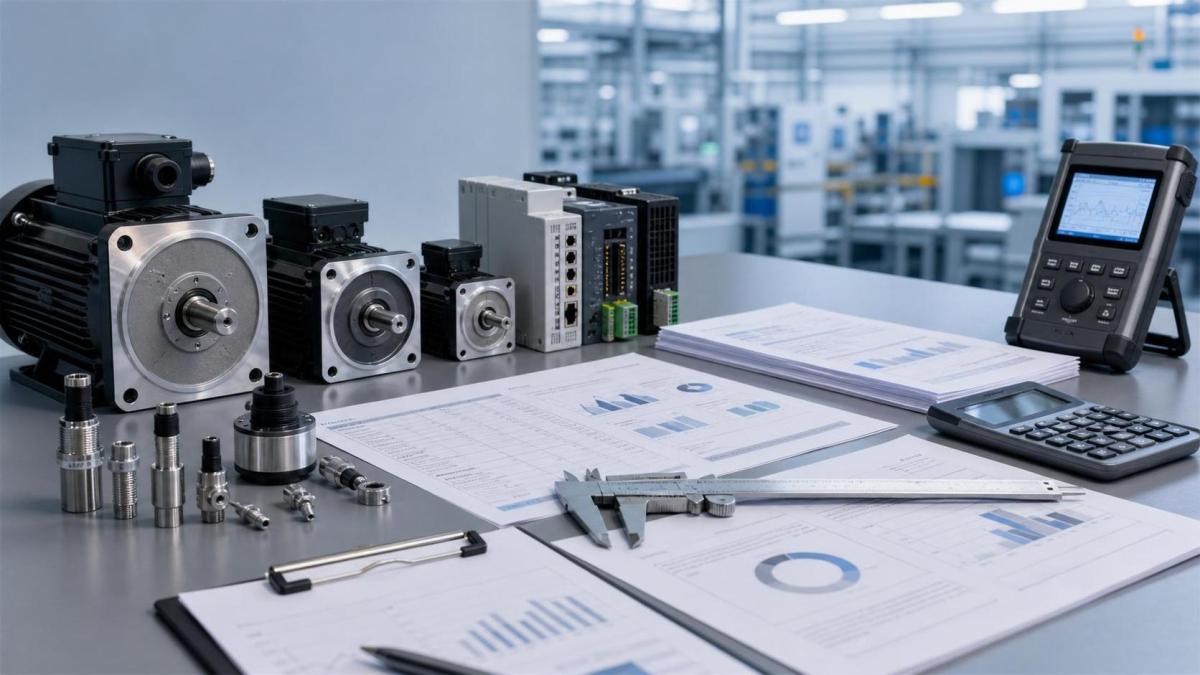
Industrial product comparison is no longer just about checking spec sheets.
Teams now need stronger evidence before locking in a supplier or platform.
That shift is easy to understand.
Industrial systems have become more connected, more customized, and more expensive to replace.
A weak decision today can create years of maintenance issues, downtime, and hidden cost.
This is why industrial product comparison must move beyond brochure claims.
The more reliable approach is to compare verified specifications, lifecycle cost, and application fit together.
At TechStat Vanguard, that is the core principle.
Engineering truth starts with measurable data, not marketing language.
If you are making a sourcing decision, this framework helps turn an industrial product comparison into a decision you can defend.
Start with the Use Case, Not the Catalog
Many sourcing mistakes begin with a simple habit.
A team compares products before defining the real operating environment.
That makes the industrial product comparison look objective, but it is often incomplete.
First, map the application in plain operational terms.
- Define load, speed, duty cycle, and required output quality.
- List ambient temperature, dust, vibration, moisture, and EMC exposure.
- Identify integration points with software, controls, and upstream equipment.
- Clarify compliance needs such as ISO, AS9100, or industry-specific validation rules.
This step creates a fair baseline for industrial product comparison.
Without it, even excellent equipment can be a poor fit in daily operation.
How to Read Specifications Without Falling for Noise
The next step in industrial product comparison is specification review.
But not all specs carry equal decision value.
Some numbers are critical performance indicators.
Others are peak lab results with little relevance to production conditions.
Focus on comparable engineering data
- Ask whether the data was measured under identical test conditions.
- Check tolerance bands, not only nominal values.
- Separate continuous ratings from short-duration maximum ratings.
- Look for fatigue data, cycle life, and failure thresholds.
- Verify whether performance changes under heat, load, or contamination.
For example, a motor with impressive peak torque may still fail your application.
If continuous torque drops sharply at operating temperature, the comparison changes fast.
The same logic applies to sensors, CNC components, UAV payload systems, and automation hardware.
A disciplined industrial product comparison always asks, “Which number predicts field performance most accurately?”
Compare Lifecycle Cost, Not Just Purchase Price
This is where many decisions go off track.
A cheaper quote can look better in a spreadsheet, yet cost more over five years.
Strong industrial product comparison includes total lifecycle cost from day one.
Key cost layers to model
- Purchase price, shipping, duties, and installation.
- Commissioning time and required engineering support.
- Energy use across normal production loads.
- Consumables, calibration, and preventive maintenance intervals.
- Spare part availability and average lead time.
- Downtime cost during failure or replacement.
- Training needs for operators and maintenance teams.
- End-of-life disposal, retrofit, or upgrade cost.
In practical sourcing work, downtime usually changes the ranking most.
A component with slightly higher price but stronger reliability may save far more in lost production.
That is why industrial product comparison should include a cost-per-operating-hour view, not only a unit price view.
Evaluate Supplier Fit Alongside Product Fit
A good product can still become a risky sourcing choice.
The reason is simple.
Industrial product comparison is also a supplier comparison.
The best engineering data loses value if support is weak or traceability is poor.
Questions that reveal supplier strength
- Can the supplier provide raw test data, not just brochure summaries?
- Is there lot traceability for critical components and materials?
- How stable are lead times across demand spikes?
- What is the documented response time for field issues?
- Can they support local service, spare stock, or remote diagnostics?
- Do they have evidence of successful deployment in similar environments?
This is especially important in robotics, edge AI, aerospace assemblies, and precision machining.
These sectors depend on consistency, validation discipline, and process control.
A complete industrial product comparison must account for those realities, not just nominal technical performance.
Build a Simple Scoring Framework That Teams Can Use
A useful industrial product comparison needs structure.
Otherwise, internal discussions drift toward opinions, not evidence.
One practical solution is a weighted scorecard.
The exact weights can change by project.
Still, the method helps keep industrial product comparison transparent and repeatable.
That matters when several teams must align around one sourcing decision.
Common Mistakes in Industrial Product Comparison
From recent market shifts, one pattern is becoming clearer.
Teams have more data available, but not always better decision logic.
These mistakes show up often:
- Comparing headline specs without reviewing test methods.
- Ignoring operating conditions during product evaluation.
- Choosing the lowest price without modeling failure cost.
- Assuming support quality will match sales promises.
- Using one generic scorecard for every product category.
Avoiding these errors improves both speed and confidence.
It also makes industrial product comparison a strategic capability, not an administrative task.
A Better Way to Make the Final Decision
The strongest sourcing decisions usually share one trait.
They combine engineering evidence with commercial discipline.
That is the real value of industrial product comparison.
It helps decision-makers filter noise, expose hidden risk, and prioritize measurable fit.
In real business settings, that discipline shortens qualification cycles and reduces expensive trial and error.
It also creates stronger conversations with suppliers, because requests become specific and verifiable.
Before your next purchase review, build a comparison around three questions.
- Does the product meet real operating requirements under verified conditions?
- Does the lifecycle cost still make sense after service and downtime are included?
- Does the supplier have the discipline to support long-term performance?
If the answer is clear on all three, your industrial product comparison is doing its job.
And if the answer is still unclear, the right next move is simple: ask for harder data, tighter tolerances, and proof that holds up in the field.
Search News
Hot Articles
- Carbon Fiber StructuresHow to Specify Aerospace Carbon Fiber Assemblies for Lightweight, Load-Bearing PartsJul 11, 2026
- Machine VisionXiaomi, Alibaba DAMO Academy Drive Open-Source Robotics Model Ecosystem, Lowering Algorithm Development Barriers for Overseas SMEs Adopting Chinese Robotics SolutionsMar 30, 2026
- Cobots & ArmsShanxi 'AI+' Conference Showcases Embodied Intelligence with Multinational Buyer Engagement: Key Industry ImplicationsMar 30, 2026
Popular Tags
Recommended News
 Jul 11, 2026How to Specify Aerospace Carbon Fiber Assemblies for Lightweight, Load-Bearing PartsAerospace carbon fiber assemblies: learn how to specify laminate design, load data, joining methods, and inspection controls for lighter, reliable load-bearing aerospace parts.Elena Rostova (UAV Systems Researcher)
 Mar 30, 2026Xiaomi, Alibaba DAMO Academy Drive Open-Source Robotics Model Ecosystem, Lowering Algorithm Development Barriers for Overseas SMEs Adopting Chinese Robotics SolutionsXiaomi & Alibaba DAMO Academy's open-source robotics models lower algorithm barriers for global SMEs. Boost efficiency in manufacturing, logistics & smart retail with ROS 2 compatible solutions.TSV Data Lab
 Mar 30, 2026Shanxi 'AI+' Conference Showcases Embodied Intelligence with Multinational Buyer Engagement: Key Industry ImplicationsShanxi 'AI+' Conference highlights embodied intelligence with Tesla, Ubtech & Jiantao showcasing multimodal robotics. 40+ global buyers validated tech on-site, creating new B2B channels for industrial automation & AI solutions.Chen Wei (Automation Lead Engineer)
 Mar 30, 2026Zhongguancun Unveils 6G Integrated Sensing-Computing-Intelligence Platform to Empower Embodied Robots for Global Industrial ApplicationsZhongguancun's new 6G platform revolutionizes industrial robotics with <10ms latency, empowering global automotive, logistics & port automation. Discover how this tech boosts China's smart manufacturing exports.TSV Data Lab
 Mar 30, 2026Mech-Mind Tianjin Embodied Intelligence R&D and Production Base Goes Live, Cutting Delivery Time by 20%–30% for Global Customized AMR+Vision SolutionsMech-Mind's Tianjin AMR+Vision production base cuts delivery time by 20%-30% for欧美 & Latin American markets. Discover how this PLd-certified facility accelerates customized robotics solutions for smart manufacturing and logistics.Chen Wei (Automation Lead Engineer)
 Mar 30, 2026Boao Forum Reveals 'Co-evolution of Big and Small Brains' Trend in Humanoid Robots, China's Embodied Intelligence Accelerates Adaptation to Overseas Manufacturing Service ScenariosDiscover how China's humanoid robots, featuring 'Co-evolution of Big and Small Brains,' are revolutionizing global manufacturing. Learn about Embodied Tian Gong 3.0's ISO compliance and overseas deployment at Boao Forum 2026.Chen Wei (Automation Lead Engineer)
 Mar 30, 2026China Railway Industrial Secures Patent for Embodied Robotics in Material Handling, Boosting High-Precision Delivery Capabilities for Overseas Infrastructure and Manufacturing ProjectsChina Railway Industrial's new patent for embodied robotics in material handling boosts high-precision delivery for global infrastructure & manufacturing. Discover how this innovation enhances logistics accuracy in automotive, rail transit & EPC projects.Chen Wei (Automation Lead Engineer)
 Sep 21, 2026Drone Payload Integration: Matching Power, Data, and Center of Gravity for Reliable FlightsDrone payload integration made practical: balance power, data, center of gravity, and endurance to build safer, more reliable mission-ready flights.Elena Rostova (UAV Systems Researcher)
 Sep 20, 2026Autonomous Navigation Pricing: Cost Drivers and Budget Benchmarks for AMR ProjectsAutonomous navigation price explained: compare AMR cost drivers, software, sensors, integration, safety, and lifecycle budgets to build a scalable project plan.Chen Wei (Automation Lead Engineer)
 Sep 19, 2026How to Scope Automation Integration Services for Multi-System Factory ProjectsAutomation integration services: learn how to scope multi-system factory projects with clear workflows, interface contracts, safety boundaries, and acceptance criteria.Victor Lin (Chief Software Architect)
 Sep 18, 2026Selecting UAV Aerospace Structural Parts for Strength, Weight, and Fatigue LifeUAV aerospace structural parts guide: compare strength, weight, stiffness, fatigue life, joints, and traceability to select reliable flight-ready components.Elena Rostova (UAV Systems Researcher)
 Sep 17, 2026Selecting Commercial Drone Payloads for European Inspection ProjectsCommercial drone payloads Europe: learn how to select RGB, thermal and LiDAR systems for compliant, reliable inspection data and better project outcomes.Elena Rostova (UAV Systems Researcher)
 Sep 16, 2026Machining Tolerance Validation: How to Verify Critical Dimensions Before Production ReleaseMachining tolerance analysis validation: verify critical dimensions, measurement systems, process capability, and tolerance stacks before production release.Dr. Marcus Vance
 Sep 15, 2026AGV Tape Guidance vs Laser Navigation: Which Fits Your Warehouse Layout?AGV tape guidance comparison: discover how tape and laser navigation fit changing warehouse layouts, docking needs, floor conditions, maintenance, and route flexibility.Chen Wei (Automation Lead Engineer)
 Sep 14, 2026How Point Cloud Analytics Improves Asset Inspection Workflows Across GCC ProjectsPoint cloud analytics GCC helps project leaders improve asset inspections with accurate change detection, safer workflows, and faster maintenance decisions.TSV Data Lab
 Sep 13, 2026How Aerospace Manufacturers Can Build a Digital Thread From Design to Certified ProductionDigital manufacturing for aerospace: learn how to build a traceable digital thread from design through certified production, supplier control, and audit-ready compliance.Victor Lin (Chief Software Architect)
 Sep 12, 2026How to Select a Thermal Sensor for Mapping Drones in Surveying ProjectsMapping drone thermal sensor selection made simple: compare GSD, radiometric data, NETD, calibration, and workflow fit for accurate, survey-ready thermal maps.Elena Rostova (UAV Systems Researcher)
 Sep 11, 2026Integrating Photogrammetry Workflows into Digital Twin Projects Without Data BottlenecksPhotogrammetry workflow integration for digital twins: learn how to streamline capture, validation, versioning, and delivery to prevent data bottlenecks.Victor Lin (Chief Software Architect)
 Sep 10, 2026Hard-Tech Supply Chain Procurement: Qualifying Suppliers to Cut Lead-Time RiskHard-tech supply chain procurement guide: qualify suppliers with proven process, traceability, capacity, and change control to reduce lead-time risk.Chen Wei (Automation Lead Engineer)
 Sep 09, 2026Industrial Application Notes: Cost Factors That Shape Automation Project BudgetsIndustrial application notes cost factors explained: uncover the engineering, safety, integration, and commissioning variables that shape accurate automation budgets.Victor Lin (Chief Software Architect)
 Sep 08, 2026Supplier Discovery for Sourcing: How Buyers Can Verify Capability and Supply RiskSupplier discovery for sourcing: learn how to verify supplier capability, traceability, quote assumptions, and supply risk before placing production orders.TSV Data Lab
 Sep 07, 2026What Determines Process Control Systems Pricing? A Buyer’s Cost GuideProcess control systems pricing explained: compare hardware, engineering, integration, cybersecurity, validation, and lifecycle costs to choose the right-value solution.Victor Lin (Chief Software Architect)
 Sep 07, 2026AMR Robots in ASEAN: Which Industries Are Adopting Them—and Why?AMR robots ASEAN adoption is accelerating in electronics, automotive, warehousing, healthcare, and cold chain. Explore use cases, risks, and deployment insights.Chen Wei (Automation Lead Engineer)
 Sep 05, 2026How to Evaluate Supplier Qualification Support Tools for Industrial Procurement TeamsSupplier qualification support tools help industrial procurement teams verify technical evidence, manage risk, and make defensible supplier approvals. Learn what to evaluate.Victor Lin (Chief Software Architect)