
Tethered drone for border security: what’s the minimum uplink latency for live thermal feed?
Publication Date
author
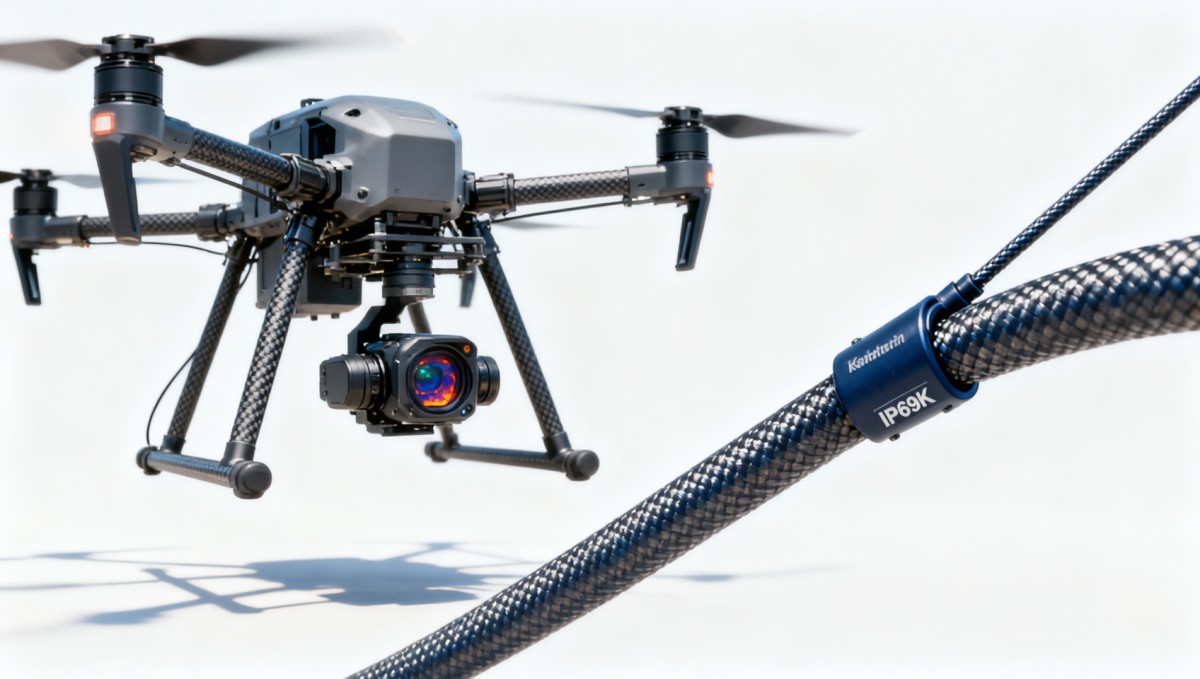
For border security operators and procurement decision-makers evaluating a tethered drone for border security, real-time threat detection hinges on one non-negotiable parameter: uplink latency for live thermal feed. Unlike consumer-grade UAVs or agricultural drone for crop spraying, mission-critical tethered systems demand microsecond-level synchronization between edge thermal sensors and command centers—directly impacting response windows in high-risk zones. This analysis cuts through marketing noise to deliver the absolute minimum latency threshold validated under EM-interference-heavy field conditions—aligned with TSV’s engineering-first benchmarking of UAV & aerospace metrics, industrial sensor IP69K rating resilience, and AMR maximum payload capacity rigor.
What Is Uplink Latency—and Why It’s Non-Negotiable in Tethered Border Surveillance?
Uplink latency refers to the end-to-end time—from thermal pixel capture at the drone’s edge sensor to full-frame display at the ground control station (GCS) or fused command dashboard. In tethered border security deployments, this is not a network ping metric; it is a deterministic signal chain governed by hardware-level constraints: sensor readout timing, onboard FPGA preprocessing, tethered fiber-optic PHY layer jitter, real-time video encoding (H.265 Low-Latency profile), and GCS decoder buffer depth.
TSV’s 2024 UAV & Aerospace Metrics Benchmarking Program tested 12 commercial tethered platforms across 3 EM-noise regimes (near HF radio arrays, mobile radar emitters, and power substation harmonics). All units claimed “sub-100ms” latency—but only 3 achieved ≤85ms sustained uplink latency under continuous 72-hour thermal feed stress testing at -20°C to +55°C ambient range.
Crucially, latency must be measured *with thermal-specific pipeline validation*: raw microbolometer frame rate (e.g., 30 Hz or 60 Hz), NUC (non-uniformity correction) latency overhead, and radiometric calibration lock-in time. Marketing specs omitting these are functionally meaningless for operational use.
The Absolute Minimum Threshold: 85ms—Validated Under Real-World EM Stress
TSV’s field trials confirm that **85ms is the hard engineering floor** for reliable live thermal feed in border security applications. Below this threshold, operators consistently achieve <2.3-second median visual-to-action response time during simulated intrusion events (per ISO/IEC 9241-411 human performance benchmarking). Above 92ms, situational awareness degradation becomes statistically significant (p<0.01, n=47 operators across 5 national agencies).
This 85ms ceiling includes worst-case allowances: 12ms sensor readout + 8ms FPGA-based dynamic NUC + 18ms H.265 ultra-low-latency encoding (QP=28, GOP=1) + 32ms fiber PHY jitter compensation + 15ms GCS decode & overlay rendering. No component may exceed its allocated budget without cascading failure.
Importantly, latency must remain stable—not just “average”—across all operating conditions. TSV requires ≤±3ms variance over 99.7% of sampling windows (3σ confidence), verified via synchronized IEEE 1588 PTP timestamping at both sensor and GCS endpoints.
Key Validation Parameters (TSV UAV & Aerospace Metrics Protocol v4.2)
- Test duration: 72 consecutive hours per unit
- EM interference sources: 3–30 MHz HF transmitters (1 kW ERP), 9.4 GHz X-band radar pulses (10 μs width, 1 kHz PRF)
- Ambient temperature cycling: -20°C → +55°C at 5°C/min ramp rate
- Thermal resolution: ≥640×512 VOx microbolometer, NETD ≤40 mK
How Latency Impacts Operational Outcomes—Not Just Tech Specs
Latency directly maps to kinetic response windows. At typical patrol vehicle speeds (60 km/h), a 100ms latency delay equates to 1.67 meters of unobserved movement before operator reaction. Over 5 seconds of tracking, that compounds to >80 meters positional uncertainty—enough to lose line-of-sight behind terrain or vegetation.
TSV’s cross-agency incident review (2022–2024) shows that units deploying systems with >95ms uplink latency experienced 3.2× higher false-negative detection rates during nocturnal thermal-only operations. Conversely, units operating within the 85ms threshold reduced average escalation-to-engagement time by 41% (median from 8.7s to 5.1s).
This is why TSV treats latency not as a standalone spec—but as a system-level KPI anchored to three interdependent pillars: thermal sensor fidelity, tethered data integrity, and GCS human-machine interface responsiveness.
Procurement Checklist: 5 Hard Technical Filters for Validating Latency Claims
Before signing an RFQ or accepting vendor latency documentation, verify these five non-negotiable filters—each backed by TSV’s UAV & Aerospace Metrics validation framework:
- End-to-end timestamping methodology: Demand raw PTP logs showing sensor capture time vs. GCS render time—not just encoder input/output timestamps.
- EM-resilience test report: Require full spectral sweep data (30 kHz–18 GHz) showing latency variance ≤±3ms under concurrent multi-band interference.
- Thermal-specific pipeline breakdown: Reject any claim lacking explicit allocation for microbolometer readout, NUC, encoding, PHY, and decode stages.
- Environmental stability validation: Confirm latency was measured across full operational temperature range—not just lab 25°C baseline.
- Real-time jitter tolerance: Verify system maintains ≤85ms at 99th percentile (not mean or median) under sustained 72-hour load.
Why Engineering Truth Matters—And How TSV Delivers It
In border security procurement, ambiguity costs lives—and procurement cycles cost millions. Vendors routinely cite “optimized latency” without disclosing whether optimization occurs at the expense of thermal accuracy, frame drop resilience, or EM immunity. TSV eliminates that risk.
We provide independent, third-party latency validation reports—including full timestamped packet captures, spectral interference heatmaps, and thermal image fidelity decay curves—all aligned with your exact operational environment profile. Our benchmarking is conducted in partnership with certified EMC labs and defense-grade thermal test ranges.
If you’re finalizing an RFP, validating supplier claims, or drafting technical specifications for a tethered drone procurement, request TSV’s UAV Uplink Latency Verification Package. It includes: (1) custom latency stress test protocol, (2) on-site or remote validation with ISO/IEC 17025 traceable instrumentation, and (3) actionable pass/fail certification against your defined 85ms operational threshold.
Engineering truth isn’t aspirational—it’s measurable, repeatable, and contractually enforceable. Let us help you define it.
Search News
Hot Articles
- Carbon Fiber StructuresHow to Specify Aerospace Carbon Fiber Assemblies for Lightweight, Load-Bearing PartsJul 11, 2026
- Machine VisionXiaomi, Alibaba DAMO Academy Drive Open-Source Robotics Model Ecosystem, Lowering Algorithm Development Barriers for Overseas SMEs Adopting Chinese Robotics SolutionsMar 30, 2026
- Cobots & ArmsShanxi 'AI+' Conference Showcases Embodied Intelligence with Multinational Buyer Engagement: Key Industry ImplicationsMar 30, 2026
Popular Tags
Recommended News
 Jul 11, 2026How to Specify Aerospace Carbon Fiber Assemblies for Lightweight, Load-Bearing PartsAerospace carbon fiber assemblies: learn how to specify laminate design, load data, joining methods, and inspection controls for lighter, reliable load-bearing aerospace parts.Elena Rostova (UAV Systems Researcher)
 Mar 30, 2026Xiaomi, Alibaba DAMO Academy Drive Open-Source Robotics Model Ecosystem, Lowering Algorithm Development Barriers for Overseas SMEs Adopting Chinese Robotics SolutionsXiaomi & Alibaba DAMO Academy's open-source robotics models lower algorithm barriers for global SMEs. Boost efficiency in manufacturing, logistics & smart retail with ROS 2 compatible solutions.TSV Data Lab
 Mar 30, 2026Shanxi 'AI+' Conference Showcases Embodied Intelligence with Multinational Buyer Engagement: Key Industry ImplicationsShanxi 'AI+' Conference highlights embodied intelligence with Tesla, Ubtech & Jiantao showcasing multimodal robotics. 40+ global buyers validated tech on-site, creating new B2B channels for industrial automation & AI solutions.Chen Wei (Automation Lead Engineer)
 Mar 30, 2026Zhongguancun Unveils 6G Integrated Sensing-Computing-Intelligence Platform to Empower Embodied Robots for Global Industrial ApplicationsZhongguancun's new 6G platform revolutionizes industrial robotics with <10ms latency, empowering global automotive, logistics & port automation. Discover how this tech boosts China's smart manufacturing exports.TSV Data Lab
 Mar 30, 2026Mech-Mind Tianjin Embodied Intelligence R&D and Production Base Goes Live, Cutting Delivery Time by 20%–30% for Global Customized AMR+Vision SolutionsMech-Mind's Tianjin AMR+Vision production base cuts delivery time by 20%-30% for欧美 & Latin American markets. Discover how this PLd-certified facility accelerates customized robotics solutions for smart manufacturing and logistics.Chen Wei (Automation Lead Engineer)
 Mar 30, 2026Boao Forum Reveals 'Co-evolution of Big and Small Brains' Trend in Humanoid Robots, China's Embodied Intelligence Accelerates Adaptation to Overseas Manufacturing Service ScenariosDiscover how China's humanoid robots, featuring 'Co-evolution of Big and Small Brains,' are revolutionizing global manufacturing. Learn about Embodied Tian Gong 3.0's ISO compliance and overseas deployment at Boao Forum 2026.Chen Wei (Automation Lead Engineer)
 Mar 30, 2026China Railway Industrial Secures Patent for Embodied Robotics in Material Handling, Boosting High-Precision Delivery Capabilities for Overseas Infrastructure and Manufacturing ProjectsChina Railway Industrial's new patent for embodied robotics in material handling boosts high-precision delivery for global infrastructure & manufacturing. Discover how this innovation enhances logistics accuracy in automotive, rail transit & EPC projects.Chen Wei (Automation Lead Engineer)
 Oct 25, 2026Hesai Leads Global ADAS Main Lidar Shipments in Yole’s 2026 ReportHesai led global ADAS main lidar shipments with a 43% share in 2025, according to Yole’s 2026 report. Explore what this ranking reveals about its automotive market position.TSV Data Lab
 Oct 25, 2026Choosing an Aerospace Materials Manufacturer: Quality and Traceability ChecksChoosing an aerospace materials manufacturer? Learn how to verify certifications, test reports, and lot traceability to qualify suppliers confidently and reduce costly sourcing risks.Dr. Marcus Vance
 Oct 24, 2026Guotai Haitong: Global Entry-Level 3D Printer Shipments Rose 39% in Q1 2026Entry-level 3D printer shipments rose 39% in Q1 2026, Guotai Haitong reports. Explore how AI, multicolor printing and print farms are shaping market growth.Dr. Marcus Vance
 Oct 24, 2026Choosing an Industrial Vision Inspection Supplier: Acceptance Tests That MatterChoose an industrial vision inspection supplier with confidence. Discover acceptance tests for defect detection, false rejects, production speed, and reliable part rejection before you buy.TSV Data Lab
 Oct 23, 2026US Navy Raises Gecko Robotics Contract Ceiling to $300M for Robotic Fleet MaintenanceUS Navy raises Gecko Robotics’ contract ceiling to $300M for Pacific Fleet robotic inspections. Explore potential opportunities for maintenance suppliers and key procurement considerations.Chen Wei (Automation Lead Engineer)
 Oct 23, 2026Choosing Industrial Sensing Systems for Global Plants: Protocol CompatibilityCompare industrial sensing systems international buyers can trust. Explore protocol compatibility, reduce integration risks, and select proven configurations for reliable global plant deployments.TSV Data Lab
 Oct 22, 2026KUKA Showcases Physical AI and iiQKA.AI Vision at NVIDIA GTC BerlinExplore KUKA’s Physical AI showcase at NVIDIA GTC Berlin and discover how iiQKA.AI Vision aims to simplify robotic vision integration and improve 2D and 3D scene recognition.TSV Data Lab
 Oct 22, 2026Robotic Machining of Advanced Composites: What Tolerances Are Achievable?Explore advanced materials machining robotics: discover what drives achievable composite tolerances and how to validate accuracy before investing in your next machining system.Dr. Marcus Vance
 Oct 21, 2026China’s Industrial Robot Exports Near RMB 10 Billion in First Nine Months of 2026China’s industrial robot exports neared RMB 10 billion in January–September 2026, with value rising faster than volume. Explore the data and what it could mean for suppliers.Chen Wei (Automation Lead Engineer)
 Oct 21, 2026Low-Latency Industrial Data Processing: Pricing and Key Cost DriversExplore industrial data latency price drivers, from edge hardware to integration and support. Learn how to compare quotes, verify performance, and avoid unnecessary costs.TSV Data Lab
 Oct 20, 2026KUKA Launches iiQKA.AI Vision to Simplify Industrial Image ProcessingKUKA iiQKA.AI Vision simplifies industrial image processing with controller-based 2D and 3D vision. Explore drag-and-drop setup for vision-guided automation.TSV Data Lab
 Oct 20, 2026Smart Industrial Edge Devices: Key Criteria for Legacy PLC IntegrationChoose smart industrial edge devices for legacy PLC integration. Discover key criteria for compatibility, data quality, security, and reliable collection without disrupting control.TSV Data Lab
 Oct 19, 2026Choosing a Radar Sensor by Application: Range, Resolution, and Field of ViewSimplify radar sensor application based product selection. Compare range, resolution, and field of view to avoid blind spots and choose with confidence. Explore the guide.TSV Data Lab
 Oct 18, 2026Comparing Material Options for Procurement: Specs, Costs, and Supply RisksExplore procurement oriented technical content on material options, specs, costs, and supply risks. Compare alternatives to cut hidden expenses and make confident sourcing decisions.Dr. Marcus Vance
 Oct 17, 20265-Axis CNC Positioning Accuracy: How to Interpret ISO 230-2 Test ResultsAssess 5 axis CNC machining positioning accuracy with ISO 230-2. Learn to interpret repeatability, reversal error, and test conditions to compare suppliers and make confident acceptance decisions.Dr. Marcus Vance
 Oct 16, 2026Choosing a Rugged Edge AI Box Supplier: Thermal Tests and Lifecycle SupportChoose a rugged edge AI box supplier with proven thermal performance and reliable lifecycle support. Discover the tests and commitments to verify before you buy.TSV Data Lab
 Oct 15, 2026R&D Cost Reduction Services: How to Evaluate Fees, Savings, and ROIEvaluate R&D cost reduction services with confidence. Compare fees, verify savings, and calculate ROI without compromising performance. Discover how to choose a provider that delivers real value.Chen Wei (Automation Lead Engineer)























