How to Choose Wholesale Musical Instruments for Schools by Grade, Program, and Budget
Publication Date
author
Why does choosing wholesale musical instruments for schools need more than a price check?
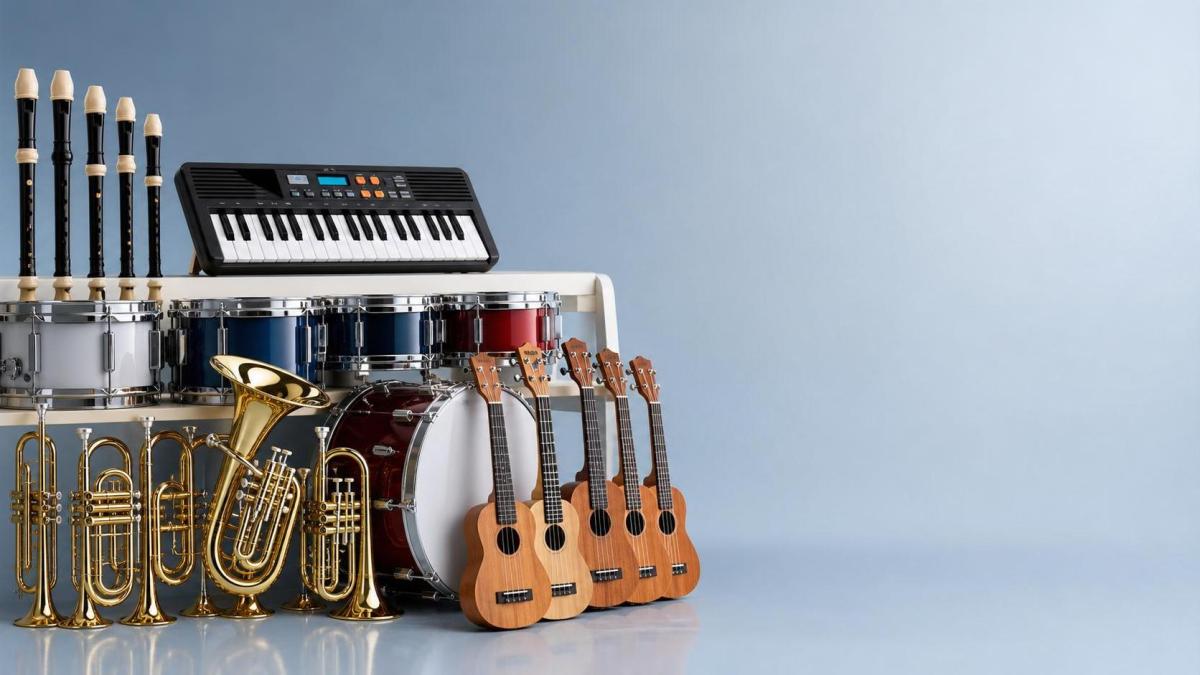
Choosing wholesale musical instruments for schools usually starts with budget pressure, but the real decision is broader than unit cost.
An entry-level recorder for early grades, a marching snare for band, and a classroom keyboard serve different learning outcomes.
If those needs are blended into one buying list, schools often overpay in one category and underbuy in another.
A better approach is to evaluate wholesale musical instruments for schools the way disciplined technical sourcing teams evaluate equipment: by use case, performance threshold, expected lifecycle, and replacement risk.
That mindset aligns with the broader TSV principle that parameters matter more than sales language.
In practice, the useful questions are simple.
Which grades will use the instruments? How intensive is the program? How often will items be shared? What failure points create hidden cost?
When wholesale musical instruments for schools are matched to actual educational conditions, purchasing becomes more predictable and less reactive.
What should be matched first: grade level, playing difficulty, or program design?
Grade level usually comes first, because physical fit and ease of use affect whether students can participate successfully.
Younger students need lighter, more forgiving instruments with fewer maintenance demands and a lower replacement cost.
Older students can handle broader ranges, more complex mechanics, and stricter tuning expectations.
Program design comes next.
A general music classroom needs volume, durability, and simple storage. A concert band or orchestra needs consistency, tone reliability, and parts support.
A common mistake is buying intermediate-level inventory for beginner-heavy programs.
That can increase repair incidents without improving student progress.
Another mistake is using only a grade-based rule.
For example, a middle school jazz program may require more robust brass and rhythm section options than a standard classroom music schedule.
A practical filter for wholesale musical instruments for schools looks like this:
- Early grades: prioritize portability, safe handling, and low-cost replacement.
- Upper elementary: look for stable tuning and shared-use durability.
- Middle school: balance playable response with repairable construction.
- High school: focus on program-specific performance standards and long-term serviceability.
That sequence keeps the instrument list tied to actual teaching conditions rather than catalog descriptions.
How can schools compare wholesale musical instruments for schools without relying on vague quality claims?
This is where measurable criteria matter most.
The same problem TSV highlights in industrial sourcing appears here in a smaller form: too many claims, not enough usable data.
Terms like premium, professional, or school-approved are not enough for comparison.
Instead, ask for details that affect ownership cost and daily classroom reliability.
When reviewing wholesale musical instruments for schools, the most useful supplier conversations revolve around specifications, defect rates, and replenishment timelines.
That data-driven approach is more reliable than brand storytelling alone.
Where do budget limits usually create the wrong buying decision?
The biggest budget error is treating all instruments as equal cost centers.
They are not.
Some categories fail quickly under heavy student rotation. Others remain usable for years if the initial specification is right.
So the question is not only, “What is affordable now?”
A better question is, “Which items should absorb more of the budget because replacement and downtime are expensive?”
For example, keyboards, brass, and woodwinds often justify more scrutiny on build consistency and service support.
Simple percussion, student ukuleles, and basic classroom rhythm tools may allow more price flexibility if safety and durability are acceptable.
It also helps to split the budget into three bands rather than one total figure.
- Core teaching inventory that must stay available all year.
- Program-building instruments that expand repertoire or ensemble options.
- Consumables and replacement parts that protect uptime.
That structure makes wholesale musical instruments for schools easier to prioritize when funding is partial or phased.
In real purchasing cycles, phased buying is often smarter than a full low-cost reset.
Are bundled school music packages really cost-effective?
Sometimes yes, but only when the package matches the teaching model.
Bundled offers for wholesale musical instruments for schools can simplify ordering, reduce freight complexity, and standardize accessories.
That is useful for new programs or district-wide refreshes.
The risk appears when bundles hide uneven quality.
One strong item can make the package look attractive, while weaker accessories or hard-to-service instruments create follow-up cost.
More careful buyers usually check four things before accepting a package:
- Whether every item is needed in the first academic year.
- Whether included accessories meet classroom durability standards.
- Whether the supplier can replace individual components without repurchasing the full set.
- Whether shipping, storage, and setup costs are clearly separated.
If a bundle passes those checks, it can reduce administrative effort and improve inventory control.
If not, line-item buying is usually safer.
What risks are easy to miss when sourcing wholesale musical instruments for schools?
The obvious risk is poor durability, but several quieter risks matter just as much.
One is inconsistency between batches.
A sample unit may perform well, while later deliveries vary in tuning, finish, or hardware quality.
Another is slow replenishment.
A low-cost source becomes disruptive if replacement reeds, strings, mallets, or power adapters are difficult to obtain mid-semester.
There is also the issue of storage and handling.
Large percussion kits or fragile string instruments may look affordable until transport carts, shelving, or protective cases are added.
In practical terms, these warning signs deserve attention:
- No clear parts policy for repairs or replacements.
- No specification sheet beyond basic catalog copy.
- Unclear carton quantities and freight assumptions.
- No distinction between beginner, classroom, and ensemble-grade stock.
- Warranty language that excludes normal school use.
These details may seem small, yet they often determine whether wholesale musical instruments for schools remain usable through the full academic cycle.
So what is the smartest next step before placing the order?
Start by building a short decision sheet, not a long wish list.
List grade groups, program formats, target quantities, maintenance exposure, and acceptable replacement windows.
Then compare wholesale musical instruments for schools against those real operating conditions.
That process keeps price in context rather than letting it dominate every choice.
It also reflects a broader sourcing principle that TSV consistently emphasizes: decisions improve when claims are filtered through measurable criteria.
For school music programs, those criteria are not abstract.
They include tuning stability, repairability, accessory completeness, logistics fit, and the total cost of keeping instruments available for students.
If the next review cycle focuses on those points, the final order is more likely to support both budget discipline and dependable classroom use.
That is usually the difference between buying inventory and building a workable music program.
Search News
Hot Articles
- Carbon Fiber StructuresHow to Specify Aerospace Carbon Fiber Assemblies for Lightweight, Load-Bearing PartsJul 11, 2026
- Machine VisionXiaomi, Alibaba DAMO Academy Drive Open-Source Robotics Model Ecosystem, Lowering Algorithm Development Barriers for Overseas SMEs Adopting Chinese Robotics SolutionsMar 30, 2026
- Cobots & ArmsShanxi 'AI+' Conference Showcases Embodied Intelligence with Multinational Buyer Engagement: Key Industry ImplicationsMar 30, 2026
Popular Tags
Recommended News
 Jul 11, 2026How to Specify Aerospace Carbon Fiber Assemblies for Lightweight, Load-Bearing PartsAerospace carbon fiber assemblies: learn how to specify laminate design, load data, joining methods, and inspection controls for lighter, reliable load-bearing aerospace parts.Elena Rostova (UAV Systems Researcher)
 Mar 30, 2026Xiaomi, Alibaba DAMO Academy Drive Open-Source Robotics Model Ecosystem, Lowering Algorithm Development Barriers for Overseas SMEs Adopting Chinese Robotics SolutionsXiaomi & Alibaba DAMO Academy's open-source robotics models lower algorithm barriers for global SMEs. Boost efficiency in manufacturing, logistics & smart retail with ROS 2 compatible solutions.TSV Data Lab
 Mar 30, 2026Shanxi 'AI+' Conference Showcases Embodied Intelligence with Multinational Buyer Engagement: Key Industry ImplicationsShanxi 'AI+' Conference highlights embodied intelligence with Tesla, Ubtech & Jiantao showcasing multimodal robotics. 40+ global buyers validated tech on-site, creating new B2B channels for industrial automation & AI solutions.Chen Wei (Automation Lead Engineer)
 Mar 30, 2026Zhongguancun Unveils 6G Integrated Sensing-Computing-Intelligence Platform to Empower Embodied Robots for Global Industrial ApplicationsZhongguancun's new 6G platform revolutionizes industrial robotics with <10ms latency, empowering global automotive, logistics & port automation. Discover how this tech boosts China's smart manufacturing exports.TSV Data Lab
 Mar 30, 2026Mech-Mind Tianjin Embodied Intelligence R&D and Production Base Goes Live, Cutting Delivery Time by 20%–30% for Global Customized AMR+Vision SolutionsMech-Mind's Tianjin AMR+Vision production base cuts delivery time by 20%-30% for欧美 & Latin American markets. Discover how this PLd-certified facility accelerates customized robotics solutions for smart manufacturing and logistics.Chen Wei (Automation Lead Engineer)
 Mar 30, 2026Boao Forum Reveals 'Co-evolution of Big and Small Brains' Trend in Humanoid Robots, China's Embodied Intelligence Accelerates Adaptation to Overseas Manufacturing Service ScenariosDiscover how China's humanoid robots, featuring 'Co-evolution of Big and Small Brains,' are revolutionizing global manufacturing. Learn about Embodied Tian Gong 3.0's ISO compliance and overseas deployment at Boao Forum 2026.Chen Wei (Automation Lead Engineer)
 Mar 30, 2026China Railway Industrial Secures Patent for Embodied Robotics in Material Handling, Boosting High-Precision Delivery Capabilities for Overseas Infrastructure and Manufacturing ProjectsChina Railway Industrial's new patent for embodied robotics in material handling boosts high-precision delivery for global infrastructure & manufacturing. Discover how this innovation enhances logistics accuracy in automotive, rail transit & EPC projects.Chen Wei (Automation Lead Engineer)
 Sep 18, 2026Selecting UAV Aerospace Structural Parts for Strength, Weight, and Fatigue LifeUAV aerospace structural parts guide: compare strength, weight, stiffness, fatigue life, joints, and traceability to select reliable flight-ready components.Elena Rostova (UAV Systems Researcher)
 Sep 17, 2026Selecting Commercial Drone Payloads for European Inspection ProjectsCommercial drone payloads Europe: learn how to select RGB, thermal and LiDAR systems for compliant, reliable inspection data and better project outcomes.Elena Rostova (UAV Systems Researcher)
 Sep 16, 2026Machining Tolerance Validation: How to Verify Critical Dimensions Before Production ReleaseMachining tolerance analysis validation: verify critical dimensions, measurement systems, process capability, and tolerance stacks before production release.Dr. Marcus Vance
 Sep 15, 2026AGV Tape Guidance vs Laser Navigation: Which Fits Your Warehouse Layout?AGV tape guidance comparison: discover how tape and laser navigation fit changing warehouse layouts, docking needs, floor conditions, maintenance, and route flexibility.Chen Wei (Automation Lead Engineer)
 Sep 14, 2026How Point Cloud Analytics Improves Asset Inspection Workflows Across GCC ProjectsPoint cloud analytics GCC helps project leaders improve asset inspections with accurate change detection, safer workflows, and faster maintenance decisions.TSV Data Lab
 Sep 13, 2026How Aerospace Manufacturers Can Build a Digital Thread From Design to Certified ProductionDigital manufacturing for aerospace: learn how to build a traceable digital thread from design through certified production, supplier control, and audit-ready compliance.Victor Lin (Chief Software Architect)
 Sep 12, 2026How to Select a Thermal Sensor for Mapping Drones in Surveying ProjectsMapping drone thermal sensor selection made simple: compare GSD, radiometric data, NETD, calibration, and workflow fit for accurate, survey-ready thermal maps.Elena Rostova (UAV Systems Researcher)
 Sep 11, 2026Integrating Photogrammetry Workflows into Digital Twin Projects Without Data BottlenecksPhotogrammetry workflow integration for digital twins: learn how to streamline capture, validation, versioning, and delivery to prevent data bottlenecks.Victor Lin (Chief Software Architect)
 Sep 10, 2026Hard-Tech Supply Chain Procurement: Qualifying Suppliers to Cut Lead-Time RiskHard-tech supply chain procurement guide: qualify suppliers with proven process, traceability, capacity, and change control to reduce lead-time risk.Chen Wei (Automation Lead Engineer)
 Sep 09, 2026Industrial Application Notes: Cost Factors That Shape Automation Project BudgetsIndustrial application notes cost factors explained: uncover the engineering, safety, integration, and commissioning variables that shape accurate automation budgets.Victor Lin (Chief Software Architect)
 Sep 08, 2026Supplier Discovery for Sourcing: How Buyers Can Verify Capability and Supply RiskSupplier discovery for sourcing: learn how to verify supplier capability, traceability, quote assumptions, and supply risk before placing production orders.TSV Data Lab
 Sep 07, 2026What Determines Process Control Systems Pricing? A Buyer’s Cost GuideProcess control systems pricing explained: compare hardware, engineering, integration, cybersecurity, validation, and lifecycle costs to choose the right-value solution.Victor Lin (Chief Software Architect)
 Sep 07, 2026AMR Robots in ASEAN: Which Industries Are Adopting Them—and Why?AMR robots ASEAN adoption is accelerating in electronics, automotive, warehousing, healthcare, and cold chain. Explore use cases, risks, and deployment insights.Chen Wei (Automation Lead Engineer)
 Sep 05, 2026How to Evaluate Supplier Qualification Support Tools for Industrial Procurement TeamsSupplier qualification support tools help industrial procurement teams verify technical evidence, manage risk, and make defensible supplier approvals. Learn what to evaluate.Victor Lin (Chief Software Architect)
 Sep 04, 2026Grinding Tolerance Analysis: How to Set Realistic Limits for Precision PartsGrinding tolerance analysis explains how to set realistic limits for precision parts, balance fit, geometry, process capability, and inspection for reliable performance.Dr. Marcus Vance
 Sep 03, 2026Warehouse Automation Strategies to Increase Storage Capacity Without ExpansionWarehouse automation space saving strategies help unlock vertical capacity, optimize slotting, and improve storage density without costly building expansion.Victor Lin (Chief Software Architect)
 Sep 02, 2026What Should Buyers Evaluate When Choosing a Hybrid VTOL UAV Factory?Hybrid VTOL UAV factory selection guide: evaluate mission fit, production traceability, payload integration, support, and total ownership costs before procurement.Elena Rostova (UAV Systems Researcher)