JIS B 8432-2026 Enforced: Stricter Bending Stiffness for CFRP Drone Arms
Publication Date
author
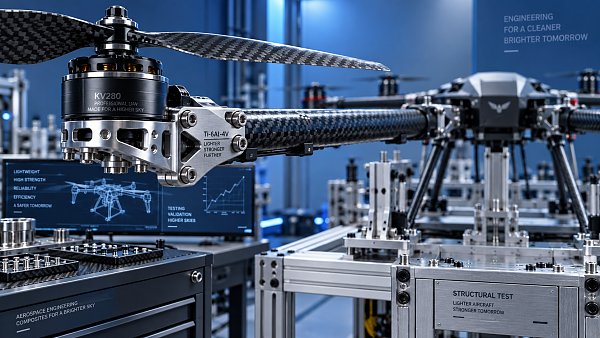
Japan’s revised industrial standard JIS B 8432-2026 entered into mandatory force on May 1, 2026, imposing a 20% increase in minimum bending stiffness requirements for carbon fiber-reinforced polymer (CFRP) drone structural components—including arms, landing gear, and gimbal mounts. This update directly affects manufacturers, exporters, and distributors engaged in the Japan–China CFRP structural parts supply chain, as compliance now dictates both mechanical performance thresholds and dual-parameter material certification.
Event Overview
JIS B 8432-2026 became effective on May 1, 2026. It introduces a new minimum three-point bending stiffness requirement of ≥1.8×10⁶ N·mm²/rad for commercial-grade UAV carbon fiber structural parts—specifically covering arms, landing gear, and gimbal brackets. This represents a 20% increase over the 2022 edition. Additionally, the standard now mandates full-batch出厂 reports certifying both tensile modulus and coefficient of thermal expansion for each production lot.
Industries Affected by Segment
Direct Trade Enterprises (Japan–China CFRP Structural Parts Exporters/Importers)
These firms are affected because the updated standard applies to all CFRP drone structural components placed on the Japanese market after May 1, 2026. Compliance is required for customs clearance and market access; non-compliant stock cannot be legally sold or distributed in Japan. The requirement for batch-level dual-parameter reporting adds traceability overhead and may delay shipment cycles.
Raw Material Procurement Entities (Carbon Fiber & Prepreg Suppliers)
Suppliers face upstream pressure as downstream fabricators request certified raw materials meeting the new stiffness–modulus–CTE correlation expectations. While JIS B 8432-2026 does not regulate raw fiber grades directly, its stiffness threshold implies tighter control over fiber alignment, resin formulation, and curing consistency—factors that influence final part-level bending rigidity.
Component Manufacturing Firms (CFRP Drone Arm Fabricators)
Manufacturers must verify existing designs meet the elevated stiffness benchmark—and retest legacy tooling or layup schedules where necessary. Since bending stiffness depends on geometry, layup sequence, and material properties, even minor deviations in fiber orientation or resin content could result in noncompliance. Revalidation across production lots is now mandatory—not just for prototypes.
Distribution & Logistics Service Providers (Third-Party Warehousing, Certification Support Firms)
These service providers are impacted operationally: inventory held pre–May 2026 requires retesting before release in Japan. Several Chinese–Japanese trade intermediaries have reported initiating urgent third-party bending tests on stored CFRP arms, with lead times extending beyond typical turnaround windows due to lab capacity constraints.
Key Focus Areas and Recommended Actions for Stakeholders
Monitor official interpretations from JISC and METI
While JIS B 8432-2026 is in force, transitional guidance—such as grandfathering provisions for contracts signed prior to May 2026 or definitions of ‘commercial-grade’ scope—has not been publicly issued. Stakeholders should track announcements from the Japanese Industrial Standards Committee (JISC) and Ministry of Economy, Trade and Industry (METI).
Prioritize retesting of high-volume CFRP arm SKUs destined for Japan
Not all CFRP structural parts carry equal risk. Arms constitute the largest volume category subject to bending load during flight and transport; they also exhibit the highest variability in stiffness due to asymmetrical cross-sections and complex layups. Firms should triage SKUs by export volume, current test history, and design age before allocating lab resources.
Distinguish between regulatory signal and enforceable obligation
The dual-parameter reporting requirement (tensile modulus + CTE) is explicitly stipulated in Clause 5.2 of JIS B 8432-2026 and applies to all delivered batches. However, enforcement mechanisms—e.g., whether Japanese importers must retain physical copies or accept digital attestations—remain unspecified. Companies should treat the reporting rule as binding but confirm documentation format with local partners.
Initiate internal cross-functional alignment on material traceability protocols
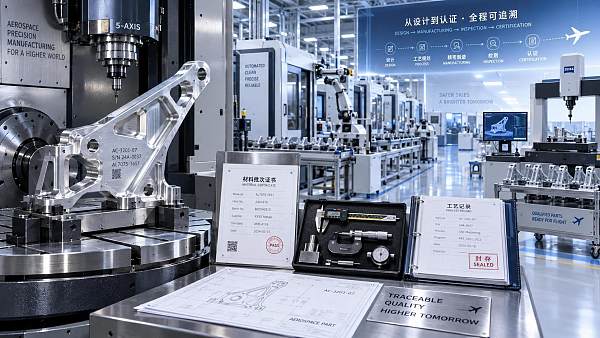
Meeting the new standard demands tighter integration between procurement (raw material certs), production (process records), and QA (bending test logs). Firms lacking digital batch tracking may need to implement interim manual reconciliation workflows ahead of potential audits or customer requests for full-lot traceability.
Editorial Perspective / Industry Observation
Observably, JIS B 8432-2026 functions less as a technical revision and more as a de facto quality gate for mid-to-high-end commercial drone hardware entering Japan. Analysis shows the 20% stiffness uplift aligns closely with field-reported failure modes in long-endurance delivery and inspection drones—suggesting the update reflects operational experience rather than theoretical modeling alone. From an industry perspective, this standard signals Japan’s intent to formalize mechanical reliability expectations for CFRP airframes, moving beyond basic safety certification toward performance-based conformity. It is not yet clear whether similar tightening will appear in JIS A 8431 (for fuselage frames) or JIS C 8433 (for battery enclosures); that remains a key area for ongoing observation.
Concluding, JIS B 8432-2026 marks a procedural and technical inflection point—not a broad sectoral disruption. Its immediate effect is concentrated among firms actively shipping CFRP drone arms to Japan, where compliance is now binary: pass the bending stiffness threshold and submit dual-parameter reports, or halt distribution. For the broader composites or UAV ecosystem, it serves as an early indicator of tightening mechanical specification discipline in regulated Asian markets—better understood today as a targeted calibration than a systemic shift.
Source: Official publication of JIS B 8432-2026 by the Japanese Industrial Standards Committee (JISC), effective May 1, 2026. No supplementary explanatory documents or enforcement guidelines have been published as of May 2026; these remain under observation.
Search News
Hot Articles
- Carbon Fiber StructuresHow to Specify Aerospace Carbon Fiber Assemblies for Lightweight, Load-Bearing PartsJul 11, 2026
- Machine VisionXiaomi, Alibaba DAMO Academy Drive Open-Source Robotics Model Ecosystem, Lowering Algorithm Development Barriers for Overseas SMEs Adopting Chinese Robotics SolutionsMar 30, 2026
- Cobots & ArmsShanxi 'AI+' Conference Showcases Embodied Intelligence with Multinational Buyer Engagement: Key Industry ImplicationsMar 30, 2026
Popular Tags
Recommended News
 Jul 11, 2026How to Specify Aerospace Carbon Fiber Assemblies for Lightweight, Load-Bearing PartsAerospace carbon fiber assemblies: learn how to specify laminate design, load data, joining methods, and inspection controls for lighter, reliable load-bearing aerospace parts.Elena Rostova (UAV Systems Researcher)
 Mar 30, 2026Xiaomi, Alibaba DAMO Academy Drive Open-Source Robotics Model Ecosystem, Lowering Algorithm Development Barriers for Overseas SMEs Adopting Chinese Robotics SolutionsXiaomi & Alibaba DAMO Academy's open-source robotics models lower algorithm barriers for global SMEs. Boost efficiency in manufacturing, logistics & smart retail with ROS 2 compatible solutions.TSV Data Lab
 Mar 30, 2026Shanxi 'AI+' Conference Showcases Embodied Intelligence with Multinational Buyer Engagement: Key Industry ImplicationsShanxi 'AI+' Conference highlights embodied intelligence with Tesla, Ubtech & Jiantao showcasing multimodal robotics. 40+ global buyers validated tech on-site, creating new B2B channels for industrial automation & AI solutions.Chen Wei (Automation Lead Engineer)
 Mar 30, 2026Zhongguancun Unveils 6G Integrated Sensing-Computing-Intelligence Platform to Empower Embodied Robots for Global Industrial ApplicationsZhongguancun's new 6G platform revolutionizes industrial robotics with <10ms latency, empowering global automotive, logistics & port automation. Discover how this tech boosts China's smart manufacturing exports.TSV Data Lab
 Mar 30, 2026Mech-Mind Tianjin Embodied Intelligence R&D and Production Base Goes Live, Cutting Delivery Time by 20%–30% for Global Customized AMR+Vision SolutionsMech-Mind's Tianjin AMR+Vision production base cuts delivery time by 20%-30% for欧美 & Latin American markets. Discover how this PLd-certified facility accelerates customized robotics solutions for smart manufacturing and logistics.Chen Wei (Automation Lead Engineer)
 Mar 30, 2026Boao Forum Reveals 'Co-evolution of Big and Small Brains' Trend in Humanoid Robots, China's Embodied Intelligence Accelerates Adaptation to Overseas Manufacturing Service ScenariosDiscover how China's humanoid robots, featuring 'Co-evolution of Big and Small Brains,' are revolutionizing global manufacturing. Learn about Embodied Tian Gong 3.0's ISO compliance and overseas deployment at Boao Forum 2026.Chen Wei (Automation Lead Engineer)
 Mar 30, 2026China Railway Industrial Secures Patent for Embodied Robotics in Material Handling, Boosting High-Precision Delivery Capabilities for Overseas Infrastructure and Manufacturing ProjectsChina Railway Industrial's new patent for embodied robotics in material handling boosts high-precision delivery for global infrastructure & manufacturing. Discover how this innovation enhances logistics accuracy in automotive, rail transit & EPC projects.Chen Wei (Automation Lead Engineer)
 Sep 18, 2026Selecting UAV Aerospace Structural Parts for Strength, Weight, and Fatigue LifeUAV aerospace structural parts guide: compare strength, weight, stiffness, fatigue life, joints, and traceability to select reliable flight-ready components.Elena Rostova (UAV Systems Researcher)
 Sep 17, 2026Selecting Commercial Drone Payloads for European Inspection ProjectsCommercial drone payloads Europe: learn how to select RGB, thermal and LiDAR systems for compliant, reliable inspection data and better project outcomes.Elena Rostova (UAV Systems Researcher)
 Sep 16, 2026Machining Tolerance Validation: How to Verify Critical Dimensions Before Production ReleaseMachining tolerance analysis validation: verify critical dimensions, measurement systems, process capability, and tolerance stacks before production release.Dr. Marcus Vance
 Sep 15, 2026AGV Tape Guidance vs Laser Navigation: Which Fits Your Warehouse Layout?AGV tape guidance comparison: discover how tape and laser navigation fit changing warehouse layouts, docking needs, floor conditions, maintenance, and route flexibility.Chen Wei (Automation Lead Engineer)
 Sep 14, 2026How Point Cloud Analytics Improves Asset Inspection Workflows Across GCC ProjectsPoint cloud analytics GCC helps project leaders improve asset inspections with accurate change detection, safer workflows, and faster maintenance decisions.TSV Data Lab
 Sep 13, 2026How Aerospace Manufacturers Can Build a Digital Thread From Design to Certified ProductionDigital manufacturing for aerospace: learn how to build a traceable digital thread from design through certified production, supplier control, and audit-ready compliance.Victor Lin (Chief Software Architect)
 Sep 12, 2026How to Select a Thermal Sensor for Mapping Drones in Surveying ProjectsMapping drone thermal sensor selection made simple: compare GSD, radiometric data, NETD, calibration, and workflow fit for accurate, survey-ready thermal maps.Elena Rostova (UAV Systems Researcher)
 Sep 11, 2026Integrating Photogrammetry Workflows into Digital Twin Projects Without Data BottlenecksPhotogrammetry workflow integration for digital twins: learn how to streamline capture, validation, versioning, and delivery to prevent data bottlenecks.Victor Lin (Chief Software Architect)
 Sep 10, 2026Hard-Tech Supply Chain Procurement: Qualifying Suppliers to Cut Lead-Time RiskHard-tech supply chain procurement guide: qualify suppliers with proven process, traceability, capacity, and change control to reduce lead-time risk.Chen Wei (Automation Lead Engineer)
 Sep 09, 2026Industrial Application Notes: Cost Factors That Shape Automation Project BudgetsIndustrial application notes cost factors explained: uncover the engineering, safety, integration, and commissioning variables that shape accurate automation budgets.Victor Lin (Chief Software Architect)
 Sep 08, 2026Supplier Discovery for Sourcing: How Buyers Can Verify Capability and Supply RiskSupplier discovery for sourcing: learn how to verify supplier capability, traceability, quote assumptions, and supply risk before placing production orders.TSV Data Lab
 Sep 07, 2026What Determines Process Control Systems Pricing? A Buyer’s Cost GuideProcess control systems pricing explained: compare hardware, engineering, integration, cybersecurity, validation, and lifecycle costs to choose the right-value solution.Victor Lin (Chief Software Architect)
 Sep 07, 2026AMR Robots in ASEAN: Which Industries Are Adopting Them—and Why?AMR robots ASEAN adoption is accelerating in electronics, automotive, warehousing, healthcare, and cold chain. Explore use cases, risks, and deployment insights.Chen Wei (Automation Lead Engineer)
 Sep 05, 2026How to Evaluate Supplier Qualification Support Tools for Industrial Procurement TeamsSupplier qualification support tools help industrial procurement teams verify technical evidence, manage risk, and make defensible supplier approvals. Learn what to evaluate.Victor Lin (Chief Software Architect)
 Sep 04, 2026Grinding Tolerance Analysis: How to Set Realistic Limits for Precision PartsGrinding tolerance analysis explains how to set realistic limits for precision parts, balance fit, geometry, process capability, and inspection for reliable performance.Dr. Marcus Vance
 Sep 03, 2026Warehouse Automation Strategies to Increase Storage Capacity Without ExpansionWarehouse automation space saving strategies help unlock vertical capacity, optimize slotting, and improve storage density without costly building expansion.Victor Lin (Chief Software Architect)
 Sep 02, 2026What Should Buyers Evaluate When Choosing a Hybrid VTOL UAV Factory?Hybrid VTOL UAV factory selection guide: evaluate mission fit, production traceability, payload integration, support, and total ownership costs before procurement.Elena Rostova (UAV Systems Researcher)