How to Evaluate an Embedded AI Module Supplier for Edge Vision Projects
Publication Date
author
How to Evaluate an Embedded AI Module Supplier for Edge Vision Projects
Selecting the right embedded ai module supplier can determine whether an edge vision project scales efficiently or stalls in costly validation cycles.
The real challenge is rarely branding. It is measurable performance under real deployment constraints.
That includes compute efficiency, latency, thermal behavior, interface fit, lifecycle support, and supply continuity.
A strong evaluation process turns supplier selection into an engineering decision, not a sales discussion.
Start with the edge vision workload, not the supplier pitch
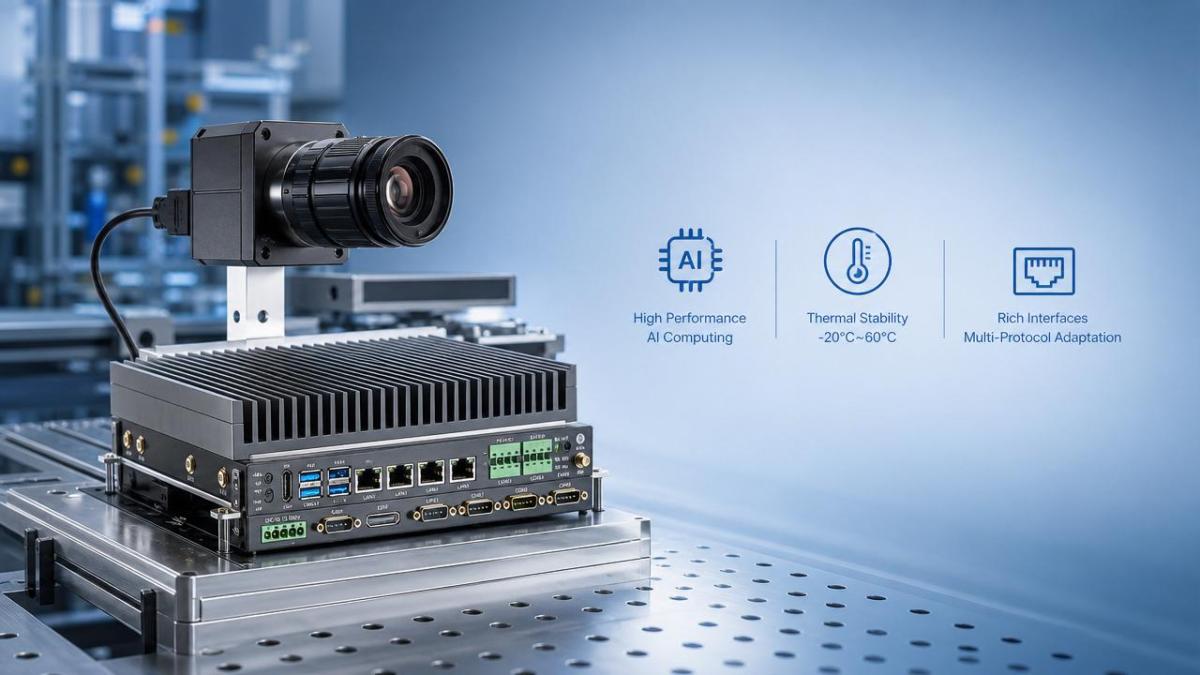
Before comparing any embedded ai module supplier, define the workload with precision.
Many teams skip this step and later discover their benchmark assumptions were too generic.
In practice, edge vision performance depends on model size, frame rate, resolution, and response deadlines.
A module that looks impressive in a demo can fail inside a sealed enclosure or unstable factory network.
Start by documenting the operating envelope.
- Target model type, such as detection, segmentation, OCR, or anomaly inspection
- Input resolution, camera count, and required frames per second
- Maximum acceptable latency from image capture to decision output
- Power budget, cooling method, and enclosure constraints
- Required interfaces, including MIPI CSI, USB, Ethernet, CAN, or GPIO
- Expected operating temperature, dust level, vibration, and uptime window
This baseline creates a fair filter for every embedded ai module supplier under review.
Measure compute efficiency, not headline TOPS
One of the most common selection mistakes is overvaluing advertised TOPS.
Raw compute numbers matter, but they rarely predict delivered edge vision performance by themselves.
A credible embedded ai module supplier should provide benchmark context, not just peak theoretical throughput.
Look for repeatable inference data using models close to your deployment pipeline.
Ask for workload-specific proof
- Inference speed for your model family, not a vendor-selected showcase model
- Latency distribution, including P50, P95, and worst-case response time
- Performance under sustained load, not only short demo bursts
- Memory bandwidth limits during multi-camera processing
- Quantization impact on accuracy and retraining effort
This is where engineering-first suppliers stand out.
They can explain why one model runs well and another bottlenecks on memory, preprocessing, or I/O.
That transparency reduces integration surprises later.
Check thermal stability and power behavior under sustained operation
From recent deployment trends, thermal limits are becoming a more visible failure point.
An embedded ai module supplier may show strong laboratory numbers, yet throttle badly after thirty minutes.
That matters in inspection lines, mobile robots, and outdoor vision nodes running all day.
Ask for thermal test data under realistic ambient temperatures and enclosure conditions.
If the supplier cannot provide this data, the validation burden shifts to your team.
Verify interface compatibility and software maturity early
Hardware fit is only half the story.
A dependable embedded ai module supplier should also shorten software integration time.
This becomes even more important when teams manage camera tuning, edge inference, and industrial control together.
Review the full integration stack
- Camera driver maturity and synchronization support
- SDK documentation quality and update frequency
- Supported frameworks, such as TensorRT, ONNX, OpenVINO, or vendor toolchains
- Linux BSP stability and long-term kernel maintenance
- Security update process and OTA deployment options
- Reference designs for industrial gateways or vision controllers
More importantly, test how quickly your own engineers can move from boot-up to a working inference pipeline.
That practical timeline often reveals more than specification sheets do.
Assess lifecycle support and supply-chain resilience
For decision-makers, supply continuity is no longer a secondary concern.
An embedded ai module supplier may pass technical review but still create commercial risk through short product lifecycles.
This is especially relevant for industrial equipment, aerospace support systems, and long-service smart devices.
Evaluate support policies with the same rigor used for compute benchmarks.
- Confirm product longevity commitments and end-of-life notice periods.
- Ask about alternate component strategies and redesign risk exposure.
- Review manufacturing location diversity and logistics flexibility.
- Check failure analysis response time and RMA handling process.
- Verify availability of engineering support during validation and ramp-up.
The best embedded ai module supplier usually behaves like a long-term technical partner, not a transactional parts vendor.
Use a weighted scorecard to compare suppliers objectively
Once several candidates look viable, a weighted scorecard keeps the decision grounded.
This is a practical way to compare each embedded ai module supplier using the same evidence base.
Weighting should reflect application risk, not internal politics.
This method also helps explain the final recommendation to procurement, product, and operations teams.
Red flags that should slow down selection
Some warning signs appear early, if you know where to look.
- Only peak TOPS is shared, with no workload-level benchmark details
- Thermal results are unavailable for fanless or sealed deployments
- Camera support is promised, but drivers are not production-ready
- SDK updates depend on private requests instead of public release discipline
- Lifecycle commitments are vague or tied to upstream uncertainty
- Support answers are fast during sales, then slow during technical review
A capable embedded ai module supplier should welcome deep technical scrutiny.
If basic engineering questions trigger vague replies, that is already useful data.
Make the final decision with engineering evidence
Choosing an embedded ai module supplier for edge vision projects is really about reducing downstream uncertainty.
The strongest choice is usually not the one with the loudest performance claim.
It is the supplier that can prove stable inference, thermal consistency, software readiness, and supply reliability.
In real programs, that evidence shortens qualification cycles and protects deployment schedules.
For teams guided by data-first evaluation, the selection process becomes clearer, faster, and far less risky.
Build the shortlist around measurable fit, challenge every unsupported claim, and let validated engineering data choose the embedded ai module supplier.
Search News
Hot Articles
- Carbon Fiber StructuresHow to Specify Aerospace Carbon Fiber Assemblies for Lightweight, Load-Bearing PartsJul 11, 2026
- Machine VisionXiaomi, Alibaba DAMO Academy Drive Open-Source Robotics Model Ecosystem, Lowering Algorithm Development Barriers for Overseas SMEs Adopting Chinese Robotics SolutionsMar 30, 2026
- Cobots & ArmsShanxi 'AI+' Conference Showcases Embodied Intelligence with Multinational Buyer Engagement: Key Industry ImplicationsMar 30, 2026
Popular Tags
Recommended News
 Jul 11, 2026How to Specify Aerospace Carbon Fiber Assemblies for Lightweight, Load-Bearing PartsAerospace carbon fiber assemblies: learn how to specify laminate design, load data, joining methods, and inspection controls for lighter, reliable load-bearing aerospace parts.Elena Rostova (UAV Systems Researcher)
 Mar 30, 2026Xiaomi, Alibaba DAMO Academy Drive Open-Source Robotics Model Ecosystem, Lowering Algorithm Development Barriers for Overseas SMEs Adopting Chinese Robotics SolutionsXiaomi & Alibaba DAMO Academy's open-source robotics models lower algorithm barriers for global SMEs. Boost efficiency in manufacturing, logistics & smart retail with ROS 2 compatible solutions.TSV Data Lab
 Mar 30, 2026Shanxi 'AI+' Conference Showcases Embodied Intelligence with Multinational Buyer Engagement: Key Industry ImplicationsShanxi 'AI+' Conference highlights embodied intelligence with Tesla, Ubtech & Jiantao showcasing multimodal robotics. 40+ global buyers validated tech on-site, creating new B2B channels for industrial automation & AI solutions.Chen Wei (Automation Lead Engineer)
 Mar 30, 2026Zhongguancun Unveils 6G Integrated Sensing-Computing-Intelligence Platform to Empower Embodied Robots for Global Industrial ApplicationsZhongguancun's new 6G platform revolutionizes industrial robotics with <10ms latency, empowering global automotive, logistics & port automation. Discover how this tech boosts China's smart manufacturing exports.TSV Data Lab
 Mar 30, 2026Mech-Mind Tianjin Embodied Intelligence R&D and Production Base Goes Live, Cutting Delivery Time by 20%–30% for Global Customized AMR+Vision SolutionsMech-Mind's Tianjin AMR+Vision production base cuts delivery time by 20%-30% for欧美 & Latin American markets. Discover how this PLd-certified facility accelerates customized robotics solutions for smart manufacturing and logistics.Chen Wei (Automation Lead Engineer)
 Mar 30, 2026Boao Forum Reveals 'Co-evolution of Big and Small Brains' Trend in Humanoid Robots, China's Embodied Intelligence Accelerates Adaptation to Overseas Manufacturing Service ScenariosDiscover how China's humanoid robots, featuring 'Co-evolution of Big and Small Brains,' are revolutionizing global manufacturing. Learn about Embodied Tian Gong 3.0's ISO compliance and overseas deployment at Boao Forum 2026.Chen Wei (Automation Lead Engineer)
 Mar 30, 2026China Railway Industrial Secures Patent for Embodied Robotics in Material Handling, Boosting High-Precision Delivery Capabilities for Overseas Infrastructure and Manufacturing ProjectsChina Railway Industrial's new patent for embodied robotics in material handling boosts high-precision delivery for global infrastructure & manufacturing. Discover how this innovation enhances logistics accuracy in automotive, rail transit & EPC projects.Chen Wei (Automation Lead Engineer)
 Sep 17, 2026Selecting Commercial Drone Payloads for European Inspection ProjectsCommercial drone payloads Europe: learn how to select RGB, thermal and LiDAR systems for compliant, reliable inspection data and better project outcomes.Elena Rostova (UAV Systems Researcher)
 Sep 16, 2026Machining Tolerance Validation: How to Verify Critical Dimensions Before Production ReleaseMachining tolerance analysis validation: verify critical dimensions, measurement systems, process capability, and tolerance stacks before production release.Dr. Marcus Vance
 Sep 15, 2026AGV Tape Guidance vs Laser Navigation: Which Fits Your Warehouse Layout?AGV tape guidance comparison: discover how tape and laser navigation fit changing warehouse layouts, docking needs, floor conditions, maintenance, and route flexibility.Chen Wei (Automation Lead Engineer)
 Sep 14, 2026How Point Cloud Analytics Improves Asset Inspection Workflows Across GCC ProjectsPoint cloud analytics GCC helps project leaders improve asset inspections with accurate change detection, safer workflows, and faster maintenance decisions.TSV Data Lab
 Sep 13, 2026How Aerospace Manufacturers Can Build a Digital Thread From Design to Certified ProductionDigital manufacturing for aerospace: learn how to build a traceable digital thread from design through certified production, supplier control, and audit-ready compliance.Victor Lin (Chief Software Architect)
 Sep 12, 2026How to Select a Thermal Sensor for Mapping Drones in Surveying ProjectsMapping drone thermal sensor selection made simple: compare GSD, radiometric data, NETD, calibration, and workflow fit for accurate, survey-ready thermal maps.Elena Rostova (UAV Systems Researcher)
 Sep 11, 2026Integrating Photogrammetry Workflows into Digital Twin Projects Without Data BottlenecksPhotogrammetry workflow integration for digital twins: learn how to streamline capture, validation, versioning, and delivery to prevent data bottlenecks.Victor Lin (Chief Software Architect)
 Sep 10, 2026Hard-Tech Supply Chain Procurement: Qualifying Suppliers to Cut Lead-Time RiskHard-tech supply chain procurement guide: qualify suppliers with proven process, traceability, capacity, and change control to reduce lead-time risk.Chen Wei (Automation Lead Engineer)
 Sep 09, 2026Industrial Application Notes: Cost Factors That Shape Automation Project BudgetsIndustrial application notes cost factors explained: uncover the engineering, safety, integration, and commissioning variables that shape accurate automation budgets.Victor Lin (Chief Software Architect)
 Sep 08, 2026Supplier Discovery for Sourcing: How Buyers Can Verify Capability and Supply RiskSupplier discovery for sourcing: learn how to verify supplier capability, traceability, quote assumptions, and supply risk before placing production orders.TSV Data Lab
 Sep 07, 2026What Determines Process Control Systems Pricing? A Buyer’s Cost GuideProcess control systems pricing explained: compare hardware, engineering, integration, cybersecurity, validation, and lifecycle costs to choose the right-value solution.Victor Lin (Chief Software Architect)
 Sep 07, 2026AMR Robots in ASEAN: Which Industries Are Adopting Them—and Why?AMR robots ASEAN adoption is accelerating in electronics, automotive, warehousing, healthcare, and cold chain. Explore use cases, risks, and deployment insights.Chen Wei (Automation Lead Engineer)
 Sep 05, 2026How to Evaluate Supplier Qualification Support Tools for Industrial Procurement TeamsSupplier qualification support tools help industrial procurement teams verify technical evidence, manage risk, and make defensible supplier approvals. Learn what to evaluate.Victor Lin (Chief Software Architect)
 Sep 04, 2026Grinding Tolerance Analysis: How to Set Realistic Limits for Precision PartsGrinding tolerance analysis explains how to set realistic limits for precision parts, balance fit, geometry, process capability, and inspection for reliable performance.Dr. Marcus Vance
 Sep 03, 2026Warehouse Automation Strategies to Increase Storage Capacity Without ExpansionWarehouse automation space saving strategies help unlock vertical capacity, optimize slotting, and improve storage density without costly building expansion.Victor Lin (Chief Software Architect)
 Sep 02, 2026What Should Buyers Evaluate When Choosing a Hybrid VTOL UAV Factory?Hybrid VTOL UAV factory selection guide: evaluate mission fit, production traceability, payload integration, support, and total ownership costs before procurement.Elena Rostova (UAV Systems Researcher)
 Sep 01, 2026Cobot Collision Detection Settings: How to Tune Sensitivity, Force, and Stop LimitsCobot collision detection settings explained: tune sensitivity, force thresholds, payload data, and stop limits to reduce false trips and improve safer, reliable automation.Chen Wei (Automation Lead Engineer)