
Bumper Cars Wholesale Buying Guide: Safety Standards, MOQ, and Cost Factors
Publication Date
author
Why does bumper cars wholesale require more than a price comparison?
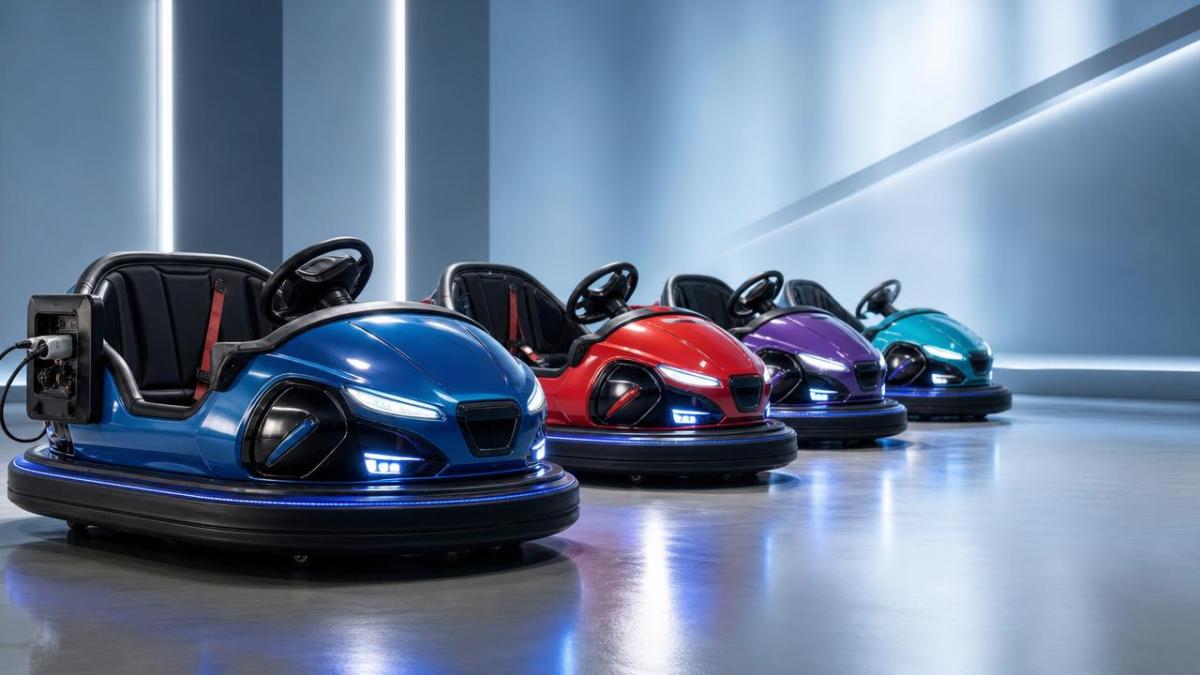
At first glance, bumper cars wholesale looks simple. Ask for a catalog, compare unit prices, and place an order.
In practice, the buying decision is more technical. Safety compliance, power systems, arena conditions, and spare parts support can change the real cost fast.
That is why serious evaluation should move beyond marketing phrases. A lower quote means little if the car body cracks early, the battery pack underperforms, or documentation is incomplete.
A more reliable approach is to review bumper cars wholesale offers the way TSV reviews industrial equipment: by checking parameters, tolerances, traceability, and lifecycle risk.
For indoor amusement venues, family entertainment centers, and seasonal parks, this discipline matters because revenue depends on uptime, safe operation, and predictable maintenance cycles.
So the real question is not, “Which supplier is cheapest?” It is, “Which offer remains commercially sound after compliance, MOQ, freight, commissioning, and replacement parts are included?”
Which safety standards should be checked before placing a wholesale order?
This is usually the first serious filter. When reviewing bumper cars wholesale proposals, safety paperwork should be examined before color options or decorative features.
Common requirements vary by market, but several checkpoints appear again and again. Electrical safety, battery protection, fire resistance, structural integrity, and rider restraint design all deserve attention.
In many cases, buyers ask for CE-related documentation, test reports, material certifications, and operating manuals. For some destinations, local amusement ride regulations may also apply.
Need to pay attention here: certificates alone do not tell the full story. A document may exist, but the tested configuration may differ from the shipped model.
A practical check is to match the bill of materials against the test file. Battery brand, motor rating, charger specification, seat construction, and bumper material should align.
It also helps to request failure data. For example, what is the expected cycle life of the battery? How does the steering assembly perform after repeated impact loading?
This parameter-first mindset reflects the TSV principle that engineering truth is more useful than polished claims. If a supplier cannot explain test conditions clearly, that is already valuable information.
A quick safety review table for bumper cars wholesale
Before moving into MOQ or price negotiations, use a compact review sheet like the one below.
How should MOQ be judged when bumper cars wholesale quotes look attractive?
MOQ is often presented as a simple number, but it changes the entire purchasing equation. A low unit price can become expensive if the minimum order exceeds actual launch needs.
More commonly, MOQ in bumper cars wholesale depends on customization level, production schedule, and packaging method. Standard colors and standard decals usually support smaller runs.
Custom molds, branded lighting packages, or upgraded battery systems tend to push MOQ higher. Some suppliers will also tie MOQ to mixed container loading efficiency.
A useful way to judge MOQ is to separate operational need from supplier convenience. Ask how many units are required for commercial viability at the venue, not just how many units unlock a discount.
If the venue needs twelve cars for opening capacity, ordering twenty-four only to reduce the price per unit may create idle inventory, storage exposure, and spare battery aging.
There is also a timing angle. A higher MOQ may be reasonable if it secures a stable parts batch, synchronized delivery, and lower freight per unit.
In actual sourcing work, the better question is this: does the MOQ support faster payback, or does it simply make the quote look efficient on paper?
When comparing bumper cars wholesale suppliers, request three scenarios: sample quantity, launch quantity, and scale quantity. That gives a more realistic decision frame.
What really drives bumper cars wholesale cost besides the quoted unit price?
This is where many buying decisions go wrong. The visible quote is only one layer of the total landed and operating cost.
Battery chemistry is a major factor. Lead-acid systems can lower upfront cost, while lithium configurations may improve charging efficiency, weight distribution, and replacement intervals.
Motor quality matters too. A lower-grade motor may pass initial inspection but fail earlier under repetitive stop-and-go loads, especially in high-traffic indoor operations.
Body shell materials, bumper ring density, seat construction, LED assemblies, and control boards all influence long-term service cost. Cosmetic parts are often underestimated until replacement requests begin.
Freight can be another swing factor. Packed dimensions, stackability, battery shipping classification, and destination port handling charges can materially change the final number.
Then there is after-sales structure. Some bumper cars wholesale suppliers include starter spare kits, remote diagnostics support, and wiring diagrams. Others charge separately for each item.
A disciplined cost review should include at least these layers:
- EXW or FOB unit price
- Tooling or customization charges
- Packaging and freight
- Import duties and local compliance costs
- Commissioning, training, and spare parts
- Battery replacement cycle and downtime exposure
That approach aligns with TSV’s broader view of procurement. Precision in commercial comparison is not about longer spec sheets. It is about isolating the variables that actually change performance and cash flow.
How can one compare suppliers without getting lost in polished claims?
A useful comparison starts with evidence, not presentation quality. Some bumper cars wholesale suppliers have strong visuals but weak traceability.
Ask for production photos only after asking for the technical file. The order matters because it reveals whether the supplier is organized around engineering or promotion.
Request a structured package that includes material list, test records, spare parts schedule, warranty terms, and expected wear components. This usually makes gaps visible quickly.
It is also worth checking response precision. If questions about battery cycle count or motor brand receive vague answers, future service communication may be equally vague.
Another strong signal is consistency across documents. If the catalog lists one voltage, the quotation lists another, and the manual lists a third, the sourcing risk rises.
The table below helps turn these soft impressions into a more usable screening tool.
What mistakes are most common in bumper cars wholesale sourcing?
One frequent mistake is treating all bumper cars as equivalent amusement products. They are not. Small specification changes can alter maintenance burden and rider experience significantly.
Another mistake is ignoring the operating environment. A model that works well on one floor surface may perform poorly on another. Arena size and traffic density also matter.
Some buyers focus on one-time purchase price and overlook spare parts lead time. That becomes expensive when a control board fails during peak season.
There is also a documentation trap. If compliance files are incomplete, customs clearance, insurance review, or local inspection may slow the project even when production is finished.
A final issue is weak acceptance criteria. Without a clear incoming inspection checklist, it is hard to verify whether the delivered bumper cars wholesale order matches the approved sample.
- Define the approved configuration before mass production starts.
- List critical parts that cannot be substituted without notice.
- Confirm battery, charger, and controller specifications in writing.
- Prepare acceptance checks for finish quality, function, and safety items.
Simple steps like these reduce ambiguity. More importantly, they create a decision trail based on evidence rather than assumptions.
So how should the next buying decision be structured?
A sound bumper cars wholesale decision usually starts with a narrow requirement sheet. Define rider capacity, target usage intensity, power preference, compliance destination, and expected spare strategy.
Then compare offers in layers. Start with safety and technical alignment. Move next to MOQ logic. Only after that should full landed cost and service terms be weighed.
This sequence prevents a common problem: choosing a low quote first and discovering technical mismatches later. In actual procurement, reversing that order often saves time and avoids costly rework.
The broader lesson is consistent with TSV’s method. Strip away vague claims, hold on to measurable facts, and let documented parameters drive the conversation.
For the next step, build a comparison sheet that covers compliance files, MOQ scenarios, landed cost, spare parts coverage, and acceptance criteria. That single document makes bumper cars wholesale evaluation faster, cleaner, and easier to defend internally.
When the decision is framed this way, the goal is no longer just to buy bumper cars. It is to secure reliable operation, predictable cost, and fewer surprises after delivery.
Search News
Hot Articles
- Carbon Fiber StructuresHow to Specify Aerospace Carbon Fiber Assemblies for Lightweight, Load-Bearing PartsJul 11, 2026
- Machine VisionXiaomi, Alibaba DAMO Academy Drive Open-Source Robotics Model Ecosystem, Lowering Algorithm Development Barriers for Overseas SMEs Adopting Chinese Robotics SolutionsMar 30, 2026
- Cobots & ArmsShanxi 'AI+' Conference Showcases Embodied Intelligence with Multinational Buyer Engagement: Key Industry ImplicationsMar 30, 2026
Popular Tags
Recommended News
 Jul 11, 2026How to Specify Aerospace Carbon Fiber Assemblies for Lightweight, Load-Bearing PartsAerospace carbon fiber assemblies: learn how to specify laminate design, load data, joining methods, and inspection controls for lighter, reliable load-bearing aerospace parts.Elena Rostova (UAV Systems Researcher)
 Mar 30, 2026Xiaomi, Alibaba DAMO Academy Drive Open-Source Robotics Model Ecosystem, Lowering Algorithm Development Barriers for Overseas SMEs Adopting Chinese Robotics SolutionsXiaomi & Alibaba DAMO Academy's open-source robotics models lower algorithm barriers for global SMEs. Boost efficiency in manufacturing, logistics & smart retail with ROS 2 compatible solutions.TSV Data Lab
 Mar 30, 2026Shanxi 'AI+' Conference Showcases Embodied Intelligence with Multinational Buyer Engagement: Key Industry ImplicationsShanxi 'AI+' Conference highlights embodied intelligence with Tesla, Ubtech & Jiantao showcasing multimodal robotics. 40+ global buyers validated tech on-site, creating new B2B channels for industrial automation & AI solutions.Chen Wei (Automation Lead Engineer)
 Mar 30, 2026Zhongguancun Unveils 6G Integrated Sensing-Computing-Intelligence Platform to Empower Embodied Robots for Global Industrial ApplicationsZhongguancun's new 6G platform revolutionizes industrial robotics with <10ms latency, empowering global automotive, logistics & port automation. Discover how this tech boosts China's smart manufacturing exports.TSV Data Lab
 Mar 30, 2026Mech-Mind Tianjin Embodied Intelligence R&D and Production Base Goes Live, Cutting Delivery Time by 20%–30% for Global Customized AMR+Vision SolutionsMech-Mind's Tianjin AMR+Vision production base cuts delivery time by 20%-30% for欧美 & Latin American markets. Discover how this PLd-certified facility accelerates customized robotics solutions for smart manufacturing and logistics.Chen Wei (Automation Lead Engineer)
 Mar 30, 2026Boao Forum Reveals 'Co-evolution of Big and Small Brains' Trend in Humanoid Robots, China's Embodied Intelligence Accelerates Adaptation to Overseas Manufacturing Service ScenariosDiscover how China's humanoid robots, featuring 'Co-evolution of Big and Small Brains,' are revolutionizing global manufacturing. Learn about Embodied Tian Gong 3.0's ISO compliance and overseas deployment at Boao Forum 2026.Chen Wei (Automation Lead Engineer)
 Mar 30, 2026China Railway Industrial Secures Patent for Embodied Robotics in Material Handling, Boosting High-Precision Delivery Capabilities for Overseas Infrastructure and Manufacturing ProjectsChina Railway Industrial's new patent for embodied robotics in material handling boosts high-precision delivery for global infrastructure & manufacturing. Discover how this innovation enhances logistics accuracy in automotive, rail transit & EPC projects.Chen Wei (Automation Lead Engineer)
 Oct 25, 2026Hesai Leads Global ADAS Main Lidar Shipments in Yole’s 2026 ReportHesai led global ADAS main lidar shipments with a 43% share in 2025, according to Yole’s 2026 report. Explore what this ranking reveals about its automotive market position.TSV Data Lab
 Oct 25, 2026Choosing an Aerospace Materials Manufacturer: Quality and Traceability ChecksChoosing an aerospace materials manufacturer? Learn how to verify certifications, test reports, and lot traceability to qualify suppliers confidently and reduce costly sourcing risks.Dr. Marcus Vance
 Oct 24, 2026Guotai Haitong: Global Entry-Level 3D Printer Shipments Rose 39% in Q1 2026Entry-level 3D printer shipments rose 39% in Q1 2026, Guotai Haitong reports. Explore how AI, multicolor printing and print farms are shaping market growth.Dr. Marcus Vance
 Oct 24, 2026Choosing an Industrial Vision Inspection Supplier: Acceptance Tests That MatterChoose an industrial vision inspection supplier with confidence. Discover acceptance tests for defect detection, false rejects, production speed, and reliable part rejection before you buy.TSV Data Lab
 Oct 23, 2026US Navy Raises Gecko Robotics Contract Ceiling to $300M for Robotic Fleet MaintenanceUS Navy raises Gecko Robotics’ contract ceiling to $300M for Pacific Fleet robotic inspections. Explore potential opportunities for maintenance suppliers and key procurement considerations.Chen Wei (Automation Lead Engineer)
 Oct 23, 2026Choosing Industrial Sensing Systems for Global Plants: Protocol CompatibilityCompare industrial sensing systems international buyers can trust. Explore protocol compatibility, reduce integration risks, and select proven configurations for reliable global plant deployments.TSV Data Lab
 Oct 22, 2026KUKA Showcases Physical AI and iiQKA.AI Vision at NVIDIA GTC BerlinExplore KUKA’s Physical AI showcase at NVIDIA GTC Berlin and discover how iiQKA.AI Vision aims to simplify robotic vision integration and improve 2D and 3D scene recognition.TSV Data Lab
 Oct 22, 2026Robotic Machining of Advanced Composites: What Tolerances Are Achievable?Explore advanced materials machining robotics: discover what drives achievable composite tolerances and how to validate accuracy before investing in your next machining system.Dr. Marcus Vance
 Oct 21, 2026China’s Industrial Robot Exports Near RMB 10 Billion in First Nine Months of 2026China’s industrial robot exports neared RMB 10 billion in January–September 2026, with value rising faster than volume. Explore the data and what it could mean for suppliers.Chen Wei (Automation Lead Engineer)
 Oct 21, 2026Low-Latency Industrial Data Processing: Pricing and Key Cost DriversExplore industrial data latency price drivers, from edge hardware to integration and support. Learn how to compare quotes, verify performance, and avoid unnecessary costs.TSV Data Lab
 Oct 20, 2026KUKA Launches iiQKA.AI Vision to Simplify Industrial Image ProcessingKUKA iiQKA.AI Vision simplifies industrial image processing with controller-based 2D and 3D vision. Explore drag-and-drop setup for vision-guided automation.TSV Data Lab
 Oct 20, 2026Smart Industrial Edge Devices: Key Criteria for Legacy PLC IntegrationChoose smart industrial edge devices for legacy PLC integration. Discover key criteria for compatibility, data quality, security, and reliable collection without disrupting control.TSV Data Lab
 Oct 19, 2026Choosing a Radar Sensor by Application: Range, Resolution, and Field of ViewSimplify radar sensor application based product selection. Compare range, resolution, and field of view to avoid blind spots and choose with confidence. Explore the guide.TSV Data Lab
 Oct 18, 2026Comparing Material Options for Procurement: Specs, Costs, and Supply RisksExplore procurement oriented technical content on material options, specs, costs, and supply risks. Compare alternatives to cut hidden expenses and make confident sourcing decisions.Dr. Marcus Vance
 Oct 17, 20265-Axis CNC Positioning Accuracy: How to Interpret ISO 230-2 Test ResultsAssess 5 axis CNC machining positioning accuracy with ISO 230-2. Learn to interpret repeatability, reversal error, and test conditions to compare suppliers and make confident acceptance decisions.Dr. Marcus Vance
 Oct 16, 2026Choosing a Rugged Edge AI Box Supplier: Thermal Tests and Lifecycle SupportChoose a rugged edge AI box supplier with proven thermal performance and reliable lifecycle support. Discover the tests and commitments to verify before you buy.TSV Data Lab
 Oct 15, 2026R&D Cost Reduction Services: How to Evaluate Fees, Savings, and ROIEvaluate R&D cost reduction services with confidence. Compare fees, verify savings, and calculate ROI without compromising performance. Discover how to choose a provider that delivers real value.Chen Wei (Automation Lead Engineer)























