
Robotic gripper manufacturer options hinge on part variation
Publication Date
author
Choosing the right robotic gripper manufacturer depends less on brand claims and more on how your parts actually vary in shape, surface, fragility, and tolerance. For engineers, operators, buyers, and decision-makers evaluating automation upgrades, this guide explains how part variation affects gripper selection, system reliability, and total cost—while connecting the choice to broader cnc automation systems and custom robotic end effectors planning.
In practical automation projects, the gripper is often treated as a small subassembly compared with the robot arm, vision system, or CNC cell. Yet the end effector is where production assumptions meet physical reality. If one production lot includes flat aluminum blanks, another includes oily cast parts, and a third includes thin-wall machined housings with ±0.05 mm tolerance sensitivity, the wrong gripper specification can cause missed picks, surface damage, scrap, and unplanned downtime.
For B2B buyers, this means robotic gripper manufacturer selection should begin with part variation mapping, not brochure comparison. A credible supplier should be able to discuss gripping force windows, jaw compliance, cycle rate, finger material, contamination tolerance, and integration with PLC, robot controller, and safety logic. That is especially important in data-driven manufacturing environments where repeatability, traceability, and qualification speed matter more than marketing language.
Why part variation is the first filter when comparing robotic gripper manufacturers
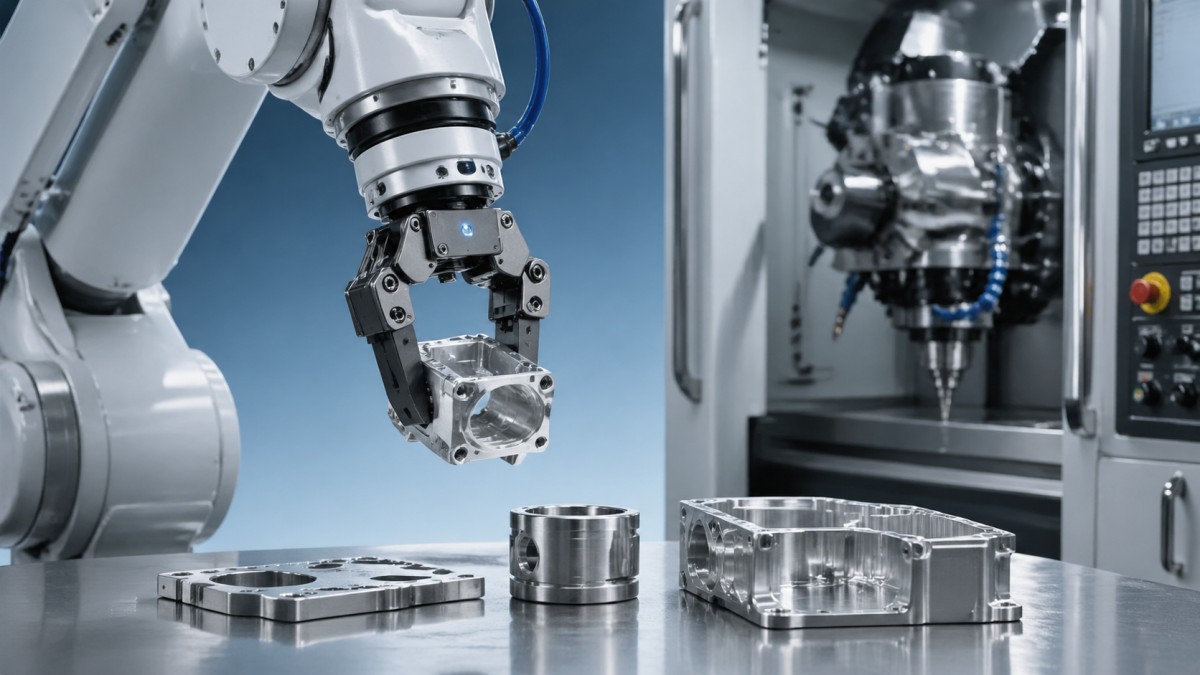
Part variation is not only about size. In most automation lines, variation appears across at least 6 dimensions: geometry, weight, surface condition, material stiffness, center of gravity, and allowable contact pressure. A gripper that performs well on a clean cylindrical part at 20 picks per minute may fail on porous molded parts, polished metal surfaces, or mixed-SKU production where dimensions drift by 1–3 mm from one batch to the next.
This is why robotic gripper manufacturer discussions should start with a part matrix. Operators and process engineers should document minimum and maximum dimensions, weight range, friction condition, temperature exposure, required orientation, and defect sensitivity. Even a basic part family review across 10–20 SKUs can reveal whether the application needs vacuum, two-jaw parallel, three-jaw centric, magnetic, soft robotic, or custom hybrid gripping.
For procurement teams, the hidden risk is assuming one gripper design can absorb all variation without trade-offs. In reality, wider variation often increases the need for compliance features, sensing, changeover hardware, or modular fingers. That affects not only purchase price, but also installation time, spare parts strategy, and the long-term economics of cnc automation systems.
A manufacturer worth shortlisting should respond with technical questions instead of generic claims. They should ask about part presentation consistency, line takt time, failure mode history, and whether the process needs 95%, 98%, or 99.5% pick reliability. Those thresholds matter because an extra 1% failure rate in a high-volume cell can translate into hundreds of interruptions per week.
Common variation factors that change gripper design
- Dimensional spread: for example, parts ranging from 45 mm to 52 mm may exceed the stable range of a fixed jaw setup.
- Surface condition: dry, oily, dusty, shot-blasted, or polished surfaces each affect friction and sealing performance differently.
- Fragility threshold: thin-wall parts, finished surfaces, and coated components may require lower contact pressure or soft-touch fingers.
- Orientation tolerance: if parts arrive with ±5° angular inconsistency, jaw geometry and vision compensation become more important.
- Environmental drift: coolant mist, 10–40°C temperature swings, and chip contamination can reduce vacuum or sensor reliability.
What this means for supplier screening
If your process includes high part variation, the better robotic gripper manufacturer is often not the one with the broadest catalog, but the one with stronger application engineering. In many factories, a 2-week evaluation with sample parts and failure testing can prevent 3–6 months of commissioning rework later. That is a far better outcome than buying a low-cost standard gripper that cannot sustain real-world variation.
Matching gripper type to shape, surface, tolerance, and handling risk
Different gripper technologies solve different variation problems. A vacuum gripper may work well for flat, sealed surfaces, but it becomes unreliable on porous textures, perforated parts, or heavily contaminated surfaces. A mechanical parallel gripper offers controlled clamping and stronger retention, but it can mark delicate parts if finger design and force regulation are not properly tuned. Magnetic gripping can simplify ferrous part transfer, yet it is unsuitable for non-ferrous alloys and may create release-control issues in fast cycles.
The best robotic gripper manufacturer should therefore be evaluated based on application fit, not product category alone. For example, a CNC tending cell handling machined steel billets from 2 kg to 8 kg may prioritize rigid jaw gripping, contamination resistance, and repeatable centering. By contrast, an electronics or medical device assembly line may prioritize low-force handling, anti-static compatibility, and sub-millimeter positional consistency.
In mixed production environments, custom robotic end effectors often provide better lifecycle value than forcing a standard gripper across incompatible parts. This does not always mean a fully bespoke design. In many cases, a modular platform with interchangeable fingers, quick-change couplings, and sensor feedback can cover 3–5 part families while keeping changeover below 10 minutes.
The table below summarizes how part conditions typically align with gripper options. These are decision guidelines rather than absolute rules, but they help narrow manufacturer discussions and reduce early-stage selection errors.
A recurring pattern is that higher part variation usually shifts selection toward adaptive gripping, better sensing, or custom fingers. That raises upfront engineering effort, but it often lowers scrap risk and operator intervention over the first 12–24 months of operation. For buyers comparing quotes, this is where total cost becomes more meaningful than unit price.
Selection checkpoints before final approval
- Test at least 3 representative parts: nominal, minimum tolerance, and maximum tolerance.
- Simulate real contamination conditions such as coolant, dust, or surface oil.
- Measure grip success across 200–500 cycles, not just a short bench demo.
- Confirm whether the gripper maintains performance at actual robot acceleration and deceleration settings.
How to evaluate manufacturer capability beyond the catalog
Once the gripper type is narrowed down, the next question is manufacturer capability. In hard-tech sourcing, the difference between a trading supplier and a technically competent robotic gripper manufacturer becomes visible in documentation quality, testing discipline, and engineering response speed. Buyers should ask for payload derating logic, finger-mount tolerances, pneumatic or electric actuation limits, maintenance intervals, and recommended spare parts lists.
For engineering teams, one of the strongest indicators is whether the supplier can translate application risk into measurable validation steps. A capable manufacturer should define test conditions such as cycle count, grip-force range, part-slip threshold, sensor response time, and acceptable failure rate. For example, if the target is 30 cycles per minute over a 16-hour shift, the evaluation should reflect that duty profile rather than an idealized lab setup.
Integration support also matters. In cnc automation systems, the gripper is rarely standalone. It interacts with robot flange standards, tool changers, compressed air quality, vacuum generators, digital I/O, safety interlocks, and sometimes machine vision. A supplier that can only ship hardware but cannot support integration logic may increase commissioning time by 2–4 weeks.
The table below gives a practical scorecard for comparing suppliers during RFQ and technical review. It helps procurement and decision-makers align cost pressure with engineering realities.
A useful benchmark is to separate supplier capability into 4 layers: hardware performance, application engineering, integration support, and after-sales responsiveness. A supplier that scores well in only one layer may still create cost overruns later. Procurement teams should therefore weight the final decision across technical fit, qualification time, and service continuity rather than comparing component price alone.
Signals of a stronger supplier review process
Look for detailed drawing review, sample-part requests, contamination questions, and realistic statements about limitations. When a robotic gripper manufacturer openly defines operating ranges such as 0.4–0.7 MPa air pressure, jaw repeatability bands, or recommended service checks every 1 million cycles, that is usually more valuable than broad claims about universal suitability.
Cost, reliability, and implementation trade-offs in cnc automation systems
In automation budgeting, grippers are often evaluated as low-cost peripherals. That view can be expensive. A gripper that is 15% cheaper at purchase may create far higher downstream costs if it increases downtime, part damage, or operator intervention. In CNC tending, even a 20-second recovery event repeated 25 times per shift removes meaningful machine utilization and disrupts labor planning.
Reliability should be measured at the cell level. If a robot, fixture, vision system, and CNC machine are all stable but the gripper struggles with edge-case parts, the entire automation investment underperforms. This is especially relevant when part batches change weekly or when upstream machining variation affects how parts sit in trays, conveyors, or pallets. The gripper must tolerate not just nominal geometry, but the real variation produced by the whole manufacturing chain.
Implementation planning should include 3 stages: application verification, commissioning, and stabilization. A typical standard gripper project may move from sample review to install in 2–6 weeks, while a custom robotic end effector can take 4–10 weeks depending on machining, testing, and control integration. Faster is not always better if the part family is complex and the cost of failure is high.
Maintenance strategy also deserves early attention. Jaw pads, seals, springs, vacuum cups, and sensors are wear items. If the line runs 2 shifts per day and 5–6 days per week, preventive checks may need to occur every 250,000 to 1,000,000 cycles depending on load, contamination, and speed. Buyers should confirm whether spare kits are stocked locally, regionally, or only built to order.
Practical implementation checklist
- Map all part families, including known variation bands and reject patterns from upstream production.
- Define success criteria before purchase: uptime target, acceptable mark threshold, recovery time, and cycle-time limit.
- Request a maintenance bill of materials covering wear parts for the first 6–12 months.
- Validate control integration, including sensors, air management, and error handling sequences.
- Plan operator training for manual recovery, finger changeover, and inspection of wear points.
Where total cost usually changes
The biggest lifecycle cost swings usually come from 5 areas: scrap, downtime, changeover time, maintenance labor, and delayed qualification. When comparing robotic gripper manufacturer options, companies should ask which design decisions lower those costs. In many cases, adding sensing, compliant fingers, or quick-change tooling improves payback even if the initial quote is higher.
FAQ: common buying questions about robotic gripper manufacturers
Many searchers evaluating end-of-arm tooling are not only looking for a component. They are trying to avoid integration risk, slow qualification, and expensive redesign. The questions below reflect common issues raised by engineering teams, operators, procurement staff, and plant leadership during automation planning.
How do I know if I need a custom robotic end effector instead of a standard gripper?
A custom approach is usually worth considering when you have 3 or more part families with different grip points, fragile surfaces, unstable presentation, or frequent SKU changes. It is also advisable when standard grippers would require repeated manual adjustments, multiple tooling swaps per shift, or tight handling of parts with finish-sensitive zones. Custom does not always mean fully unique; it often means a modular platform engineered around your variation profile.
What technical data should I send to a robotic gripper manufacturer?
At minimum, provide part drawings or 3D files, weight range, material type, surface condition, allowable contact areas, takt time, ambient conditions, and robot model. If possible, include photos of real part presentation, defect history, and the maximum expected dimensional spread. Sending 5–10 representative samples often improves recommendation quality more than sending only nominal CAD.
What is a realistic lead time for evaluation and delivery?
For a standard product with limited customization, application review and delivery may fit within 2–6 weeks. For custom fingers, integrated sensing, or full custom robotic end effectors, 4–10 weeks is a more realistic planning window. If approval requires on-site testing, robot programming, and FAT support, total project time can extend further depending on internal customer availability.
Which metrics should procurement prioritize besides price?
Focus on repeatability, supported part variation range, maintenance interval, integration support, spare availability, and demonstrated testing method. Price matters, but a lower-cost gripper with weak documentation or no validation protocol often creates larger hidden costs across commissioning and operations. For high-value cells, even one avoided redesign can outweigh the initial price difference.
Selecting the right robotic gripper manufacturer comes down to engineering fit: how well the solution handles your actual part variation, how clearly the supplier defines operating limits, and how effectively the gripper integrates into your broader cnc automation systems. When shape, surface, fragility, and tolerance are analyzed early, buyers make better decisions, operators face fewer interruptions, and leadership gains a more predictable automation return.
If your team is comparing standard grippers, modular tooling, or custom robotic end effectors, a data-led review will shorten qualification and reduce trial-and-error cost. To assess application fit, discuss your part matrix, cycle targets, and integration requirements with a technical partner that prioritizes measurable performance over generic claims. Contact us to get a tailored evaluation framework, review your gripper options, and explore more automation solutions aligned with real production conditions.
Search News
Hot Articles
- Carbon Fiber StructuresHow to Specify Aerospace Carbon Fiber Assemblies for Lightweight, Load-Bearing PartsJul 11, 2026
- Machine VisionXiaomi, Alibaba DAMO Academy Drive Open-Source Robotics Model Ecosystem, Lowering Algorithm Development Barriers for Overseas SMEs Adopting Chinese Robotics SolutionsMar 30, 2026
- Cobots & ArmsShanxi 'AI+' Conference Showcases Embodied Intelligence with Multinational Buyer Engagement: Key Industry ImplicationsMar 30, 2026
Popular Tags
Recommended News
 Jul 11, 2026How to Specify Aerospace Carbon Fiber Assemblies for Lightweight, Load-Bearing PartsAerospace carbon fiber assemblies: learn how to specify laminate design, load data, joining methods, and inspection controls for lighter, reliable load-bearing aerospace parts.Elena Rostova (UAV Systems Researcher)
 Mar 30, 2026Xiaomi, Alibaba DAMO Academy Drive Open-Source Robotics Model Ecosystem, Lowering Algorithm Development Barriers for Overseas SMEs Adopting Chinese Robotics SolutionsXiaomi & Alibaba DAMO Academy's open-source robotics models lower algorithm barriers for global SMEs. Boost efficiency in manufacturing, logistics & smart retail with ROS 2 compatible solutions.TSV Data Lab
 Mar 30, 2026Shanxi 'AI+' Conference Showcases Embodied Intelligence with Multinational Buyer Engagement: Key Industry ImplicationsShanxi 'AI+' Conference highlights embodied intelligence with Tesla, Ubtech & Jiantao showcasing multimodal robotics. 40+ global buyers validated tech on-site, creating new B2B channels for industrial automation & AI solutions.Chen Wei (Automation Lead Engineer)
 Mar 30, 2026Zhongguancun Unveils 6G Integrated Sensing-Computing-Intelligence Platform to Empower Embodied Robots for Global Industrial ApplicationsZhongguancun's new 6G platform revolutionizes industrial robotics with <10ms latency, empowering global automotive, logistics & port automation. Discover how this tech boosts China's smart manufacturing exports.TSV Data Lab
 Mar 30, 2026Mech-Mind Tianjin Embodied Intelligence R&D and Production Base Goes Live, Cutting Delivery Time by 20%–30% for Global Customized AMR+Vision SolutionsMech-Mind's Tianjin AMR+Vision production base cuts delivery time by 20%-30% for欧美 & Latin American markets. Discover how this PLd-certified facility accelerates customized robotics solutions for smart manufacturing and logistics.Chen Wei (Automation Lead Engineer)
 Mar 30, 2026Boao Forum Reveals 'Co-evolution of Big and Small Brains' Trend in Humanoid Robots, China's Embodied Intelligence Accelerates Adaptation to Overseas Manufacturing Service ScenariosDiscover how China's humanoid robots, featuring 'Co-evolution of Big and Small Brains,' are revolutionizing global manufacturing. Learn about Embodied Tian Gong 3.0's ISO compliance and overseas deployment at Boao Forum 2026.Chen Wei (Automation Lead Engineer)
 Mar 30, 2026China Railway Industrial Secures Patent for Embodied Robotics in Material Handling, Boosting High-Precision Delivery Capabilities for Overseas Infrastructure and Manufacturing ProjectsChina Railway Industrial's new patent for embodied robotics in material handling boosts high-precision delivery for global infrastructure & manufacturing. Discover how this innovation enhances logistics accuracy in automotive, rail transit & EPC projects.Chen Wei (Automation Lead Engineer)
 Oct 25, 2026Hesai Leads Global ADAS Main Lidar Shipments in Yole’s 2026 ReportHesai led global ADAS main lidar shipments with a 43% share in 2025, according to Yole’s 2026 report. Explore what this ranking reveals about its automotive market position.TSV Data Lab
 Oct 25, 2026Choosing an Aerospace Materials Manufacturer: Quality and Traceability ChecksChoosing an aerospace materials manufacturer? Learn how to verify certifications, test reports, and lot traceability to qualify suppliers confidently and reduce costly sourcing risks.Dr. Marcus Vance
 Oct 24, 2026Guotai Haitong: Global Entry-Level 3D Printer Shipments Rose 39% in Q1 2026Entry-level 3D printer shipments rose 39% in Q1 2026, Guotai Haitong reports. Explore how AI, multicolor printing and print farms are shaping market growth.Dr. Marcus Vance
 Oct 24, 2026Choosing an Industrial Vision Inspection Supplier: Acceptance Tests That MatterChoose an industrial vision inspection supplier with confidence. Discover acceptance tests for defect detection, false rejects, production speed, and reliable part rejection before you buy.TSV Data Lab
 Oct 23, 2026US Navy Raises Gecko Robotics Contract Ceiling to $300M for Robotic Fleet MaintenanceUS Navy raises Gecko Robotics’ contract ceiling to $300M for Pacific Fleet robotic inspections. Explore potential opportunities for maintenance suppliers and key procurement considerations.Chen Wei (Automation Lead Engineer)
 Oct 23, 2026Choosing Industrial Sensing Systems for Global Plants: Protocol CompatibilityCompare industrial sensing systems international buyers can trust. Explore protocol compatibility, reduce integration risks, and select proven configurations for reliable global plant deployments.TSV Data Lab
 Oct 22, 2026KUKA Showcases Physical AI and iiQKA.AI Vision at NVIDIA GTC BerlinExplore KUKA’s Physical AI showcase at NVIDIA GTC Berlin and discover how iiQKA.AI Vision aims to simplify robotic vision integration and improve 2D and 3D scene recognition.TSV Data Lab
 Oct 22, 2026Robotic Machining of Advanced Composites: What Tolerances Are Achievable?Explore advanced materials machining robotics: discover what drives achievable composite tolerances and how to validate accuracy before investing in your next machining system.Dr. Marcus Vance
 Oct 21, 2026China’s Industrial Robot Exports Near RMB 10 Billion in First Nine Months of 2026China’s industrial robot exports neared RMB 10 billion in January–September 2026, with value rising faster than volume. Explore the data and what it could mean for suppliers.Chen Wei (Automation Lead Engineer)
 Oct 21, 2026Low-Latency Industrial Data Processing: Pricing and Key Cost DriversExplore industrial data latency price drivers, from edge hardware to integration and support. Learn how to compare quotes, verify performance, and avoid unnecessary costs.TSV Data Lab
 Oct 20, 2026KUKA Launches iiQKA.AI Vision to Simplify Industrial Image ProcessingKUKA iiQKA.AI Vision simplifies industrial image processing with controller-based 2D and 3D vision. Explore drag-and-drop setup for vision-guided automation.TSV Data Lab
 Oct 20, 2026Smart Industrial Edge Devices: Key Criteria for Legacy PLC IntegrationChoose smart industrial edge devices for legacy PLC integration. Discover key criteria for compatibility, data quality, security, and reliable collection without disrupting control.TSV Data Lab
 Oct 19, 2026Choosing a Radar Sensor by Application: Range, Resolution, and Field of ViewSimplify radar sensor application based product selection. Compare range, resolution, and field of view to avoid blind spots and choose with confidence. Explore the guide.TSV Data Lab
 Oct 18, 2026Comparing Material Options for Procurement: Specs, Costs, and Supply RisksExplore procurement oriented technical content on material options, specs, costs, and supply risks. Compare alternatives to cut hidden expenses and make confident sourcing decisions.Dr. Marcus Vance
 Oct 17, 20265-Axis CNC Positioning Accuracy: How to Interpret ISO 230-2 Test ResultsAssess 5 axis CNC machining positioning accuracy with ISO 230-2. Learn to interpret repeatability, reversal error, and test conditions to compare suppliers and make confident acceptance decisions.Dr. Marcus Vance
 Oct 16, 2026Choosing a Rugged Edge AI Box Supplier: Thermal Tests and Lifecycle SupportChoose a rugged edge AI box supplier with proven thermal performance and reliable lifecycle support. Discover the tests and commitments to verify before you buy.TSV Data Lab
 Oct 15, 2026R&D Cost Reduction Services: How to Evaluate Fees, Savings, and ROIEvaluate R&D cost reduction services with confidence. Compare fees, verify savings, and calculate ROI without compromising performance. Discover how to choose a provider that delivers real value.Chen Wei (Automation Lead Engineer)























