Warehouse Sorting Robot Wholesale: 7 Questions to Ask Before Ordering
Publication Date
author
For procurement teams evaluating warehouse sorting robot wholesale options, the biggest risk is not price—it is unclear specifications, inflated performance claims, and costly integration mistakes. Before placing a bulk order, asking the right technical and commercial questions can reduce supplier qualification time, protect ROI, and ensure the robots match your throughput, layout, and long-term automation goals.
Why warehouse sorting robot wholesale decisions fail without a spec-first approach
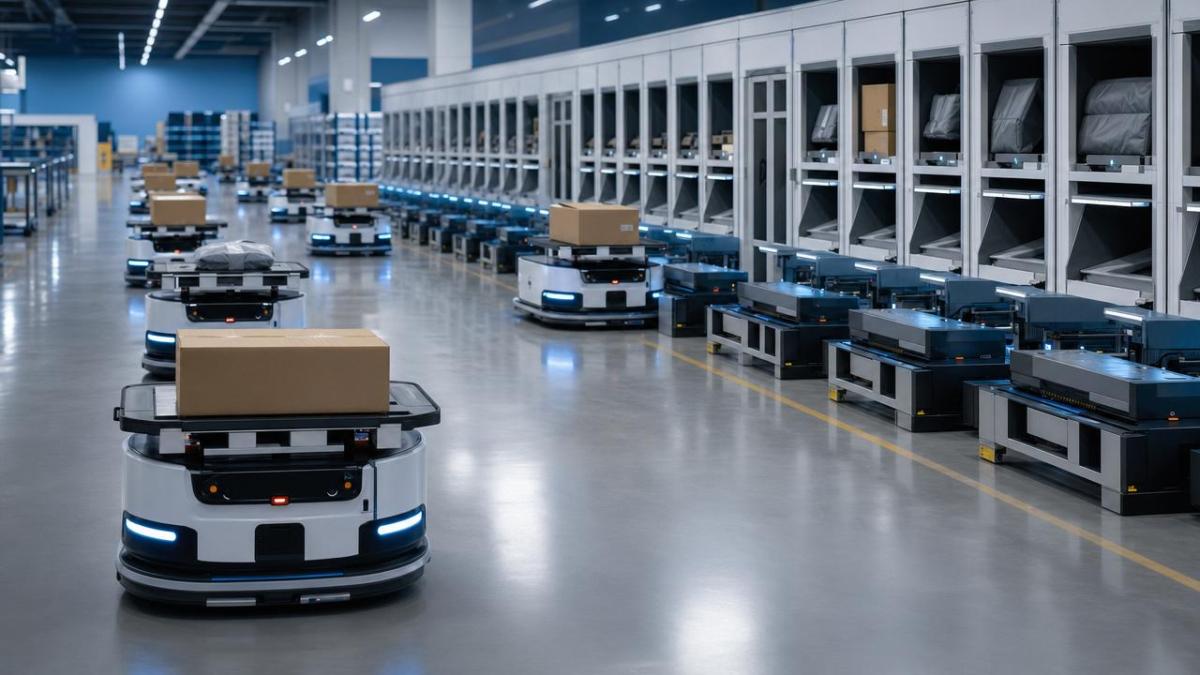
In warehouse sorting robot wholesale projects, procurement errors usually start when teams compare quotations before they align operating conditions. A robot that performs well in a vendor demo may underperform in a live site with mixed carton sizes, reflective floors, Wi-Fi congestion, or multi-shift duty cycles. For buyers, the first task is not to ask for a discount. It is to define the exact workload, exception rate, and integration boundary.
This is where a data-driven evaluation model matters. TechStat Vanguard focuses on engineering truth rather than broad marketing language. In automation sourcing, parameters such as sorting accuracy, route recovery behavior, battery cycle planning, and communication latency are far more useful than generic claims about intelligence or efficiency. Procurement teams need measurable ranges, test conditions, and acceptance criteria that can be verified before shipment and again during site commissioning.
Most bulk purchases involve 3 linked risks: wrong capacity sizing, weak systems integration, and incomplete lifecycle cost visibility. If any one of these is missed, the apparent unit price advantage disappears quickly. A low-price robot fleet may require additional charging stations, more manual exception handling, or expensive middleware changes within 2–4 weeks of deployment.
Before contacting suppliers, buyers should document at least 5 baseline conditions: order volume by hour, SKU diversity, package dimensions, floor environment, and host software architecture. Without these inputs, warehouse sorting robot wholesale comparisons become subjective, and supplier proposals become difficult to benchmark on an equal basis.
- Peak sorting demand: define average and peak parcels per hour across at least 2 operating windows.
- Navigation environment: confirm aisle width, turning radius, slope, floor flatness, and obstacle frequency.
- System interface scope: clarify WMS, WCS, ERP, barcode, and scanner handshake requirements.
- Labor model: identify whether robots replace, assist, or rebalance manual sorting stations.
- Expansion plan: estimate whether the fleet needs 20%, 50%, or higher scalability within 12–24 months.
The 7 questions to ask before ordering warehouse sorting robots in bulk
The most effective warehouse sorting robot wholesale strategy is question-led procurement. Each question should force the supplier to provide testable data, not polished adjectives. The seven questions below help buyers filter out ambiguous offers and reduce qualification cycles.
1. What throughput is achievable under my real parcel mix?
Ask for rated throughput under conditions that match your site. A supplier may publish units per hour based on standard cartons, limited destinations, and short travel distances. Your operation may include soft packs, uneven labels, oversize cartons, or a high percentage of exception orders. Require throughput by parcel type, destination count, and shift duration, preferably with a clearly defined test window such as 60 minutes or 8 hours.
2. What is the sorting accuracy and how is it measured?
Accuracy should be expressed with conditions, not as a standalone percentage. Buyers should ask how the robot handles damaged barcodes, duplicate labels, unreadable surfaces, and cross-lane congestion. Separate normal-case accuracy from exception-case handling. This distinction matters because a system with good nominal accuracy but poor recovery logic can create hidden labor costs every shift.
3. What navigation stack and sensor configuration are included?
For warehouse sorting robot wholesale orders, sensor architecture affects reliability, safety, and maintenance. Clarify whether the robot uses LiDAR, QR code guidance, vision, SLAM, or hybrid navigation. Ask for minimum readable marker conditions, obstacle detection range, and behavior under low-light or reflective surfaces. TSV’s engineering perspective is simple: navigation claims are only useful when paired with fault tolerance thresholds.
4. How will the robots integrate with WMS, WCS, and site controls?
Integration failures are among the most expensive surprises in automation procurement. Confirm interface protocol, API availability, message timing, alarm reporting, and fallback logic when the host system disconnects. Ask whether the supplier provides standard connectors or requires custom middleware. A bulk order should never proceed before interface ownership, testing milestones, and data mapping responsibilities are written into the project scope.
5. What are the battery, charging, and duty-cycle limits?
A robot fleet that needs unplanned charging every few hours may disrupt sorting rhythm. Ask for battery chemistry, runtime under rated payload, charging time, and expected cycle planning under 1-shift, 2-shift, and 3-shift operations. Buyers should also confirm whether opportunity charging is supported and whether spare batteries or charging docks are included in the wholesale quotation.
6. What maintenance resources and spare parts are required?
The right question is not whether the robots are reliable. It is what the maintenance burden looks like every month, every quarter, and every 12 months. Ask for wear components, recommended preventive maintenance intervals, remote diagnostics capability, and spare parts lead times. If a critical wheel motor or sensor assembly requires 4–6 weeks for replacement, the purchase risk is very different from a fleet supported by stocked local service parts.
7. What acceptance tests, warranties, and service levels are contractually defined?
In warehouse sorting robot wholesale agreements, vague warranty wording often leads to disputes. Buyers should define factory acceptance testing, site acceptance testing, uptime calculation methods, and response-time commitments. A useful contract will specify performance verification items, excluded conditions, training coverage, and software update responsibilities for at least the first 12 months.
The table below helps procurement teams convert these seven questions into a practical supplier review framework before requesting final quotations.
When suppliers answer with measurable data instead of broad claims, comparison becomes much easier. This is exactly the kind of technical filtering procurement teams need when sourcing warehouse sorting robot wholesale solutions across multiple vendors and regions.
How to compare technical specifications without getting lost in marketing language
Not every parameter in a product brochure has equal procurement value. Buyers should prioritize the specifications that influence throughput stability, integration effort, and serviceability. In most warehouse sorting robot wholesale reviews, 4 categories deserve the closest attention: mobility, sensing, control, and maintainability.
Mobility includes travel speed, acceleration behavior, turning precision, floor adaptability, and rated payload. Sensing includes barcode reading compatibility, obstacle detection logic, localization method, and environmental tolerance. Control includes fleet scheduling logic, communication architecture, and host-system interface stability. Maintainability includes modularity, battery replacement method, and spare-part accessibility.
Procurement teams should be especially careful with isolated maximum values. For example, maximum speed alone does not define site productivity. In dense sorting layouts, smooth deceleration, stop accuracy, and congestion recovery can matter more than peak motion speed. The same logic applies to battery capacity: the usable runtime under actual payload and route density matters more than a nominal lab figure.
A practical parameter review checklist
- Travel and payload: verify rated payload range, acceleration profile, docking accuracy, and behavior on floor joints or minor slopes.
- Sensing and reading: confirm barcode format support, scanner placement, and tolerance to damaged or low-contrast labels.
- Connectivity: review wireless dependency, edge processing capability, and system behavior during temporary communication loss.
- Maintenance: ask whether common replacement items can be changed on site within 30–60 minutes or require factory return.
The table below summarizes which specifications typically deserve the highest priority during warehouse sorting robot wholesale evaluation.
A clean parameter hierarchy also improves internal approval. Engineering can review integration and reliability. Operations can validate flow fit. Procurement can benchmark commercial terms. This cross-functional structure is one reason data-centered sourcing creates faster and more defensible decisions.
What costs should buyers calculate beyond robot unit price?
In warehouse sorting robot wholesale projects, unit cost is only one part of total ownership. Buyers should model at least 6 cost layers: robot hardware, charging infrastructure, software licensing, integration engineering, spare parts, and service support. If one supplier appears cheaper by 10% but requires custom middleware and additional site modifications, the landed project cost can quickly exceed the higher initial quote.
Implementation timing also affects cost. A project that takes 8–12 weeks from order confirmation to site commissioning may have lower disruption than one with fast shipment but poorly defined software preparation. Procurement teams should compare not only purchase price, but also the sequence of design freeze, interface test, factory acceptance, shipment, installation, and site acceptance.
Another hidden issue is fleet scaling. Some suppliers quote attractive pricing for an initial batch, then add disproportionately high costs for additional robots, extra licenses, or dispatching software expansion. Before signing, ask whether the same architecture can scale from a pilot of 10 units to 30 or 50 units without replacing the control layer.
Typical cost categories in a bulk order
- Core equipment cost, including onboard scanners, sensor pack, and charging interface.
- Software cost, including fleet management, dashboards, user seats, and update policy.
- Integration and commissioning cost, often influenced by WMS/WCS complexity and test depth.
- Support cost, including training, remote diagnostics, preventive maintenance, and spare-part kits.
- Facility adaptation cost, such as markers, docking points, protective barriers, or charging zones.
A disciplined cost model helps procurement avoid the common trap of comparing unlike-for-like quotations. It also strengthens negotiation, because buyers can challenge omissions in chargers, APIs, warranty scope, or commissioning resources before the contract is finalized.
Which compliance, testing, and implementation checks should be mandatory?
Even in a general industrial context, warehouse sorting robot wholesale procurement should include a minimum compliance and validation checklist. Buyers do not need inflated promises. They need documented safety logic, electrical compatibility, software version control, and repeatable acceptance procedures. Depending on the market, the project may also need alignment with local machinery, electrical, or workplace safety requirements.
Implementation should be broken into at least 4 stages: specification freeze, interface verification, factory acceptance, and site acceptance. Each stage should have defined inputs and exit criteria. For example, interface verification should confirm barcode data flow, destination mapping, alarm handling, and stop/restart logic before hardware arrives on site.
Site acceptance testing should reflect real production windows. A 2-hour stable demo is not the same as a full-shift verification under realistic parcel flow. Buyers should require tests for startup, peak congestion, battery rotation, exception lane handling, and controlled recovery after communication interruption.
Minimum implementation checklist
- Specification document with parcel size range, destination logic, floor conditions, and performance targets.
- Interface matrix covering WMS/WCS signals, API ownership, and error-handling pathways.
- Factory acceptance test list with 6 or more core items, including navigation, reading, dispatch, charging, and alarm behavior.
- Site acceptance criteria with a clear test duration, such as one shift or one full operating day.
- Training plan for operators, maintenance staff, and supervisors within the first 3–5 days after commissioning.
Why this matters for procurement
When testing and compliance are written into the procurement process, commercial discussion becomes more objective. The supplier is evaluated on measurable readiness, not presentation quality. This is consistent with TSV’s view that hard-tech sourcing should be guided by verifiable engineering inputs and traceable performance logic.
FAQ for procurement teams sourcing warehouse sorting robot wholesale
The questions below reflect common search intent and real procurement concerns. They are especially useful for buyers comparing several warehouse sorting robot wholesale suppliers at the same time.
How many robots should I order for an initial deployment?
Start with workload math, not vendor preference. Estimate peak parcels per hour, route density, average cycle time, and acceptable buffer capacity. Many teams begin with a pilot or first-stage deployment sized for one operational zone, then expand after 4–8 weeks of stable data collection. The correct number depends on throughput targets, not on a generic package offer.
What delivery timeline is common for a wholesale order?
Lead times vary by configuration depth, software scope, and component availability. In general, buyers should separate production lead time from implementation lead time. Hardware may ship in several weeks, but interface work, test planning, and site readiness can extend the usable deployment schedule. Always ask for a milestone-based project calendar rather than a single promised date.
Are all warehouse sorting robots suitable for mixed parcel environments?
No. Mixed parcel operations stress reading accuracy, lane logic, and exception handling much more than uniform carton flows. Buyers should verify soft pack behavior, barcode readability on curved or damaged surfaces, and the system response when package dimensions fall outside the normal range. A robot optimized for standard cartons may not be suitable for highly variable e-commerce or returns sorting.
What is the most common mistake in warehouse sorting robot wholesale sourcing?
The most common mistake is treating robots as standalone equipment rather than as part of a larger automation system. Buyers often compare chassis features but overlook dispatch software, charging logic, interface ownership, and spare-parts planning. In practice, these system-level details are often the difference between a smooth launch and an expensive delay.
Why work with a data-driven technical partner before you request final quotes?
For procurement teams, the best time to reduce risk is before supplier selection is locked. TechStat Vanguard supports hard-tech sourcing with a benchmark mindset: strip away vague claims, define measurable requirements, and build decisions around engineering evidence. In warehouse sorting robot wholesale evaluation, that means clarifying throughput assumptions, interface boundaries, service expectations, and acceptance tests before price negotiation dominates the conversation.
This approach is valuable for buyers who need cross-functional alignment between operations, engineering, and finance. A well-structured specification package shortens supplier qualification cycles, improves quote comparability, and reduces change orders during commissioning. It also helps procurement teams defend their decision internally with technical logic instead of sales language.
If you are reviewing warehouse sorting robot wholesale options, you can consult on concrete items such as parameter confirmation, product selection, expected delivery windows, customization scope, interface planning, compliance requirements, sample or demo evaluation criteria, and quotation comparison. These are the issues that most often determine whether a robot fleet creates real operational value or only adds complexity.
Contact us when you need a clearer sourcing framework for bulk warehouse sorting robots. We can help you turn supplier claims into a decision-ready checklist built around performance ranges, integration logic, service terms, and implementation milestones—so your next order is based on engineering truth, not commercial noise.
Search News
Hot Articles
- Carbon Fiber StructuresHow to Specify Aerospace Carbon Fiber Assemblies for Lightweight, Load-Bearing PartsJul 11, 2026
- Machine VisionXiaomi, Alibaba DAMO Academy Drive Open-Source Robotics Model Ecosystem, Lowering Algorithm Development Barriers for Overseas SMEs Adopting Chinese Robotics SolutionsMar 30, 2026
- Cobots & ArmsShanxi 'AI+' Conference Showcases Embodied Intelligence with Multinational Buyer Engagement: Key Industry ImplicationsMar 30, 2026
Popular Tags
Recommended News
 Jul 11, 2026How to Specify Aerospace Carbon Fiber Assemblies for Lightweight, Load-Bearing PartsAerospace carbon fiber assemblies: learn how to specify laminate design, load data, joining methods, and inspection controls for lighter, reliable load-bearing aerospace parts.Elena Rostova (UAV Systems Researcher)
 Mar 30, 2026Xiaomi, Alibaba DAMO Academy Drive Open-Source Robotics Model Ecosystem, Lowering Algorithm Development Barriers for Overseas SMEs Adopting Chinese Robotics SolutionsXiaomi & Alibaba DAMO Academy's open-source robotics models lower algorithm barriers for global SMEs. Boost efficiency in manufacturing, logistics & smart retail with ROS 2 compatible solutions.TSV Data Lab
 Mar 30, 2026Shanxi 'AI+' Conference Showcases Embodied Intelligence with Multinational Buyer Engagement: Key Industry ImplicationsShanxi 'AI+' Conference highlights embodied intelligence with Tesla, Ubtech & Jiantao showcasing multimodal robotics. 40+ global buyers validated tech on-site, creating new B2B channels for industrial automation & AI solutions.Chen Wei (Automation Lead Engineer)
 Mar 30, 2026Zhongguancun Unveils 6G Integrated Sensing-Computing-Intelligence Platform to Empower Embodied Robots for Global Industrial ApplicationsZhongguancun's new 6G platform revolutionizes industrial robotics with <10ms latency, empowering global automotive, logistics & port automation. Discover how this tech boosts China's smart manufacturing exports.TSV Data Lab
 Mar 30, 2026Mech-Mind Tianjin Embodied Intelligence R&D and Production Base Goes Live, Cutting Delivery Time by 20%–30% for Global Customized AMR+Vision SolutionsMech-Mind's Tianjin AMR+Vision production base cuts delivery time by 20%-30% for欧美 & Latin American markets. Discover how this PLd-certified facility accelerates customized robotics solutions for smart manufacturing and logistics.Chen Wei (Automation Lead Engineer)
 Mar 30, 2026Boao Forum Reveals 'Co-evolution of Big and Small Brains' Trend in Humanoid Robots, China's Embodied Intelligence Accelerates Adaptation to Overseas Manufacturing Service ScenariosDiscover how China's humanoid robots, featuring 'Co-evolution of Big and Small Brains,' are revolutionizing global manufacturing. Learn about Embodied Tian Gong 3.0's ISO compliance and overseas deployment at Boao Forum 2026.Chen Wei (Automation Lead Engineer)
 Mar 30, 2026China Railway Industrial Secures Patent for Embodied Robotics in Material Handling, Boosting High-Precision Delivery Capabilities for Overseas Infrastructure and Manufacturing ProjectsChina Railway Industrial's new patent for embodied robotics in material handling boosts high-precision delivery for global infrastructure & manufacturing. Discover how this innovation enhances logistics accuracy in automotive, rail transit & EPC projects.Chen Wei (Automation Lead Engineer)
 Oct 28, 2026IDC: Global Quadruped Robot Shipments Rise 92.5% in H1 2026 as Volume and Value DivergeGlobal quadruped robot shipments rose 92.5% in H1 2026, according to IDC. Explore what diverging volume and value trends mean for industrial buyers and manufacturers.Chen Wei (Automation Lead Engineer)
 Oct 28, 2026Interpreting Industrial IoT Latency Data for Monitoring and Real-Time ControlInterpret industrial category latency data to assess jitter, deadline misses, and real-time readiness. Learn how to benchmark IIoT systems and choose monitoring and control solutions.TSV Data Lab
 Oct 27, 2026GXO and Agility Robotics Expand Partnership to Accelerate US Humanoid Robot DeploymentGXO and Agility Robotics plan to expand US humanoid robot deployment with Digit 4 in early 2027. Explore warehouse automation plans, service terms and future Digit 5 upgrades.Chen Wei (Automation Lead Engineer)
 Oct 27, 2026Robotic Automation Costs: Budgeting for Equipment, Integration, and MaintenancePlan your robotics automation cost with confidence. Explore equipment, integration, and maintenance expenses, compare quotes, and build a realistic budget for better ROI.Chen Wei (Automation Lead Engineer)
 Oct 26, 2026AMAXiMAL Releases Open-Source TopMod 3D v3 With Claude AIExplore AMAXiMAL’s free, open-source TopMod 3D v3 with Claude AI assistance, topology-based modeling and plywood fabrication tools that connect complex designs to physical builds.Dr. Marcus Vance
 Oct 26, 2026Choosing a SCADA System Integrator Company: PLC Compatibility and Long-Term SupportChoose a scada system integrator company with proven PLC compatibility and reliable long-term support. Discover what to test, compare, and require before investing.Victor Lin (Chief Software Architect)
 Oct 25, 2026Hesai Leads Global ADAS Main Lidar Shipments in Yole’s 2026 ReportHesai led global ADAS main lidar shipments with a 43% share in 2025, according to Yole’s 2026 report. Explore what this ranking reveals about its automotive market position.TSV Data Lab
 Oct 25, 2026Choosing an Aerospace Materials Manufacturer: Quality and Traceability ChecksChoosing an aerospace materials manufacturer? Learn how to verify certifications, test reports, and lot traceability to qualify suppliers confidently and reduce costly sourcing risks.Dr. Marcus Vance
 Oct 24, 2026Guotai Haitong: Global Entry-Level 3D Printer Shipments Rose 39% in Q1 2026Entry-level 3D printer shipments rose 39% in Q1 2026, Guotai Haitong reports. Explore how AI, multicolor printing and print farms are shaping market growth.Dr. Marcus Vance
 Oct 24, 2026Choosing an Industrial Vision Inspection Supplier: Acceptance Tests That MatterChoose an industrial vision inspection supplier with confidence. Discover acceptance tests for defect detection, false rejects, production speed, and reliable part rejection before you buy.TSV Data Lab
 Oct 23, 2026US Navy Raises Gecko Robotics Contract Ceiling to $300M for Robotic Fleet MaintenanceUS Navy raises Gecko Robotics’ contract ceiling to $300M for Pacific Fleet robotic inspections. Explore potential opportunities for maintenance suppliers and key procurement considerations.Chen Wei (Automation Lead Engineer)
 Oct 23, 2026Choosing Industrial Sensing Systems for Global Plants: Protocol CompatibilityCompare industrial sensing systems international buyers can trust. Explore protocol compatibility, reduce integration risks, and select proven configurations for reliable global plant deployments.TSV Data Lab
 Oct 22, 2026KUKA Showcases Physical AI and iiQKA.AI Vision at NVIDIA GTC BerlinExplore KUKA’s Physical AI showcase at NVIDIA GTC Berlin and discover how iiQKA.AI Vision aims to simplify robotic vision integration and improve 2D and 3D scene recognition.TSV Data Lab
 Oct 22, 2026Robotic Machining of Advanced Composites: What Tolerances Are Achievable?Explore advanced materials machining robotics: discover what drives achievable composite tolerances and how to validate accuracy before investing in your next machining system.Dr. Marcus Vance
 Oct 21, 2026China’s Industrial Robot Exports Near RMB 10 Billion in First Nine Months of 2026China’s industrial robot exports neared RMB 10 billion in January–September 2026, with value rising faster than volume. Explore the data and what it could mean for suppliers.Chen Wei (Automation Lead Engineer)
 Oct 21, 2026Low-Latency Industrial Data Processing: Pricing and Key Cost DriversExplore industrial data latency price drivers, from edge hardware to integration and support. Learn how to compare quotes, verify performance, and avoid unnecessary costs.TSV Data Lab
 Oct 20, 2026KUKA Launches iiQKA.AI Vision to Simplify Industrial Image ProcessingKUKA iiQKA.AI Vision simplifies industrial image processing with controller-based 2D and 3D vision. Explore drag-and-drop setup for vision-guided automation.TSV Data Lab