
Mecanum wheel AGV factory design choices shape floor performance
Publication Date
author
In high-throughput material handling, the right mecanum wheel AGV factory design can directly influence traction stability, turning precision, and long-term maintenance costs. For engineers, operators, buyers, and decision-makers comparing AGV navigation systems factory capabilities, the practical question is not whether a mecanum AGV looks agile on a demo floor, but whether its factory design can maintain consistent performance on your real floor, under your load profile, across your maintenance cycle. In most cases, floor performance is shaped less by marketing claims and more by the interaction between wheel geometry, chassis stiffness, motor-control tuning, floor flatness, and serviceability. That is where serious evaluation should begin.
Why factory design matters more than brochure mobility claims
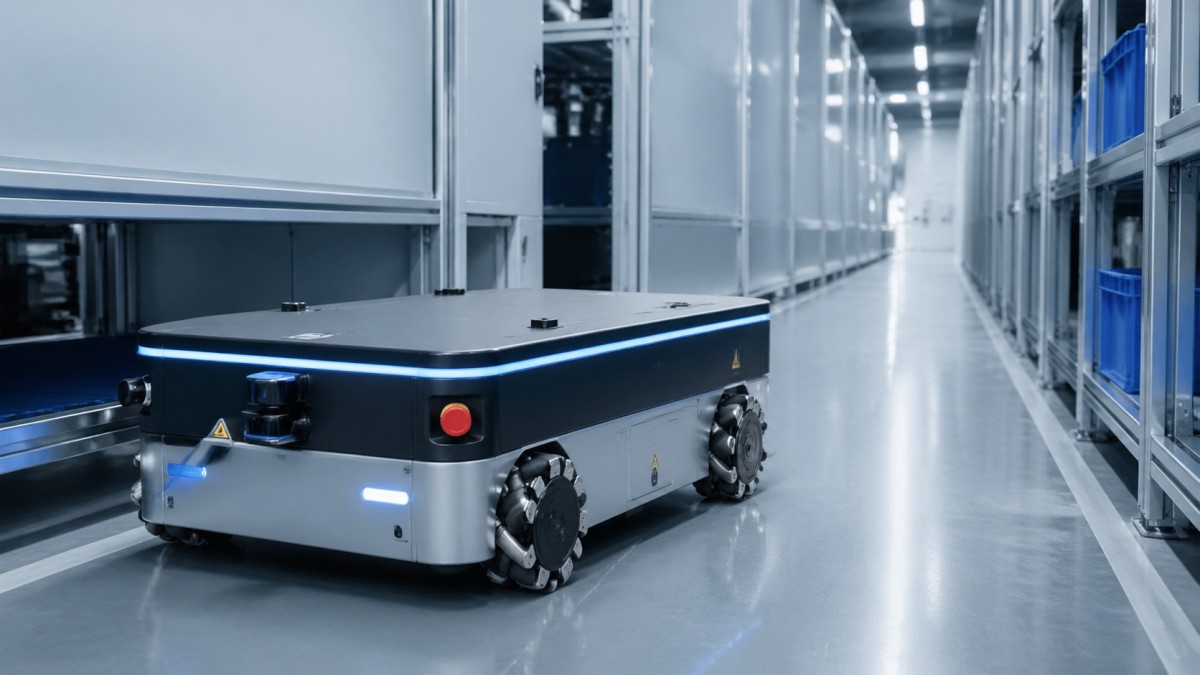
Mecanum wheel AGVs are often selected because they can move laterally, rotate in place, and operate in tight aisles without complex steering mechanisms. But omnidirectional movement alone does not guarantee stable production-floor performance. The factory design choices behind the vehicle determine whether that mobility remains accurate and efficient after months of real operation.
For procurement teams and technical evaluators, the key point is simple: two AGVs may share the same broad category of mecanum drive, yet deliver very different results in traction, navigation stability, wheel wear, vibration, and maintenance intervals. The difference usually comes from engineering depth in five areas:
- Chassis structure and load-path design
- Wheel quality and roller material selection
- Motor sizing, gearbox matching, and torque reserve
- Motion-control algorithms and sensor fusion quality
- Ease of maintenance and spare-part standardization
If a factory is strong in these fundamentals, the AGV is more likely to perform well on epoxy floors, polished concrete, warehouse joints, and mixed indoor logistics routes. If not, operators may see drift during lateral motion, unstable docking, frequent wheel replacement, and rising downtime costs.
What engineers and operators should check before trusting floor performance
From a user and operations perspective, floor performance is judged by repeatable behavior, not theoretical maneuverability. The most important questions are practical:
- Does the AGV hold position accurately when moving diagonally or sideways under load?
- How does it behave on uneven seams, painted lines, dust, or minor floor contamination?
- Does turning precision degrade at higher payloads?
- Are vibration and noise acceptable for sensitive material handling?
- How often do wheels, rollers, bearings, or drive modules require service?
Mecanum wheel systems are more sensitive to floor condition than many conventional differential-drive platforms. Because each wheel relies on angled rollers to generate multidirectional movement, force transmission is inherently more complex. On smooth and well-maintained floors, this is a major advantage. On floors with slope variation, cracks, expansion joints, or low-friction contamination, it can expose weaknesses quickly.
This is why engineers should ask for validated operating conditions rather than generic statements like “suitable for industrial environments.” A stronger AGV factory will be able to define:
- Recommended floor flatness and roughness range
- Allowable gap or joint width
- Maximum slope and cross-slope tolerance
- Payload range at which motion accuracy is maintained
- Typical wheel life under specified duty cycles
How chassis architecture shapes traction, stability, and wheel wear
One of the most overlooked factors in mecanum wheel AGV design is chassis rigidity. If the frame lacks sufficient stiffness, wheel loading becomes uneven during acceleration, braking, and floor transitions. That uneven loading reduces traction consistency and causes some wheels to wear faster than others.
A well-designed chassis should keep the four mecanum wheels in controlled contact with the floor while minimizing torsional distortion. In practice, this affects:
- Lateral movement smoothness
- Rotational accuracy during in-place turning
- Docking repeatability at stations or conveyors
- Roller wear distribution across the wheel set
- Sensor stability due to lower structural vibration
For heavy-duty applications, suspension strategy also matters. Some factories use passive floating mechanisms or equalization structures to compensate for minor floor irregularities. This can improve wheel contact consistency, but only if integrated properly with the control system. Poorly implemented compliance may instead introduce oscillation and reduce high-speed stability.
Decision-makers comparing suppliers should therefore ask not only about payload capacity, but about payload behavior. A 1000 kg-rated AGV is not automatically a stable 1000 kg omnidirectional platform if weight distribution shifts, wheel contact varies, or the chassis deforms under dynamic movement.
Why control logic and navigation tuning matter as much as the hardware
Even with a strong mechanical platform, mecanum wheel AGV performance depends heavily on control architecture. Omnidirectional kinematics require precise coordination across all driven wheels. Small errors in wheel speed control, encoder feedback, or inertial compensation can accumulate into visible path deviation.
This is especially important for readers evaluating an AGV navigation systems factory. Navigation performance is not just about whether the AGV uses QR, SLAM, laser, vision, or hybrid localization. It is about how well the navigation stack is integrated with motion control.
The best-performing systems usually show strength in the following areas:
- Closed-loop wheel-speed synchronization
- Fast correction of yaw drift during lateral travel
- Stable low-speed control for docking and pickup alignment
- Adaptive behavior when floor friction changes
- Robust fault handling when one wheel experiences slip or partial lift
In real facilities, poor tuning often appears as “small” issues that become expensive over time: repeated docking offsets, pallet misalignment, reduced rack interface reliability, and operator intervention during recovery. For this reason, buyers should request application-level performance data, such as positioning repeatability under load, path deviation at set speed, and recovery behavior after traction disturbance.
What procurement teams should ask a mecanum wheel AGV factory before shortlisting
For sourcing and supplier qualification, the goal is to turn technical complexity into comparable evaluation criteria. Instead of relying on broad claims, ask suppliers for specific engineering evidence. Good questions include:
- What floor conditions were used for internal validation testing?
- What is the positioning repeatability during forward, lateral, and rotational motion?
- How does performance change at 25%, 50%, 75%, and 100% payload?
- What is the expected service life of mecanum rollers and bearings?
- Are wheels modular and field-replaceable without full drive disassembly?
- What spare-parts lead times apply in the target market?
- What navigation sensors are standard, and what are the fallback modes?
- What commissioning support is offered for floor adaptation and route tuning?
Strong suppliers will usually answer with measurable ranges, test conditions, and maintenance procedures. Weak suppliers often respond with generic assurance language. For enterprise buyers, that distinction matters because lifecycle cost in AGV deployment is often driven by service frequency, floor adaptation effort, and downtime exposure rather than initial unit price alone.
Where mecanum AGVs perform best and where they need caution
Mecanum wheel AGVs can be an excellent fit in applications where maneuverability and space efficiency are more valuable than pure travel speed or rough-floor tolerance. Typical strong-fit scenarios include:
- Electronics and precision assembly logistics
- Clean, flat indoor manufacturing floors
- Workstation feeding in tight production cells
- Omnidirectional docking near conveyors, lifts, or test stands
- Flexible intralogistics layouts with frequent route changes
However, buyers should evaluate more carefully if the site includes:
- Damaged concrete or frequent floor joints
- Oil, dust, moisture, or unstable friction conditions
- Long-distance transport with high-speed duty cycles
- Heavy shock loads or abrupt threshold crossings
- Poorly controlled load distribution on top modules
In these environments, another AGV architecture may sometimes offer lower risk or lower maintenance burden. A credible factory should be willing to say so. Honest application matching is usually a sign of engineering maturity, not sales weakness.
How decision-makers should balance ROI, risk, and long-term serviceability
For enterprise decision-makers, the best mecanum wheel AGV factory design is not necessarily the one with the most advanced-looking platform. It is the one that aligns motion capability with actual facility conditions and support requirements.
ROI should be evaluated through a lifecycle lens:
- How much floor-space efficiency does omnidirectional movement create?
- Will docking precision reduce manual correction and handling delay?
- How often will wheel modules need replacement?
- Can in-house maintenance teams service the platform quickly?
- How sensitive is the system to floor degradation over time?
- What are the costs of navigation recalibration after layout changes?
Factories that design with serviceability in mind usually create stronger long-term value. Features such as accessible drive modules, standardized electrical interfaces, remote diagnostics, and parameterized control updates can reduce total ownership cost substantially. For multi-site deployment, consistency of spare parts and software architecture is also critical.
In other words, floor performance is not just a mobility issue. It is an operating-cost issue, a reliability issue, and a deployment-risk issue.
Conclusion: choose factory design based on measured floor reality, not motion demos
Mecanum wheel AGV factory design choices shape floor performance because omnidirectional mobility depends on more than wheel type alone. Chassis stiffness, wheel module quality, control tuning, navigation integration, floor compatibility, and maintenance access all influence whether the AGV performs reliably in production.
For researchers, operators, procurement teams, and business leaders, the clearest path to a sound decision is to evaluate the platform under real load and real floor conditions, then compare measurable indicators: traction stability, docking repeatability, wheel wear, service intervals, and recovery behavior. If a supplier can explain these parameters clearly and support them with engineering data, that is usually a stronger sign of capability than any generic promise about “smart” automation.
In a market full of broad claims, the most valuable question remains straightforward: how will this AGV actually behave on our floor, in our duty cycle, over time? The right factory can answer that with evidence.
Search News
Hot Articles
- Carbon Fiber StructuresHow to Specify Aerospace Carbon Fiber Assemblies for Lightweight, Load-Bearing PartsJul 11, 2026
- Machine VisionXiaomi, Alibaba DAMO Academy Drive Open-Source Robotics Model Ecosystem, Lowering Algorithm Development Barriers for Overseas SMEs Adopting Chinese Robotics SolutionsMar 30, 2026
- Cobots & ArmsShanxi 'AI+' Conference Showcases Embodied Intelligence with Multinational Buyer Engagement: Key Industry ImplicationsMar 30, 2026
Popular Tags
Recommended News
 Jul 11, 2026How to Specify Aerospace Carbon Fiber Assemblies for Lightweight, Load-Bearing PartsAerospace carbon fiber assemblies: learn how to specify laminate design, load data, joining methods, and inspection controls for lighter, reliable load-bearing aerospace parts.Elena Rostova (UAV Systems Researcher)
 Mar 30, 2026Xiaomi, Alibaba DAMO Academy Drive Open-Source Robotics Model Ecosystem, Lowering Algorithm Development Barriers for Overseas SMEs Adopting Chinese Robotics SolutionsXiaomi & Alibaba DAMO Academy's open-source robotics models lower algorithm barriers for global SMEs. Boost efficiency in manufacturing, logistics & smart retail with ROS 2 compatible solutions.TSV Data Lab
 Mar 30, 2026Shanxi 'AI+' Conference Showcases Embodied Intelligence with Multinational Buyer Engagement: Key Industry ImplicationsShanxi 'AI+' Conference highlights embodied intelligence with Tesla, Ubtech & Jiantao showcasing multimodal robotics. 40+ global buyers validated tech on-site, creating new B2B channels for industrial automation & AI solutions.Chen Wei (Automation Lead Engineer)
 Mar 30, 2026Zhongguancun Unveils 6G Integrated Sensing-Computing-Intelligence Platform to Empower Embodied Robots for Global Industrial ApplicationsZhongguancun's new 6G platform revolutionizes industrial robotics with <10ms latency, empowering global automotive, logistics & port automation. Discover how this tech boosts China's smart manufacturing exports.TSV Data Lab
 Mar 30, 2026Mech-Mind Tianjin Embodied Intelligence R&D and Production Base Goes Live, Cutting Delivery Time by 20%–30% for Global Customized AMR+Vision SolutionsMech-Mind's Tianjin AMR+Vision production base cuts delivery time by 20%-30% for欧美 & Latin American markets. Discover how this PLd-certified facility accelerates customized robotics solutions for smart manufacturing and logistics.Chen Wei (Automation Lead Engineer)
 Mar 30, 2026Boao Forum Reveals 'Co-evolution of Big and Small Brains' Trend in Humanoid Robots, China's Embodied Intelligence Accelerates Adaptation to Overseas Manufacturing Service ScenariosDiscover how China's humanoid robots, featuring 'Co-evolution of Big and Small Brains,' are revolutionizing global manufacturing. Learn about Embodied Tian Gong 3.0's ISO compliance and overseas deployment at Boao Forum 2026.Chen Wei (Automation Lead Engineer)
 Mar 30, 2026China Railway Industrial Secures Patent for Embodied Robotics in Material Handling, Boosting High-Precision Delivery Capabilities for Overseas Infrastructure and Manufacturing ProjectsChina Railway Industrial's new patent for embodied robotics in material handling boosts high-precision delivery for global infrastructure & manufacturing. Discover how this innovation enhances logistics accuracy in automotive, rail transit & EPC projects.Chen Wei (Automation Lead Engineer)
 Oct 25, 2026Hesai Leads Global ADAS Main Lidar Shipments in Yole’s 2026 ReportHesai led global ADAS main lidar shipments with a 43% share in 2025, according to Yole’s 2026 report. Explore what this ranking reveals about its automotive market position.TSV Data Lab
 Oct 25, 2026Choosing an Aerospace Materials Manufacturer: Quality and Traceability ChecksChoosing an aerospace materials manufacturer? Learn how to verify certifications, test reports, and lot traceability to qualify suppliers confidently and reduce costly sourcing risks.Dr. Marcus Vance
 Oct 24, 2026Guotai Haitong: Global Entry-Level 3D Printer Shipments Rose 39% in Q1 2026Entry-level 3D printer shipments rose 39% in Q1 2026, Guotai Haitong reports. Explore how AI, multicolor printing and print farms are shaping market growth.Dr. Marcus Vance
 Oct 24, 2026Choosing an Industrial Vision Inspection Supplier: Acceptance Tests That MatterChoose an industrial vision inspection supplier with confidence. Discover acceptance tests for defect detection, false rejects, production speed, and reliable part rejection before you buy.TSV Data Lab
 Oct 23, 2026US Navy Raises Gecko Robotics Contract Ceiling to $300M for Robotic Fleet MaintenanceUS Navy raises Gecko Robotics’ contract ceiling to $300M for Pacific Fleet robotic inspections. Explore potential opportunities for maintenance suppliers and key procurement considerations.Chen Wei (Automation Lead Engineer)
 Oct 23, 2026Choosing Industrial Sensing Systems for Global Plants: Protocol CompatibilityCompare industrial sensing systems international buyers can trust. Explore protocol compatibility, reduce integration risks, and select proven configurations for reliable global plant deployments.TSV Data Lab
 Oct 22, 2026KUKA Showcases Physical AI and iiQKA.AI Vision at NVIDIA GTC BerlinExplore KUKA’s Physical AI showcase at NVIDIA GTC Berlin and discover how iiQKA.AI Vision aims to simplify robotic vision integration and improve 2D and 3D scene recognition.TSV Data Lab
 Oct 22, 2026Robotic Machining of Advanced Composites: What Tolerances Are Achievable?Explore advanced materials machining robotics: discover what drives achievable composite tolerances and how to validate accuracy before investing in your next machining system.Dr. Marcus Vance
 Oct 21, 2026China’s Industrial Robot Exports Near RMB 10 Billion in First Nine Months of 2026China’s industrial robot exports neared RMB 10 billion in January–September 2026, with value rising faster than volume. Explore the data and what it could mean for suppliers.Chen Wei (Automation Lead Engineer)
 Oct 21, 2026Low-Latency Industrial Data Processing: Pricing and Key Cost DriversExplore industrial data latency price drivers, from edge hardware to integration and support. Learn how to compare quotes, verify performance, and avoid unnecessary costs.TSV Data Lab
 Oct 20, 2026KUKA Launches iiQKA.AI Vision to Simplify Industrial Image ProcessingKUKA iiQKA.AI Vision simplifies industrial image processing with controller-based 2D and 3D vision. Explore drag-and-drop setup for vision-guided automation.TSV Data Lab
 Oct 20, 2026Smart Industrial Edge Devices: Key Criteria for Legacy PLC IntegrationChoose smart industrial edge devices for legacy PLC integration. Discover key criteria for compatibility, data quality, security, and reliable collection without disrupting control.TSV Data Lab
 Oct 19, 2026Choosing a Radar Sensor by Application: Range, Resolution, and Field of ViewSimplify radar sensor application based product selection. Compare range, resolution, and field of view to avoid blind spots and choose with confidence. Explore the guide.TSV Data Lab
 Oct 18, 2026Comparing Material Options for Procurement: Specs, Costs, and Supply RisksExplore procurement oriented technical content on material options, specs, costs, and supply risks. Compare alternatives to cut hidden expenses and make confident sourcing decisions.Dr. Marcus Vance
 Oct 17, 20265-Axis CNC Positioning Accuracy: How to Interpret ISO 230-2 Test ResultsAssess 5 axis CNC machining positioning accuracy with ISO 230-2. Learn to interpret repeatability, reversal error, and test conditions to compare suppliers and make confident acceptance decisions.Dr. Marcus Vance
 Oct 16, 2026Choosing a Rugged Edge AI Box Supplier: Thermal Tests and Lifecycle SupportChoose a rugged edge AI box supplier with proven thermal performance and reliable lifecycle support. Discover the tests and commitments to verify before you buy.TSV Data Lab
 Oct 15, 2026R&D Cost Reduction Services: How to Evaluate Fees, Savings, and ROIEvaluate R&D cost reduction services with confidence. Compare fees, verify savings, and calculate ROI without compromising performance. Discover how to choose a provider that delivers real value.Chen Wei (Automation Lead Engineer)























