Drone Delivery System Logistics: Key Cost Drivers, Constraints, and Use Cases
Publication Date
author
Drone Delivery System Logistics: What Actually Drives Cost and Value
Drone delivery system logistics is moving beyond demos.
It now sits inside real sourcing plans, CAPEX reviews, and network redesign discussions.
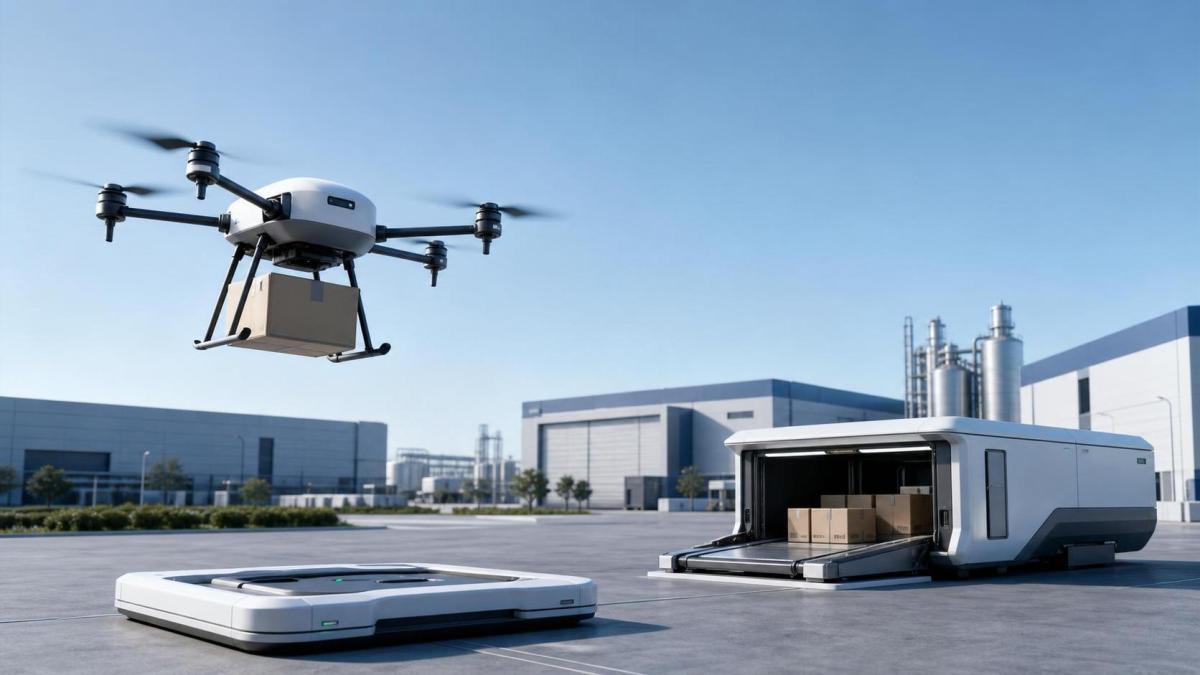
That shift matters because the business case is not uniform.
In some lanes, drone delivery system logistics reduces lead time and labor dependence.
In others, it adds complexity without enough operational return.
The smart question is not whether drones are innovative.
The real question is where drone delivery system logistics creates measurable logistics advantage.
For procurement and operations leaders, clear cost visibility comes first.
So does an honest view of regulation, payload limits, and infrastructure readiness.
That is where data-led evaluation becomes critical.
At TechStat Vanguard, the useful lens is simple.
Parameters matter more than branding, and operating constraints matter more than slide decks.
The Core Cost Drivers Behind Drone Delivery System Logistics
Most buying mistakes happen when teams look only at aircraft price.
In reality, drone delivery system logistics is a full operating system, not a single asset purchase.
The total cost stack usually includes five major layers.
1. Airframe, payload, and battery architecture
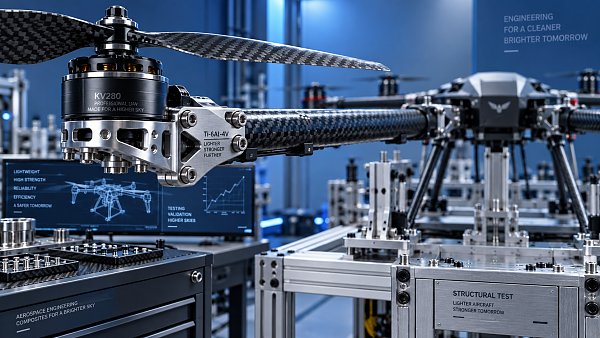
Aircraft cost changes sharply with payload class, endurance, and redundancy requirements.
A lightweight campus shuttle is very different from a medical delivery UAV.
Battery replacement cycles also reshape lifetime economics.
Frequent charging, high temperatures, and aggressive duty cycles accelerate degradation.
2. Ground infrastructure and launch workflow
Drone delivery system logistics needs more than a landing pad.
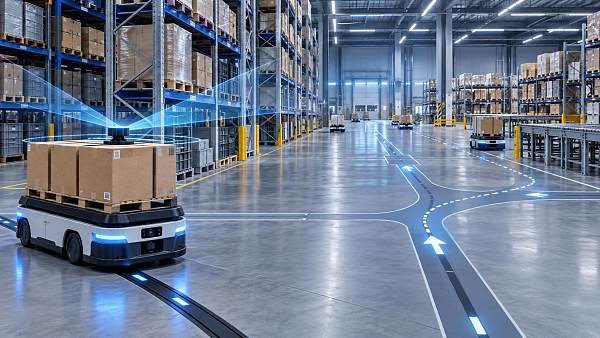
It may require charging stations, swap modules, secure storage, route monitoring, and package handling points.
If the workflow still depends on manual loading and exception handling, labor savings shrink fast.
3. Software, control, and integration
This cost line is often underestimated.
Fleet management, geofencing, dispatch logic, telemetry storage, and ERP or WMS integration are not optional.
Without system integration, drone delivery system logistics becomes an isolated pilot.
4. Compliance, insurance, and flight approvals
Regulatory compliance creates direct and indirect costs.
These include documentation, operator training, safety cases, airspace approvals, and liability coverage.
For BVLOS operations, the burden rises further.
5. Maintenance and uptime resilience
A drone network only works when service levels hold.
Spare parts, sensor calibration, propeller wear, weather downtime, and fleet redundancy all affect delivered cost per trip.
The Main Constraints That Limit Deployment at Scale
From recent market signals, the biggest barrier is not interest.
It is operating consistency under real-world conditions.
That is why drone delivery system logistics must be judged against constraints early.
- Payload ceilings limit commercial versatility, especially for multi-item or temperature-controlled orders.
- Range and battery reserve reduce usable mission distance once safety margins are applied.
- Weather exposure affects mission reliability more than many pilot plans assume.
- Urban airspace, buildings, and signal interference complicate routing and landing precision.
- Noise, privacy concerns, and local policy can slow public acceptance.
These limits do not make the model unworkable.
They simply narrow the lanes where drone delivery system logistics performs best.
This also means supplier selection should center on operational evidence.
Look for demonstrated sortie rates, environmental testing data, and uptime history.
Marketing claims without engineering thresholds add risk, not clarity.
Where Drone Delivery System Logistics Makes Commercial Sense
The strongest use cases share a common pattern.
They involve urgent, lightweight, high-value, or hard-to-reach deliveries.
In these conditions, drone delivery system logistics can outperform road transport on time and service continuity.
Medical and healthcare distribution
Blood samples, vaccines, lab materials, and emergency medicines are high-fit categories.
The value comes from reduced delay, lower spoilage risk, and better access to remote clinics.
Industrial campus and inter-facility transport
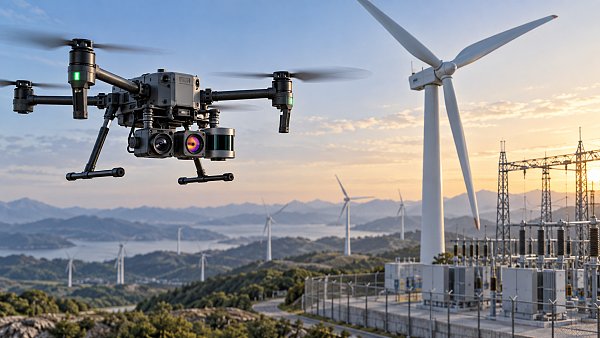
Large factories, ports, mines, and energy sites benefit from short internal routes.
This is one of the most practical drone delivery system logistics models today.
Controlled airspace and repeatable routes simplify deployment.
Critical spare parts and maintenance support
When downtime costs are high, fast delivery matters more than parcel economics.
A drone that moves a small replacement part can prevent hours of production loss.
Rural and last-mile service gaps
Remote locations with poor road access remain a strong long-term opportunity.
Here, drone delivery system logistics may improve service coverage more than unit cost.
A Practical Evaluation Framework for Procurement
In actual sourcing work, the fastest way to reduce risk is to compare systems on operational metrics.
The table below highlights what to check before any large rollout.
This is also where TSV’s perspective is useful.
Procurement should request evidence in engineering terms, not just commercial promises.
Ask for tolerance data, fault records, cycle-life assumptions, and real operating envelopes.
How to Build a Low-Risk Adoption Roadmap
The best drone delivery system logistics strategy usually starts small and specific.
A narrow first lane reveals economics much faster than a broad innovation program.
- Select one route with repeatable demand, clear urgency, and manageable airspace.
- Model full trip cost, including software, labor, maintenance, and compliance overhead.
- Run a pilot with service-level KPIs, not publicity metrics.
- Measure exception rates, weather cancellations, battery turnover, and manual intervention time.
- Scale only after the lane proves durable unit economics and reliable uptime.
That approach keeps drone delivery system logistics tied to operational value.
It also helps separate strategic fit from technical curiosity.
As adoption expands, the winners will likely be networks built on verifiable data, disciplined route design, and integration depth.
For organizations assessing suppliers today, the priority is straightforward.
Treat drone delivery system logistics like any critical infrastructure decision.
Interrogate the numbers, validate the constraints, and buy only where the route economics hold up.
Search News
Hot Articles
- Carbon Fiber StructuresHow to Specify Aerospace Carbon Fiber Assemblies for Lightweight, Load-Bearing PartsJul 11, 2026
- Machine VisionXiaomi, Alibaba DAMO Academy Drive Open-Source Robotics Model Ecosystem, Lowering Algorithm Development Barriers for Overseas SMEs Adopting Chinese Robotics SolutionsMar 30, 2026
- Cobots & ArmsShanxi 'AI+' Conference Showcases Embodied Intelligence with Multinational Buyer Engagement: Key Industry ImplicationsMar 30, 2026
Popular Tags
Recommended News
 Jul 11, 2026How to Specify Aerospace Carbon Fiber Assemblies for Lightweight, Load-Bearing PartsAerospace carbon fiber assemblies: learn how to specify laminate design, load data, joining methods, and inspection controls for lighter, reliable load-bearing aerospace parts.Elena Rostova (UAV Systems Researcher)
 Mar 30, 2026Xiaomi, Alibaba DAMO Academy Drive Open-Source Robotics Model Ecosystem, Lowering Algorithm Development Barriers for Overseas SMEs Adopting Chinese Robotics SolutionsXiaomi & Alibaba DAMO Academy's open-source robotics models lower algorithm barriers for global SMEs. Boost efficiency in manufacturing, logistics & smart retail with ROS 2 compatible solutions.TSV Data Lab
 Mar 30, 2026Shanxi 'AI+' Conference Showcases Embodied Intelligence with Multinational Buyer Engagement: Key Industry ImplicationsShanxi 'AI+' Conference highlights embodied intelligence with Tesla, Ubtech & Jiantao showcasing multimodal robotics. 40+ global buyers validated tech on-site, creating new B2B channels for industrial automation & AI solutions.Chen Wei (Automation Lead Engineer)
 Mar 30, 2026Zhongguancun Unveils 6G Integrated Sensing-Computing-Intelligence Platform to Empower Embodied Robots for Global Industrial ApplicationsZhongguancun's new 6G platform revolutionizes industrial robotics with <10ms latency, empowering global automotive, logistics & port automation. Discover how this tech boosts China's smart manufacturing exports.TSV Data Lab
 Mar 30, 2026Mech-Mind Tianjin Embodied Intelligence R&D and Production Base Goes Live, Cutting Delivery Time by 20%–30% for Global Customized AMR+Vision SolutionsMech-Mind's Tianjin AMR+Vision production base cuts delivery time by 20%-30% for欧美 & Latin American markets. Discover how this PLd-certified facility accelerates customized robotics solutions for smart manufacturing and logistics.Chen Wei (Automation Lead Engineer)
 Mar 30, 2026Boao Forum Reveals 'Co-evolution of Big and Small Brains' Trend in Humanoid Robots, China's Embodied Intelligence Accelerates Adaptation to Overseas Manufacturing Service ScenariosDiscover how China's humanoid robots, featuring 'Co-evolution of Big and Small Brains,' are revolutionizing global manufacturing. Learn about Embodied Tian Gong 3.0's ISO compliance and overseas deployment at Boao Forum 2026.Chen Wei (Automation Lead Engineer)
 Mar 30, 2026China Railway Industrial Secures Patent for Embodied Robotics in Material Handling, Boosting High-Precision Delivery Capabilities for Overseas Infrastructure and Manufacturing ProjectsChina Railway Industrial's new patent for embodied robotics in material handling boosts high-precision delivery for global infrastructure & manufacturing. Discover how this innovation enhances logistics accuracy in automotive, rail transit & EPC projects.Chen Wei (Automation Lead Engineer)
 Sep 22, 2026Drone Engine-T550CC Applications: Build the UAV Power System Around the MissionAn application guide for Drone Engine-T550CC integration, covering payload planning, airframe matching, cooling, fuel, vibration, test procedures, documentation, and service preparation.Elena Rostova (UAV Systems Researcher)
 Sep 22, 2026How to Evaluate Industrial Edge Computing Vendors for Factory DeploymentIndustrial edge computing vendor evaluation guide for factories: compare latency, protocol fit, reliability, security, and lifecycle support before deployment.TSV Data Lab
 Sep 21, 2026Drone Payload Integration: Matching Power, Data, and Center of Gravity for Reliable FlightsDrone payload integration made practical: balance power, data, center of gravity, and endurance to build safer, more reliable mission-ready flights.Elena Rostova (UAV Systems Researcher)
 Sep 20, 2026Autonomous Navigation Pricing: Cost Drivers and Budget Benchmarks for AMR ProjectsAutonomous navigation price explained: compare AMR cost drivers, software, sensors, integration, safety, and lifecycle budgets to build a scalable project plan.Chen Wei (Automation Lead Engineer)
 Sep 19, 2026How to Scope Automation Integration Services for Multi-System Factory ProjectsAutomation integration services: learn how to scope multi-system factory projects with clear workflows, interface contracts, safety boundaries, and acceptance criteria.Victor Lin (Chief Software Architect)
 Sep 18, 2026Selecting UAV Aerospace Structural Parts for Strength, Weight, and Fatigue LifeUAV aerospace structural parts guide: compare strength, weight, stiffness, fatigue life, joints, and traceability to select reliable flight-ready components.Elena Rostova (UAV Systems Researcher)
 Sep 17, 2026Selecting Commercial Drone Payloads for European Inspection ProjectsCommercial drone payloads Europe: learn how to select RGB, thermal and LiDAR systems for compliant, reliable inspection data and better project outcomes.Elena Rostova (UAV Systems Researcher)
 Sep 16, 2026Machining Tolerance Validation: How to Verify Critical Dimensions Before Production ReleaseMachining tolerance analysis validation: verify critical dimensions, measurement systems, process capability, and tolerance stacks before production release.Dr. Marcus Vance
 Sep 15, 2026AGV Tape Guidance vs Laser Navigation: Which Fits Your Warehouse Layout?AGV tape guidance comparison: discover how tape and laser navigation fit changing warehouse layouts, docking needs, floor conditions, maintenance, and route flexibility.Chen Wei (Automation Lead Engineer)
 Sep 14, 2026How Point Cloud Analytics Improves Asset Inspection Workflows Across GCC ProjectsPoint cloud analytics GCC helps project leaders improve asset inspections with accurate change detection, safer workflows, and faster maintenance decisions.TSV Data Lab
 Sep 13, 2026How Aerospace Manufacturers Can Build a Digital Thread From Design to Certified ProductionDigital manufacturing for aerospace: learn how to build a traceable digital thread from design through certified production, supplier control, and audit-ready compliance.Victor Lin (Chief Software Architect)
 Sep 12, 2026How to Select a Thermal Sensor for Mapping Drones in Surveying ProjectsMapping drone thermal sensor selection made simple: compare GSD, radiometric data, NETD, calibration, and workflow fit for accurate, survey-ready thermal maps.Elena Rostova (UAV Systems Researcher)
 Sep 11, 2026Integrating Photogrammetry Workflows into Digital Twin Projects Without Data BottlenecksPhotogrammetry workflow integration for digital twins: learn how to streamline capture, validation, versioning, and delivery to prevent data bottlenecks.Victor Lin (Chief Software Architect)
 Sep 10, 2026Hard-Tech Supply Chain Procurement: Qualifying Suppliers to Cut Lead-Time RiskHard-tech supply chain procurement guide: qualify suppliers with proven process, traceability, capacity, and change control to reduce lead-time risk.Chen Wei (Automation Lead Engineer)
 Sep 09, 2026Industrial Application Notes: Cost Factors That Shape Automation Project BudgetsIndustrial application notes cost factors explained: uncover the engineering, safety, integration, and commissioning variables that shape accurate automation budgets.Victor Lin (Chief Software Architect)
 Sep 08, 2026Supplier Discovery for Sourcing: How Buyers Can Verify Capability and Supply RiskSupplier discovery for sourcing: learn how to verify supplier capability, traceability, quote assumptions, and supply risk before placing production orders.TSV Data Lab
 Sep 07, 2026What Determines Process Control Systems Pricing? A Buyer’s Cost GuideProcess control systems pricing explained: compare hardware, engineering, integration, cybersecurity, validation, and lifecycle costs to choose the right-value solution.Victor Lin (Chief Software Architect)