Wholesale Jewelry Findings Guide: Types, Materials, and MOQ Questions Buyers Ask
Publication Date
author
Wholesale Jewelry Findings Guide: Types, Materials, and MOQ Questions Buyers Ask
For procurement teams sourcing wholesale jewelry findings, the real challenge is not just price—it is consistency, material transparency, and workable MOQ terms.
This guide breaks down the types of findings buyers compare most, the materials that affect durability and compliance, and the MOQ questions that shape sourcing efficiency.
In practice, smart buying decisions come from balancing unit cost, plating life, defect rate, lead time, and reorder flexibility.
Why Wholesale Jewelry Findings Matter in Procurement
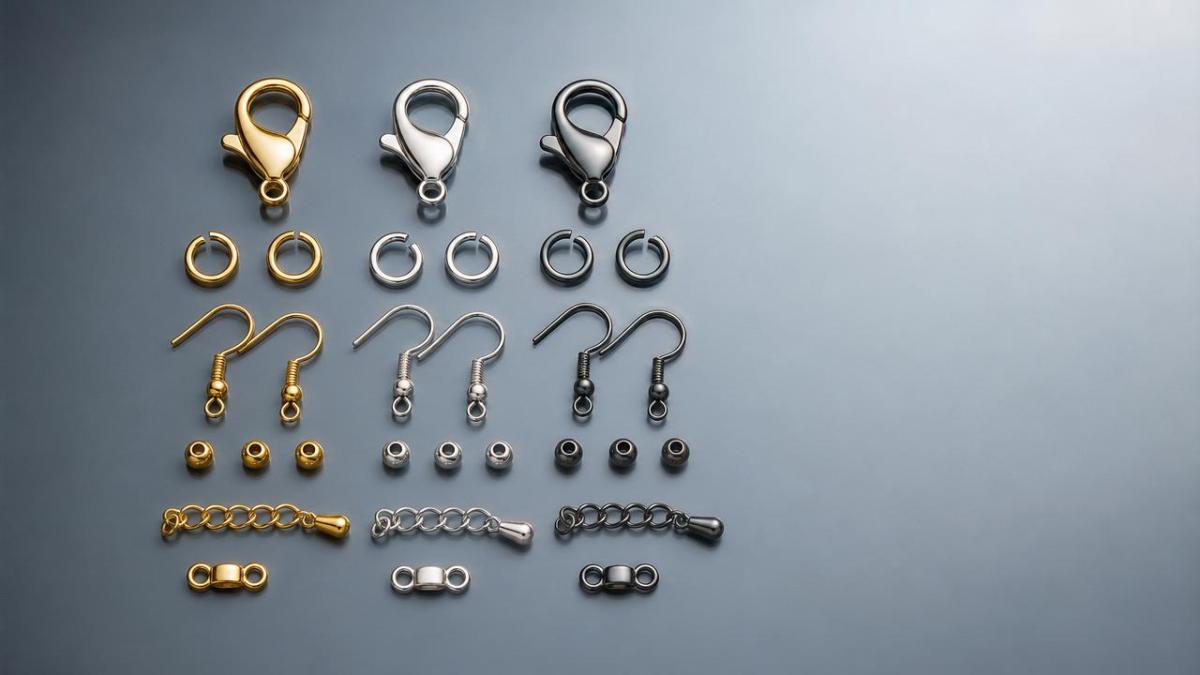
Wholesale jewelry findings are the small components that hold finished pieces together.
They include clasps, jump rings, ear wires, crimp beads, pin backs, connectors, and chain ends.
These parts may look simple, but they strongly influence product quality, assembly speed, and return rates.
A necklace with weak findings fails faster, even if the centerpiece looks premium.
That is why buyers comparing wholesale jewelry findings often focus on reliability before chasing the lowest quote.
The bigger the order volume, the more important consistency becomes across every batch.
Main Types of Wholesale Jewelry Findings Buyers Compare
Not all wholesale jewelry findings play the same role in product performance.
From recent sourcing patterns, the most compared categories are usually the following.
Clasps and Closures
Lobster clasps, spring rings, magnetic clasps, and toggle clasps are common purchase items.
Buyers check opening strength, plating durability, and ease of use.
For higher-return categories, closure failure is often the first complaint.
Jump Rings and Split Rings
These are basic but critical wholesale jewelry findings for linking components.
Thickness tolerance matters because uneven rings slow assembly and weaken finished products.
Ear Wires, Posts, and Backs
This category raises more material and skin-contact questions than most others.
Nickel release, burr-free finishing, and stable plating are usually top concerns.
Crimps, Bead Caps, and Chain Ends
These wholesale jewelry findings affect both function and appearance.
Poorly formed crimps can crack during assembly, while rough chain ends hurt finish quality.
Pins, Connectors, and Settings
Head pins, eye pins, brooch backs, and stone settings are frequently customized.
That also means tooling, tolerance control, and MOQ terms deserve closer review.
Material Choices That Change Cost and Durability
When sourcing wholesale jewelry findings, material selection shapes both margin and risk.
The same design can perform very differently depending on the base metal and plating system.
Brass
Brass is widely used for wholesale jewelry findings because it balances formability, finish quality, and cost.
It works well for plated fashion jewelry and many mid-range collections.
Stainless Steel
Stainless steel offers stronger corrosion resistance and better wear performance.
It is often preferred for ear posts, body-contact parts, and long-use products.
However, it can be harder to process, which may raise tooling or production cost.
Zinc Alloy
Zinc alloy is common for decorative wholesale jewelry findings with complex shapes.
It supports efficient casting, but strength and long-term wear may be lower than brass or steel.
Sterling Silver and Gold-Filled Options
These materials serve premium lines where skin sensitivity and perceived value matter more.
MOQ levels are usually higher, and metal price volatility has a direct cost impact.
Plating, Compliance, and Hidden Quality Risks
Base material is only one part of the wholesale jewelry findings decision.
Plating quality often decides whether findings keep their look after storage, transport, and daily wear.
Gold, silver, rhodium, and imitation finishes all have different thickness, adhesion, and color consistency issues.
In actual buying work, asking only for color is not enough.
It helps to confirm plating thickness, salt spray expectations, and whether an anti-tarnish topcoat is applied.
For skin-contact findings, compliance questions should be addressed early.
That may include nickel, lead, cadmium, or regional test requirements.
A low quote on wholesale jewelry findings can become expensive if rework or claim risk appears later.
MOQ Questions Buyers Should Ask Before Ordering
MOQ is one of the most discussed issues in wholesale jewelry findings sourcing.
But MOQ is rarely just one number.
It can vary by material, color, plating, packaging, and whether the item is standard or custom.
Key MOQ Questions
- Is the MOQ per item, per size, per finish, or per total order value?
- Does the MOQ change for custom logo bags, labels, or retail-ready packing?
- Can mixed models be combined to reach the MOQ threshold?
- What is the MOQ for sample development and first production?
- Will repeat orders keep the same MOQ after tooling is approved?
- Are there price breaks tied to higher volume tiers?
These questions help buyers compare suppliers on a more realistic basis.
They also expose hidden costs that do not show up in the first quotation.
How to Evaluate Suppliers Beyond Unit Price
When comparing wholesale jewelry findings suppliers, unit price is only one layer.
A better sourcing view looks at total procurement efficiency.
This is where experienced teams make better decisions on wholesale jewelry findings.
They measure cost with quality data, not with price alone.
Practical Buying Tips for Better Wholesale Jewelry Findings Orders
A smoother sourcing process usually comes from a few disciplined steps.
- Standardize technical descriptions before requesting quotes for wholesale jewelry findings.
- Ask for material details, plating specs, and test references in writing.
- Approve samples by function, finish, and packaging, not by appearance alone.
- Track defect patterns by item category, especially clasps and ear components.
- Compare landed cost, not just ex-factory price, when choosing wholesale jewelry findings suppliers.
- Negotiate MOQ with reorder forecasts to gain flexibility without hurting supplier interest.
These steps are simple, but they reduce friction across sampling, approval, and repeat purchasing.
Final Takeaway
Choosing wholesale jewelry findings is really about controlling quality risk while protecting margin.
The best sourcing results usually come from clear specifications, transparent materials, and realistic MOQ negotiation.
When buyers compare wholesale jewelry findings through performance, compliance, and repeat-order efficiency, supplier selection becomes much easier.
Start with the critical categories, verify the material story, and ask sharper MOQ questions before scaling volume.
That approach creates cleaner purchasing decisions and stronger long-term supply relationships.
Search News
Hot Articles
- Carbon Fiber StructuresHow to Specify Aerospace Carbon Fiber Assemblies for Lightweight, Load-Bearing PartsJul 11, 2026
- Machine VisionXiaomi, Alibaba DAMO Academy Drive Open-Source Robotics Model Ecosystem, Lowering Algorithm Development Barriers for Overseas SMEs Adopting Chinese Robotics SolutionsMar 30, 2026
- Cobots & ArmsShanxi 'AI+' Conference Showcases Embodied Intelligence with Multinational Buyer Engagement: Key Industry ImplicationsMar 30, 2026
Popular Tags
Recommended News
 Jul 11, 2026How to Specify Aerospace Carbon Fiber Assemblies for Lightweight, Load-Bearing PartsAerospace carbon fiber assemblies: learn how to specify laminate design, load data, joining methods, and inspection controls for lighter, reliable load-bearing aerospace parts.Elena Rostova (UAV Systems Researcher)
 Mar 30, 2026Xiaomi, Alibaba DAMO Academy Drive Open-Source Robotics Model Ecosystem, Lowering Algorithm Development Barriers for Overseas SMEs Adopting Chinese Robotics SolutionsXiaomi & Alibaba DAMO Academy's open-source robotics models lower algorithm barriers for global SMEs. Boost efficiency in manufacturing, logistics & smart retail with ROS 2 compatible solutions.TSV Data Lab
 Mar 30, 2026Shanxi 'AI+' Conference Showcases Embodied Intelligence with Multinational Buyer Engagement: Key Industry ImplicationsShanxi 'AI+' Conference highlights embodied intelligence with Tesla, Ubtech & Jiantao showcasing multimodal robotics. 40+ global buyers validated tech on-site, creating new B2B channels for industrial automation & AI solutions.Chen Wei (Automation Lead Engineer)
 Mar 30, 2026Zhongguancun Unveils 6G Integrated Sensing-Computing-Intelligence Platform to Empower Embodied Robots for Global Industrial ApplicationsZhongguancun's new 6G platform revolutionizes industrial robotics with <10ms latency, empowering global automotive, logistics & port automation. Discover how this tech boosts China's smart manufacturing exports.TSV Data Lab
 Mar 30, 2026Mech-Mind Tianjin Embodied Intelligence R&D and Production Base Goes Live, Cutting Delivery Time by 20%–30% for Global Customized AMR+Vision SolutionsMech-Mind's Tianjin AMR+Vision production base cuts delivery time by 20%-30% for欧美 & Latin American markets. Discover how this PLd-certified facility accelerates customized robotics solutions for smart manufacturing and logistics.Chen Wei (Automation Lead Engineer)
 Mar 30, 2026Boao Forum Reveals 'Co-evolution of Big and Small Brains' Trend in Humanoid Robots, China's Embodied Intelligence Accelerates Adaptation to Overseas Manufacturing Service ScenariosDiscover how China's humanoid robots, featuring 'Co-evolution of Big and Small Brains,' are revolutionizing global manufacturing. Learn about Embodied Tian Gong 3.0's ISO compliance and overseas deployment at Boao Forum 2026.Chen Wei (Automation Lead Engineer)
 Mar 30, 2026China Railway Industrial Secures Patent for Embodied Robotics in Material Handling, Boosting High-Precision Delivery Capabilities for Overseas Infrastructure and Manufacturing ProjectsChina Railway Industrial's new patent for embodied robotics in material handling boosts high-precision delivery for global infrastructure & manufacturing. Discover how this innovation enhances logistics accuracy in automotive, rail transit & EPC projects.Chen Wei (Automation Lead Engineer)
 Oct 28, 2026IDC: Global Quadruped Robot Shipments Rise 92.5% in H1 2026 as Volume and Value DivergeGlobal quadruped robot shipments rose 92.5% in H1 2026, according to IDC. Explore what diverging volume and value trends mean for industrial buyers and manufacturers.Chen Wei (Automation Lead Engineer)
 Oct 28, 2026Interpreting Industrial IoT Latency Data for Monitoring and Real-Time ControlInterpret industrial category latency data to assess jitter, deadline misses, and real-time readiness. Learn how to benchmark IIoT systems and choose monitoring and control solutions.TSV Data Lab
 Oct 27, 2026GXO and Agility Robotics Expand Partnership to Accelerate US Humanoid Robot DeploymentGXO and Agility Robotics plan to expand US humanoid robot deployment with Digit 4 in early 2027. Explore warehouse automation plans, service terms and future Digit 5 upgrades.Chen Wei (Automation Lead Engineer)
 Oct 27, 2026Robotic Automation Costs: Budgeting for Equipment, Integration, and MaintenancePlan your robotics automation cost with confidence. Explore equipment, integration, and maintenance expenses, compare quotes, and build a realistic budget for better ROI.Chen Wei (Automation Lead Engineer)
 Oct 26, 2026AMAXiMAL Releases Open-Source TopMod 3D v3 With Claude AIExplore AMAXiMAL’s free, open-source TopMod 3D v3 with Claude AI assistance, topology-based modeling and plywood fabrication tools that connect complex designs to physical builds.Dr. Marcus Vance
 Oct 26, 2026Choosing a SCADA System Integrator Company: PLC Compatibility and Long-Term SupportChoose a scada system integrator company with proven PLC compatibility and reliable long-term support. Discover what to test, compare, and require before investing.Victor Lin (Chief Software Architect)
 Oct 25, 2026Hesai Leads Global ADAS Main Lidar Shipments in Yole’s 2026 ReportHesai led global ADAS main lidar shipments with a 43% share in 2025, according to Yole’s 2026 report. Explore what this ranking reveals about its automotive market position.TSV Data Lab
 Oct 25, 2026Choosing an Aerospace Materials Manufacturer: Quality and Traceability ChecksChoosing an aerospace materials manufacturer? Learn how to verify certifications, test reports, and lot traceability to qualify suppliers confidently and reduce costly sourcing risks.Dr. Marcus Vance
 Oct 24, 2026Guotai Haitong: Global Entry-Level 3D Printer Shipments Rose 39% in Q1 2026Entry-level 3D printer shipments rose 39% in Q1 2026, Guotai Haitong reports. Explore how AI, multicolor printing and print farms are shaping market growth.Dr. Marcus Vance
 Oct 24, 2026Choosing an Industrial Vision Inspection Supplier: Acceptance Tests That MatterChoose an industrial vision inspection supplier with confidence. Discover acceptance tests for defect detection, false rejects, production speed, and reliable part rejection before you buy.TSV Data Lab
 Oct 23, 2026US Navy Raises Gecko Robotics Contract Ceiling to $300M for Robotic Fleet MaintenanceUS Navy raises Gecko Robotics’ contract ceiling to $300M for Pacific Fleet robotic inspections. Explore potential opportunities for maintenance suppliers and key procurement considerations.Chen Wei (Automation Lead Engineer)
 Oct 23, 2026Choosing Industrial Sensing Systems for Global Plants: Protocol CompatibilityCompare industrial sensing systems international buyers can trust. Explore protocol compatibility, reduce integration risks, and select proven configurations for reliable global plant deployments.TSV Data Lab
 Oct 22, 2026KUKA Showcases Physical AI and iiQKA.AI Vision at NVIDIA GTC BerlinExplore KUKA’s Physical AI showcase at NVIDIA GTC Berlin and discover how iiQKA.AI Vision aims to simplify robotic vision integration and improve 2D and 3D scene recognition.TSV Data Lab
 Oct 22, 2026Robotic Machining of Advanced Composites: What Tolerances Are Achievable?Explore advanced materials machining robotics: discover what drives achievable composite tolerances and how to validate accuracy before investing in your next machining system.Dr. Marcus Vance
 Oct 21, 2026China’s Industrial Robot Exports Near RMB 10 Billion in First Nine Months of 2026China’s industrial robot exports neared RMB 10 billion in January–September 2026, with value rising faster than volume. Explore the data and what it could mean for suppliers.Chen Wei (Automation Lead Engineer)
 Oct 21, 2026Low-Latency Industrial Data Processing: Pricing and Key Cost DriversExplore industrial data latency price drivers, from edge hardware to integration and support. Learn how to compare quotes, verify performance, and avoid unnecessary costs.TSV Data Lab
 Oct 20, 2026KUKA Launches iiQKA.AI Vision to Simplify Industrial Image ProcessingKUKA iiQKA.AI Vision simplifies industrial image processing with controller-based 2D and 3D vision. Explore drag-and-drop setup for vision-guided automation.TSV Data Lab