Precision Aluminum Milling Wholesale: When Bulk Pricing Stops Saving Money
Publication Date
author
For finance approvers, precision aluminum milling wholesale only looks cost-effective until hidden variables start eroding margins. Unit discounts can be offset by tolerance failures, scrap rates, tooling wear, rework, and supplier inconsistency. This article examines the point where bulk pricing stops saving money and shows how data-driven sourcing can protect both engineering performance and total procurement value.
In hard-tech supply chains, aluminum parts are rarely “just components.” They may sit inside UAV frames, automation housings, sensor mounts, thermal management assemblies, or aerospace-adjacent fixtures where dimensional repeatability directly affects downstream assembly time and field reliability. That is why finance teams cannot evaluate precision aluminum milling wholesale only through piece-price comparisons.
A 6% to 12% unit discount can disappear quickly when incoming variation drives inspection delays, nonconforming lots, or assembly-line stoppages. From a TSV-style engineering benchmark perspective, the real question is not whether bulk pricing is lower, but at what order volume lower pricing starts producing higher total landed cost.
Why Bulk Pricing Often Misleads Finance Approvers
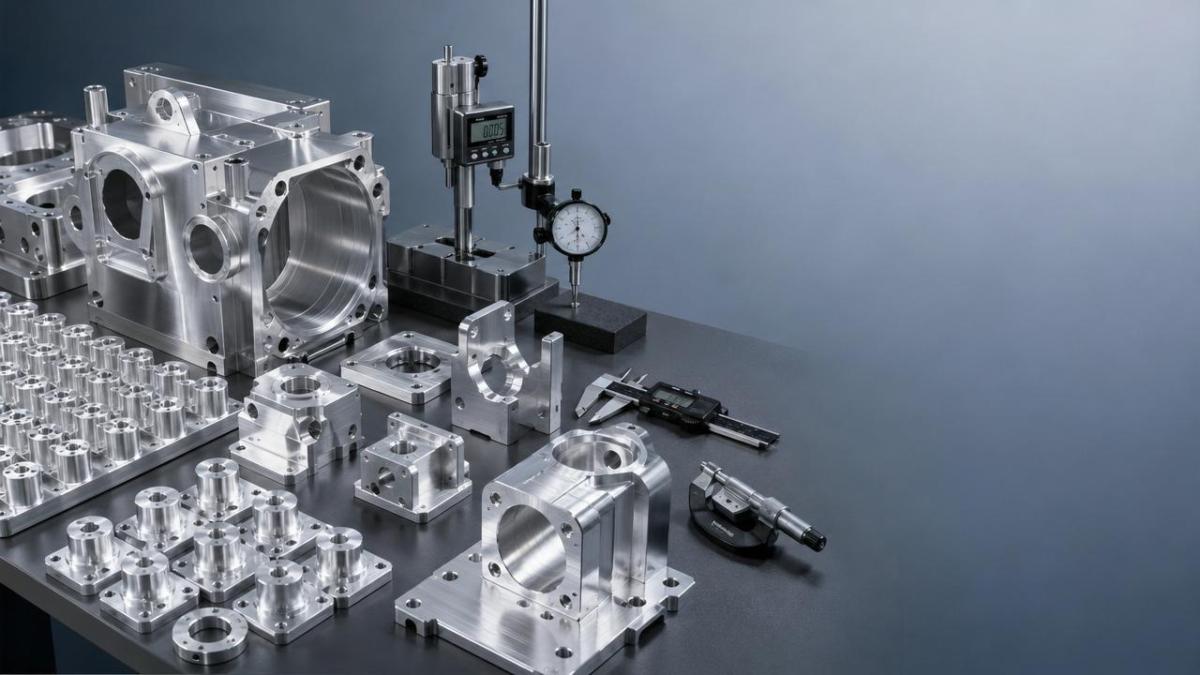
In most RFQ cycles, suppliers present price breaks at thresholds such as 500, 1,000, 5,000, or 10,000 units. On paper, precision aluminum milling wholesale appears increasingly attractive as volume rises. In practice, each price tier should trigger a second review: Can the supplier maintain the same tolerance window, surface finish, toolpath stability, and inspection discipline at that batch size?
Finance teams are especially exposed when quotations hide process assumptions. A supplier may quote one price based on 6061-T6, another based on 7075, but omit the higher tooling wear and slower cycle time associated with harder material or tighter tolerances such as ±0.02 mm instead of ±0.05 mm. The nominal discount remains visible; the operational risk stays buried.
There is also a timing mismatch between commercial savings and quality losses. The purchase order captures the discount immediately, while the cost of scrap, rework, delayed validation, and emergency replenishment may appear 2 to 8 weeks later. This delay can make a weak sourcing decision look successful in the first reporting cycle.
The hidden cost stack behind low unit pricing
When reviewing precision aluminum milling wholesale, finance approvers should map cost in at least 5 layers instead of 1. Unit price is only the top layer. The others usually include incoming quality inspection, internal handling, assembly losses, field risk, and supplier recovery cost. If even one of those layers shifts by 3% to 5%, the total program margin can change materially.
- Scrap caused by out-of-tolerance features, thread damage, burrs, or warpage after machining.
- Rework labor for deburring, hole correction, flatness recovery, or secondary inspection.
- Production delays when replacement parts require 7–15 extra days.
- Warranty or field-service exposure if nonconforming parts enter deployed equipment.
- Cash-flow drag from overbuying inventory that later fails validation or design revision checks.
For finance functions supporting advanced manufacturing, this broader view aligns with TSV’s data-first logic: parameters do not lie. If a low quote cannot show process capability, inspection method, and lot consistency, the discount is not a saving yet. It is an unpriced liability.
Where Precision Aluminum Milling Wholesale Stops Saving Money
The break point usually appears when volume increases faster than process control. A supplier that performs well at 300 pieces may struggle at 3,000 if machine loading changes, tool replacement intervals stretch, or final inspection becomes sample-based instead of full-feature verification for critical dimensions. That is where finance approvers should shift from price analysis to threshold analysis.
For example, a batch with a 9% lower unit price can still be more expensive if scrap rises from 1.5% to 6%, or if rework adds 12 to 20 labor minutes per part family. In precision aluminum milling wholesale, the “stop saving money” point often emerges before catastrophic failure. It begins with subtle erosion: extra receiving checks, slower assembly, higher NCR frequency, and repeated supplier clarifications.
Finance teams should therefore define a control boundary. Once any combination of scrap, rework, delay, or carrying cost exceeds the quoted unit-price advantage, wholesale pricing has lost its economic value. That boundary varies by application, but the logic is consistent across robotics, aerospace-related assemblies, sensors, and industrial automation hardware.
A practical cost-threshold model
The table below shows a simplified comparison that finance approvers can use during sourcing reviews. It does not claim universal market averages, but it reflects common procurement logic for machined aluminum components with moderate-to-tight tolerance requirements.
The key conclusion is simple: the larger the order, the more finance should ask for process evidence, not just a lower price. Precision aluminum milling wholesale becomes risky when the supplier’s control system does not scale at the same rate as the purchase order.
Signals that savings are already eroding
- First-article approval takes more than 2 review cycles for a supposedly repeat order.
- Incoming inspection failure exceeds 2% to 3% on critical dimensions.
- Supplier lead time extends by more than 20% after volume commitment.
- Engineering change response requires full batch replacement rather than controlled partial correction.
- Lot traceability is weak, making root-cause analysis slow and expensive.
When two or more of these signals appear together, finance approvers should assume that unit-price savings are no longer reliable indicators of total procurement efficiency.
The Metrics Finance Should Request Before Approving Large Orders
A finance approver does not need to become a machining engineer, but they do need a disciplined metrics framework. In precision aluminum milling wholesale, the best approvals are based on measurable process capability, not persuasive sales language. That approach is especially important in sectors where aluminum parts support tight-fit assemblies, lightweight structures, or thermal interfaces.
At a minimum, request tolerance ranges for critical features, material grade confirmation, inspection frequency, batch traceability format, and expected scrap assumptions. If the supplier cannot define how they hold flatness, hole position, thread quality, or surface finish over a 4-week or 8-week production window, finance is approving uncertainty, not procurement value.
This matters because many cost leaks are cumulative rather than dramatic. A 1-day receiving delay, a 4% rework rate, and two extra engineering review loops may each look small alone. Together, they can exceed the entire savings generated by precision aluminum milling wholesale pricing.
Metrics that separate stable suppliers from risky low bidders
The following table highlights procurement metrics that are more useful than headline price alone. These are practical checkpoints for finance, sourcing, and engineering teams working from the same approval package.
Finance should treat these metrics as commercial controls, not only technical details. They create a bridge between engineering intent and budget discipline, which is exactly where large-volume sourcing decisions succeed or fail.
A 4-point approval checklist
- Confirm whether quoted pricing assumes stable drawings for at least 1 full order cycle.
- Ask whether the supplier has different control plans for 500, 2,000, and 10,000-unit lots.
- Require clear ownership for replacement, rework, and freight in case of nonconforming batches.
- Check whether payment terms expose your business to excessive prepayment risk before validation.
If these points are unresolved, precision aluminum milling wholesale may still be appropriate, but the order size should be staged rather than fully released.
A Data-Driven Sourcing Model for Lower Total Cost
The most reliable way to protect value is not to avoid volume purchasing altogether, but to phase it using evidence. Instead of jumping from prototype quantities to a full-year wholesale commitment, many strong procurement teams use a 3-stage release model: pilot lot, validated production lot, and scaled wholesale lot. This preserves negotiating leverage while limiting exposure.
In a pilot lot of 50 to 200 units, the goal is dimensional confirmation, process alignment, and packaging review. In a validated production lot of 500 to 1,500 units, the focus shifts to repeatability, on-time delivery, and defect response speed. Only after those checkpoints are met should precision aluminum milling wholesale be expanded to larger blanket orders or forecast-based call-offs.
This model aligns with the TSV principle of engineering truth through data. Procurement should not rely on marketing language such as “mass production ready.” It should rely on measured capability over time, especially for aluminum parts used in high-mix, high-value systems.
Recommended staged sourcing flow
- Define critical-to-quality features and acceptable tolerance bands before RFQ release.
- Run a pilot lot with first-article documentation and incoming inspection feedback.
- Measure defect rate, lead-time adherence, and communication response across 2 to 3 lots.
- Negotiate wholesale pricing only after process stability is demonstrated.
- Use quarterly supplier reviews to update pricing, capacity, and risk exposure.
This staged method often outperforms aggressive bulk buying because it converts assumptions into verified data. It also helps finance teams defend approvals with objective criteria rather than supplier promises.
When wholesale does make financial sense
Precision aluminum milling wholesale is usually justified when 4 conditions are present: annual demand is stable within a ±15% range, drawings are mature, critical dimensions show repeatable conformity, and supplier lead times stay predictable across at least 2 consecutive production cycles. Without those conditions, the discount may be premature.
For finance approvers, the objective is not to eliminate risk completely. It is to buy risk consciously, at a level the business can quantify and absorb. That is a stronger position than chasing the lowest quoted piece cost.
FAQ for Finance Teams Reviewing Precision Aluminum Milling Wholesale
How large should the first wholesale order be?
A prudent first release is often 20% to 35% of expected quarterly demand, not 100% of forecast. This gives the buyer enough volume to test pricing efficiency and process stability without locking the business into a large inventory position if tolerance issues or design revisions appear.
Which cost items are most often missed in approvals?
The most commonly missed items are inspection labor, line-side rework, schedule disruption, expedited freight, and internal engineering review time. In many organizations, these costs sit in different budgets, so the original price advantage of precision aluminum milling wholesale appears larger than the true net benefit.
What tolerance range should trigger deeper financial review?
Any part family with critical features tighter than ±0.02 mm, positional accuracy demands, cosmetic surface requirements, or secondary treatments such as anodizing should receive deeper review. These factors can materially affect yield and cycle time, especially in larger batches.
How can finance support engineering without slowing procurement?
Use a standard approval template with 4 to 6 mandatory supplier data points: material grade, critical tolerance list, inspection method, lead-time range, nonconformance response, and traceability scope. This reduces repeated internal questions and speeds alignment between procurement, quality, and engineering.
Precision aluminum milling wholesale becomes financially sound only when price breaks are matched by process discipline, traceable quality control, and realistic order staging. For finance approvers, the most valuable question is not “How much cheaper is this lot?” but “How much uncertainty is embedded in this discount?”
A data-driven sourcing approach protects both margin and engineering outcomes. It helps procurement teams avoid false savings, shortens supplier qualification cycles, and supports better decisions in robotics, aerospace-related manufacturing, sensors, and advanced industrial systems. If you need a more rigorous framework for supplier comparison, cost-threshold modeling, or machining benchmark review, contact us to discuss a tailored sourcing strategy and explore more precision manufacturing solutions.
Search News
Hot Articles
- Carbon Fiber StructuresHow to Specify Aerospace Carbon Fiber Assemblies for Lightweight, Load-Bearing PartsJul 11, 2026
- Machine VisionXiaomi, Alibaba DAMO Academy Drive Open-Source Robotics Model Ecosystem, Lowering Algorithm Development Barriers for Overseas SMEs Adopting Chinese Robotics SolutionsMar 30, 2026
- Cobots & ArmsShanxi 'AI+' Conference Showcases Embodied Intelligence with Multinational Buyer Engagement: Key Industry ImplicationsMar 30, 2026
Popular Tags
Recommended News
 Jul 11, 2026How to Specify Aerospace Carbon Fiber Assemblies for Lightweight, Load-Bearing PartsAerospace carbon fiber assemblies: learn how to specify laminate design, load data, joining methods, and inspection controls for lighter, reliable load-bearing aerospace parts.Elena Rostova (UAV Systems Researcher)
 Mar 30, 2026Xiaomi, Alibaba DAMO Academy Drive Open-Source Robotics Model Ecosystem, Lowering Algorithm Development Barriers for Overseas SMEs Adopting Chinese Robotics SolutionsXiaomi & Alibaba DAMO Academy's open-source robotics models lower algorithm barriers for global SMEs. Boost efficiency in manufacturing, logistics & smart retail with ROS 2 compatible solutions.TSV Data Lab
 Mar 30, 2026Shanxi 'AI+' Conference Showcases Embodied Intelligence with Multinational Buyer Engagement: Key Industry ImplicationsShanxi 'AI+' Conference highlights embodied intelligence with Tesla, Ubtech & Jiantao showcasing multimodal robotics. 40+ global buyers validated tech on-site, creating new B2B channels for industrial automation & AI solutions.Chen Wei (Automation Lead Engineer)
 Mar 30, 2026Zhongguancun Unveils 6G Integrated Sensing-Computing-Intelligence Platform to Empower Embodied Robots for Global Industrial ApplicationsZhongguancun's new 6G platform revolutionizes industrial robotics with <10ms latency, empowering global automotive, logistics & port automation. Discover how this tech boosts China's smart manufacturing exports.TSV Data Lab
 Mar 30, 2026Mech-Mind Tianjin Embodied Intelligence R&D and Production Base Goes Live, Cutting Delivery Time by 20%–30% for Global Customized AMR+Vision SolutionsMech-Mind's Tianjin AMR+Vision production base cuts delivery time by 20%-30% for欧美 & Latin American markets. Discover how this PLd-certified facility accelerates customized robotics solutions for smart manufacturing and logistics.Chen Wei (Automation Lead Engineer)
 Mar 30, 2026Boao Forum Reveals 'Co-evolution of Big and Small Brains' Trend in Humanoid Robots, China's Embodied Intelligence Accelerates Adaptation to Overseas Manufacturing Service ScenariosDiscover how China's humanoid robots, featuring 'Co-evolution of Big and Small Brains,' are revolutionizing global manufacturing. Learn about Embodied Tian Gong 3.0's ISO compliance and overseas deployment at Boao Forum 2026.Chen Wei (Automation Lead Engineer)
 Mar 30, 2026China Railway Industrial Secures Patent for Embodied Robotics in Material Handling, Boosting High-Precision Delivery Capabilities for Overseas Infrastructure and Manufacturing ProjectsChina Railway Industrial's new patent for embodied robotics in material handling boosts high-precision delivery for global infrastructure & manufacturing. Discover how this innovation enhances logistics accuracy in automotive, rail transit & EPC projects.Chen Wei (Automation Lead Engineer)
 Oct 28, 2026IDC: Global Quadruped Robot Shipments Rise 92.5% in H1 2026 as Volume and Value DivergeGlobal quadruped robot shipments rose 92.5% in H1 2026, according to IDC. Explore what diverging volume and value trends mean for industrial buyers and manufacturers.Chen Wei (Automation Lead Engineer)
 Oct 28, 2026Interpreting Industrial IoT Latency Data for Monitoring and Real-Time ControlInterpret industrial category latency data to assess jitter, deadline misses, and real-time readiness. Learn how to benchmark IIoT systems and choose monitoring and control solutions.TSV Data Lab
 Oct 27, 2026GXO and Agility Robotics Expand Partnership to Accelerate US Humanoid Robot DeploymentGXO and Agility Robotics plan to expand US humanoid robot deployment with Digit 4 in early 2027. Explore warehouse automation plans, service terms and future Digit 5 upgrades.Chen Wei (Automation Lead Engineer)
 Oct 27, 2026Robotic Automation Costs: Budgeting for Equipment, Integration, and MaintenancePlan your robotics automation cost with confidence. Explore equipment, integration, and maintenance expenses, compare quotes, and build a realistic budget for better ROI.Chen Wei (Automation Lead Engineer)
 Oct 26, 2026AMAXiMAL Releases Open-Source TopMod 3D v3 With Claude AIExplore AMAXiMAL’s free, open-source TopMod 3D v3 with Claude AI assistance, topology-based modeling and plywood fabrication tools that connect complex designs to physical builds.Dr. Marcus Vance
 Oct 26, 2026Choosing a SCADA System Integrator Company: PLC Compatibility and Long-Term SupportChoose a scada system integrator company with proven PLC compatibility and reliable long-term support. Discover what to test, compare, and require before investing.Victor Lin (Chief Software Architect)
 Oct 25, 2026Hesai Leads Global ADAS Main Lidar Shipments in Yole’s 2026 ReportHesai led global ADAS main lidar shipments with a 43% share in 2025, according to Yole’s 2026 report. Explore what this ranking reveals about its automotive market position.TSV Data Lab
 Oct 25, 2026Choosing an Aerospace Materials Manufacturer: Quality and Traceability ChecksChoosing an aerospace materials manufacturer? Learn how to verify certifications, test reports, and lot traceability to qualify suppliers confidently and reduce costly sourcing risks.Dr. Marcus Vance
 Oct 24, 2026Guotai Haitong: Global Entry-Level 3D Printer Shipments Rose 39% in Q1 2026Entry-level 3D printer shipments rose 39% in Q1 2026, Guotai Haitong reports. Explore how AI, multicolor printing and print farms are shaping market growth.Dr. Marcus Vance
 Oct 24, 2026Choosing an Industrial Vision Inspection Supplier: Acceptance Tests That MatterChoose an industrial vision inspection supplier with confidence. Discover acceptance tests for defect detection, false rejects, production speed, and reliable part rejection before you buy.TSV Data Lab
 Oct 23, 2026US Navy Raises Gecko Robotics Contract Ceiling to $300M for Robotic Fleet MaintenanceUS Navy raises Gecko Robotics’ contract ceiling to $300M for Pacific Fleet robotic inspections. Explore potential opportunities for maintenance suppliers and key procurement considerations.Chen Wei (Automation Lead Engineer)
 Oct 23, 2026Choosing Industrial Sensing Systems for Global Plants: Protocol CompatibilityCompare industrial sensing systems international buyers can trust. Explore protocol compatibility, reduce integration risks, and select proven configurations for reliable global plant deployments.TSV Data Lab
 Oct 22, 2026KUKA Showcases Physical AI and iiQKA.AI Vision at NVIDIA GTC BerlinExplore KUKA’s Physical AI showcase at NVIDIA GTC Berlin and discover how iiQKA.AI Vision aims to simplify robotic vision integration and improve 2D and 3D scene recognition.TSV Data Lab
 Oct 22, 2026Robotic Machining of Advanced Composites: What Tolerances Are Achievable?Explore advanced materials machining robotics: discover what drives achievable composite tolerances and how to validate accuracy before investing in your next machining system.Dr. Marcus Vance
 Oct 21, 2026China’s Industrial Robot Exports Near RMB 10 Billion in First Nine Months of 2026China’s industrial robot exports neared RMB 10 billion in January–September 2026, with value rising faster than volume. Explore the data and what it could mean for suppliers.Chen Wei (Automation Lead Engineer)
 Oct 21, 2026Low-Latency Industrial Data Processing: Pricing and Key Cost DriversExplore industrial data latency price drivers, from edge hardware to integration and support. Learn how to compare quotes, verify performance, and avoid unnecessary costs.TSV Data Lab
 Oct 20, 2026KUKA Launches iiQKA.AI Vision to Simplify Industrial Image ProcessingKUKA iiQKA.AI Vision simplifies industrial image processing with controller-based 2D and 3D vision. Explore drag-and-drop setup for vision-guided automation.TSV Data Lab