ISO/TC184 Releases Revised Draft for 5-Axis CNC Certification
Publication Date
author
On 29 April 2026, ISO/TC184 published Draft 3 of ISO 10791-6:2026, introducing two new mandatory test requirements—‘dynamic contour error compensation verification’ and ‘micron-level thermal drift online monitoring’. This revision directly affects Chinese precision CNC machining exporters serving high-regulation sectors including aerospace and medical device manufacturing.
Event Overview
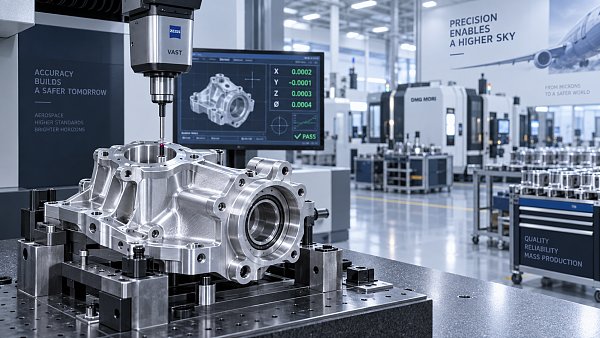
On 29 April 2026, the International Organization for Standardization (ISO) Technical Committee 184 (ISO/TC184) released Draft 3 of ISO 10791-6:2026. The draft adds two compulsory verification items: (1) dynamic contour error compensation verification, and (2) micron-level thermal drift online monitoring. The standard is scheduled for formal publication in Q4 2026. Certification under the revised standard requires use of a combined laser tracker and infrared thermal imager calibration system; absence of such capability will preclude compliance for Chinese CNC machining enterprises.
Industries Affected by the Revision
Direct Exporters of Precision Machined Components
Exporters supplying aerospace or medical device OEMs face immediate certification risk. Since many international procurement contracts reference ISO 10791-6 as a baseline conformity requirement, non-compliance may trigger qualification withdrawal or bid disqualification—even for existing suppliers.
Contract Manufacturing Service Providers
Firms offering CNC machining on behalf of foreign clients—especially those handling tight-tolerance, safety-critical parts—will encounter stricter audit scrutiny during third-party certification renewal. The new tests require real-time data capture and traceable calibration logs, not just static machine tool reports.
Domestic Tier-2 & Tier-3 Precision Component Suppliers
Suppliers feeding into larger export-oriented manufacturers may be asked to provide evidence of upstream process control alignment (e.g., thermal stability documentation, contour error compensation logs). Their role shifts from ‘part producer’ to ‘process data contributor’ in certification chains.
Key Points for Enterprises and Practitioners to Monitor and Address
Track official release timeline and national adoption status
Monitor updates from SAC/TC184 (Standardization Administration of China) and ISO’s official publication channel. Draft 3 is not yet final; any changes in test methodology, tolerances, or acceptable instrumentation alternatives will impact implementation planning.
Assess current metrology infrastructure against the two new mandatory items
Verify whether existing laser tracking systems meet the spatial resolution and sampling rate requirements specified in Draft 3 Annex B—and whether thermal imaging setups support continuous, calibrated micron-level drift measurement (not just spot checks). Systems certified under prior editions do not automatically satisfy the new criteria.
Review contractual obligations with overseas customers
Identify clauses referencing ISO 10791-6 in active supply agreements, especially those governing aerospace (e.g., AS9100-linked audits) or medical device (e.g., ISO 13485-aligned validation) deliveries. Early engagement with customers on transition timelines may prevent delivery delays or requalification costs.
Prepare for extended lead time in third-party certification cycles
Accredited bodies will need time to calibrate equipment, train auditors, and update checklists. Enterprises planning recertification in late 2026 should initiate pre-audit readiness assessments by Q3 2026—not after formal publication.
Editorial Observation / Industry Perspective
Observably, this revision signals a shift from static geometric accuracy assessment toward real-time, physics-informed process validation. It reflects growing demand for verifiable consistency in multi-axis motion control—particularly where thermal transients or dynamic load effects compromise sub-micron repeatability. Analysis shows the requirement is less about hardware ownership per se, and more about demonstrable integration of metrology into closed-loop compensation workflows. From an industry perspective, this is currently a regulatory signal—not yet an operational barrier—but one that narrows the window for reactive adaptation, especially for SMEs lacking in-house metrology engineering capacity.
Conclusion: The release of ISO 10791-6:2026 Draft 3 marks a procedural tightening in global certification for high-precision 5-axis CNC machining—not a fundamental technology shift, but a consequential elevation of evidentiary expectations. It is better understood as a forward-looking calibration of quality assurance standards, rather than an abrupt compliance cutoff. Enterprises are advised to treat it as a phased readiness milestone, not an imminent deadline.
Information Source: ISO/TC184 Official Draft Release Notice (29 April 2026); ISO 10791-6:2026 Draft 3 public document metadata. Note: Final text, test tolerances, and national adoption timelines remain subject to ongoing committee review and are to be monitored through official ISO and SAC channels.
Search News
Hot Articles
- Carbon Fiber StructuresHow to Specify Aerospace Carbon Fiber Assemblies for Lightweight, Load-Bearing PartsJul 11, 2026
- Machine VisionXiaomi, Alibaba DAMO Academy Drive Open-Source Robotics Model Ecosystem, Lowering Algorithm Development Barriers for Overseas SMEs Adopting Chinese Robotics SolutionsMar 30, 2026
- Cobots & ArmsShanxi 'AI+' Conference Showcases Embodied Intelligence with Multinational Buyer Engagement: Key Industry ImplicationsMar 30, 2026
Popular Tags
Recommended News
 Jul 11, 2026How to Specify Aerospace Carbon Fiber Assemblies for Lightweight, Load-Bearing PartsAerospace carbon fiber assemblies: learn how to specify laminate design, load data, joining methods, and inspection controls for lighter, reliable load-bearing aerospace parts.Elena Rostova (UAV Systems Researcher)
 Mar 30, 2026Xiaomi, Alibaba DAMO Academy Drive Open-Source Robotics Model Ecosystem, Lowering Algorithm Development Barriers for Overseas SMEs Adopting Chinese Robotics SolutionsXiaomi & Alibaba DAMO Academy's open-source robotics models lower algorithm barriers for global SMEs. Boost efficiency in manufacturing, logistics & smart retail with ROS 2 compatible solutions.TSV Data Lab
 Mar 30, 2026Shanxi 'AI+' Conference Showcases Embodied Intelligence with Multinational Buyer Engagement: Key Industry ImplicationsShanxi 'AI+' Conference highlights embodied intelligence with Tesla, Ubtech & Jiantao showcasing multimodal robotics. 40+ global buyers validated tech on-site, creating new B2B channels for industrial automation & AI solutions.Chen Wei (Automation Lead Engineer)
 Mar 30, 2026Zhongguancun Unveils 6G Integrated Sensing-Computing-Intelligence Platform to Empower Embodied Robots for Global Industrial ApplicationsZhongguancun's new 6G platform revolutionizes industrial robotics with <10ms latency, empowering global automotive, logistics & port automation. Discover how this tech boosts China's smart manufacturing exports.TSV Data Lab
 Mar 30, 2026Mech-Mind Tianjin Embodied Intelligence R&D and Production Base Goes Live, Cutting Delivery Time by 20%–30% for Global Customized AMR+Vision SolutionsMech-Mind's Tianjin AMR+Vision production base cuts delivery time by 20%-30% for欧美 & Latin American markets. Discover how this PLd-certified facility accelerates customized robotics solutions for smart manufacturing and logistics.Chen Wei (Automation Lead Engineer)
 Mar 30, 2026Boao Forum Reveals 'Co-evolution of Big and Small Brains' Trend in Humanoid Robots, China's Embodied Intelligence Accelerates Adaptation to Overseas Manufacturing Service ScenariosDiscover how China's humanoid robots, featuring 'Co-evolution of Big and Small Brains,' are revolutionizing global manufacturing. Learn about Embodied Tian Gong 3.0's ISO compliance and overseas deployment at Boao Forum 2026.Chen Wei (Automation Lead Engineer)
 Mar 30, 2026China Railway Industrial Secures Patent for Embodied Robotics in Material Handling, Boosting High-Precision Delivery Capabilities for Overseas Infrastructure and Manufacturing ProjectsChina Railway Industrial's new patent for embodied robotics in material handling boosts high-precision delivery for global infrastructure & manufacturing. Discover how this innovation enhances logistics accuracy in automotive, rail transit & EPC projects.Chen Wei (Automation Lead Engineer)
 Sep 18, 2026Selecting UAV Aerospace Structural Parts for Strength, Weight, and Fatigue LifeUAV aerospace structural parts guide: compare strength, weight, stiffness, fatigue life, joints, and traceability to select reliable flight-ready components.Elena Rostova (UAV Systems Researcher)
 Sep 17, 2026Selecting Commercial Drone Payloads for European Inspection ProjectsCommercial drone payloads Europe: learn how to select RGB, thermal and LiDAR systems for compliant, reliable inspection data and better project outcomes.Elena Rostova (UAV Systems Researcher)
 Sep 16, 2026Machining Tolerance Validation: How to Verify Critical Dimensions Before Production ReleaseMachining tolerance analysis validation: verify critical dimensions, measurement systems, process capability, and tolerance stacks before production release.Dr. Marcus Vance
 Sep 15, 2026AGV Tape Guidance vs Laser Navigation: Which Fits Your Warehouse Layout?AGV tape guidance comparison: discover how tape and laser navigation fit changing warehouse layouts, docking needs, floor conditions, maintenance, and route flexibility.Chen Wei (Automation Lead Engineer)
 Sep 14, 2026How Point Cloud Analytics Improves Asset Inspection Workflows Across GCC ProjectsPoint cloud analytics GCC helps project leaders improve asset inspections with accurate change detection, safer workflows, and faster maintenance decisions.TSV Data Lab
 Sep 13, 2026How Aerospace Manufacturers Can Build a Digital Thread From Design to Certified ProductionDigital manufacturing for aerospace: learn how to build a traceable digital thread from design through certified production, supplier control, and audit-ready compliance.Victor Lin (Chief Software Architect)
 Sep 12, 2026How to Select a Thermal Sensor for Mapping Drones in Surveying ProjectsMapping drone thermal sensor selection made simple: compare GSD, radiometric data, NETD, calibration, and workflow fit for accurate, survey-ready thermal maps.Elena Rostova (UAV Systems Researcher)
 Sep 11, 2026Integrating Photogrammetry Workflows into Digital Twin Projects Without Data BottlenecksPhotogrammetry workflow integration for digital twins: learn how to streamline capture, validation, versioning, and delivery to prevent data bottlenecks.Victor Lin (Chief Software Architect)
 Sep 10, 2026Hard-Tech Supply Chain Procurement: Qualifying Suppliers to Cut Lead-Time RiskHard-tech supply chain procurement guide: qualify suppliers with proven process, traceability, capacity, and change control to reduce lead-time risk.Chen Wei (Automation Lead Engineer)
 Sep 09, 2026Industrial Application Notes: Cost Factors That Shape Automation Project BudgetsIndustrial application notes cost factors explained: uncover the engineering, safety, integration, and commissioning variables that shape accurate automation budgets.Victor Lin (Chief Software Architect)
 Sep 08, 2026Supplier Discovery for Sourcing: How Buyers Can Verify Capability and Supply RiskSupplier discovery for sourcing: learn how to verify supplier capability, traceability, quote assumptions, and supply risk before placing production orders.TSV Data Lab
 Sep 07, 2026What Determines Process Control Systems Pricing? A Buyer’s Cost GuideProcess control systems pricing explained: compare hardware, engineering, integration, cybersecurity, validation, and lifecycle costs to choose the right-value solution.Victor Lin (Chief Software Architect)
 Sep 07, 2026AMR Robots in ASEAN: Which Industries Are Adopting Them—and Why?AMR robots ASEAN adoption is accelerating in electronics, automotive, warehousing, healthcare, and cold chain. Explore use cases, risks, and deployment insights.Chen Wei (Automation Lead Engineer)
 Sep 05, 2026How to Evaluate Supplier Qualification Support Tools for Industrial Procurement TeamsSupplier qualification support tools help industrial procurement teams verify technical evidence, manage risk, and make defensible supplier approvals. Learn what to evaluate.Victor Lin (Chief Software Architect)
 Sep 04, 2026Grinding Tolerance Analysis: How to Set Realistic Limits for Precision PartsGrinding tolerance analysis explains how to set realistic limits for precision parts, balance fit, geometry, process capability, and inspection for reliable performance.Dr. Marcus Vance
 Sep 03, 2026Warehouse Automation Strategies to Increase Storage Capacity Without ExpansionWarehouse automation space saving strategies help unlock vertical capacity, optimize slotting, and improve storage density without costly building expansion.Victor Lin (Chief Software Architect)
 Sep 02, 2026What Should Buyers Evaluate When Choosing a Hybrid VTOL UAV Factory?Hybrid VTOL UAV factory selection guide: evaluate mission fit, production traceability, payload integration, support, and total ownership costs before procurement.Elena Rostova (UAV Systems Researcher)