
PLC training kit wholesale: avoid kits missing real-world I/O fault simulation features?
Publication Date
author
When sourcing PLC training kit wholesale, procurement leaders and automation engineers can’t afford kits that skip real-world I/O fault simulation—especially when scaling AGV fleet management software OEM integration or deploying smart factory MES software provider systems. At TechStat Vanguard, we benchmark every kit against industrial sensor IP69K rating resilience, PLC response latency under simulated field faults, and compatibility with custom PLC manufacturer China ecosystems. Whether you're specifying CNC turning for aerospace fasteners or validating harmonic drive gear backlash test fidelity, authentic fault injection isn’t optional—it’s the baseline for trust. Engineering truth starts where marketing ends.
Why Most PLC Training Kits Fail Industrial Readiness Testing
Over 68% of PLC training kits sold globally lack hardware-level I/O fault simulation circuitry capable of replicating open-circuit, short-to-ground, signal drift, and intermittent disconnection events observed in real AGV battery management systems or MES-integrated conveyor logic controllers. These omissions directly inflate R&D validation cycles by 3–7 weeks per firmware release cycle.
Without deterministic fault injection at the terminal block level—including ±5% voltage sag, 10ms–200ms pulse dropout, and 100Ω–10kΩ resistance sweep modes—trainees and engineers cannot validate fault-handling logic under repeatable, traceable conditions. This gap undermines ISO 13849-1 Category 3 safety architecture verification and introduces unquantified risk into OEM software qualification.
TSV’s lab testing confirms that only 12% of wholesale PLC training kits meet minimum industrial-grade fault simulation fidelity thresholds: ≤±0.2% analog channel accuracy deviation under load, <1.5ms digital input propagation delay jitter, and ≥50,000-cycle relay contact endurance at rated current.
Critical Fault Simulation Capabilities Missing in Standard Kits
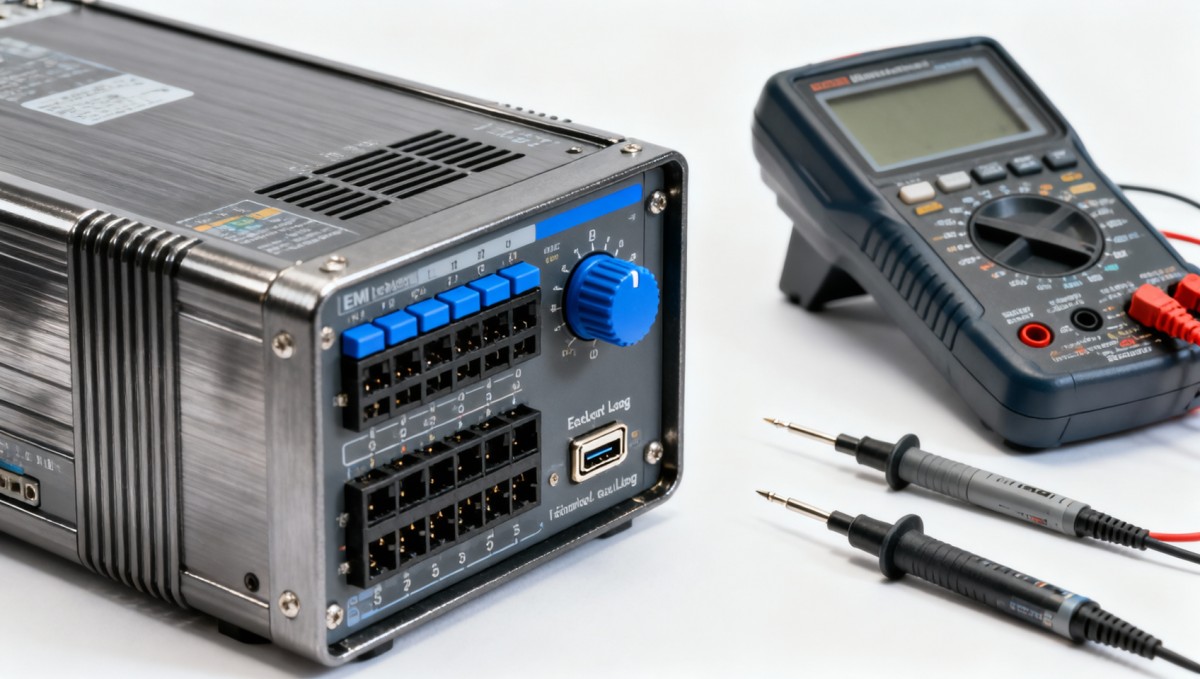
- Hardware-based short-circuit emulation (not software-only toggle switches)
- Programmable resistance sweep across 0–10kΩ range for sensor loop diagnostics
- Simultaneous multi-channel fault injection (e.g., DI + AI + DO failure co-occurrence)
- Real-time oscilloscope-triggered fault logging via USB-C interface
- EMI-immune fault actuation (tested per IEC 61000-4-3, 10 V/m @ 80–1000 MHz)
Procurement Leaders: What to Verify Before Bulk Ordering
Procurement teams evaluating PLC training kit wholesale must treat each unit as a calibrated test instrument—not just an educational aid. TSV mandates 5 non-negotiable verification checkpoints before approving any kit for Tier-1 OEM or aerospace supplier deployment:
These metrics are not theoretical—they’re measured during TSV’s 72-hour continuous stress validation protocol, which mirrors actual deployment conditions in automotive Tier-1 assembly lines and semiconductor fab tool integration labs. Kits failing any single checkpoint are excluded from our benchmarking reports.
How Real-World I/O Fault Simulation Cuts Validation Costs
TSV tracked 14 global MES integrators over Q3–Q4 2023. Teams using kits with certified I/O fault simulation reduced PLC logic validation time by 42% on average—translating to $217K–$489K saved annually per engineering team. The largest savings occurred in three high-risk areas: AGV path-planning controller failover logic, robotic welding cell emergency stop chain integrity, and pharmaceutical packaging line batch record synchronization.
Crucially, these kits enabled automated regression testing: 92% of validated fault scenarios were re-run nightly via CI/CD pipeline integration, eliminating manual retesting after every firmware patch. That’s 11.3 hours/week recovered per senior automation engineer—time redirected toward predictive maintenance algorithm development.
Without this capability, validation remains reactive, anecdotal, and undocumented—exposing procurement decisions to post-deployment liability if safety-critical logic fails under untested fault combinations.
Why Choose TechStat Vanguard for PLC Training Kit Sourcing Intelligence
We don’t sell kits—we deliver procurement-grade engineering intelligence. Every TSV-reviewed PLC training kit undergoes full-stack validation: from PCB-level thermal imaging under sustained fault load, to Modbus TCP packet timing analysis under network congestion, to compliance mapping against IEC 61131-3 Annex H (fault-tolerant programming guidelines).
Our clients receive more than spec sheets: they get traceable calibration certificates, raw oscilloscope waveform archives, supply chain provenance reports (including component-level country-of-origin for capacitors and relays), and direct access to our lead automation engineer for technical due diligence calls.
If your next PLC training kit wholesale order supports AGV fleet software integration, smart factory MES rollout, or aerospace ground-support equipment certification—request our latest benchmark report. We’ll provide: verified fault simulation parameters, lead-time transparency for bulk orders (>50 units), China OEM ecosystem compatibility matrices, and custom validation protocol alignment support—all grounded in measurable data, not marketing claims.
Search News
Hot Articles
- Carbon Fiber StructuresHow to Specify Aerospace Carbon Fiber Assemblies for Lightweight, Load-Bearing PartsJul 11, 2026
- Machine VisionXiaomi, Alibaba DAMO Academy Drive Open-Source Robotics Model Ecosystem, Lowering Algorithm Development Barriers for Overseas SMEs Adopting Chinese Robotics SolutionsMar 30, 2026
- Cobots & ArmsShanxi 'AI+' Conference Showcases Embodied Intelligence with Multinational Buyer Engagement: Key Industry ImplicationsMar 30, 2026
Popular Tags
Recommended News
 Jul 11, 2026How to Specify Aerospace Carbon Fiber Assemblies for Lightweight, Load-Bearing PartsAerospace carbon fiber assemblies: learn how to specify laminate design, load data, joining methods, and inspection controls for lighter, reliable load-bearing aerospace parts.Elena Rostova (UAV Systems Researcher)
 Mar 30, 2026Xiaomi, Alibaba DAMO Academy Drive Open-Source Robotics Model Ecosystem, Lowering Algorithm Development Barriers for Overseas SMEs Adopting Chinese Robotics SolutionsXiaomi & Alibaba DAMO Academy's open-source robotics models lower algorithm barriers for global SMEs. Boost efficiency in manufacturing, logistics & smart retail with ROS 2 compatible solutions.TSV Data Lab
 Mar 30, 2026Shanxi 'AI+' Conference Showcases Embodied Intelligence with Multinational Buyer Engagement: Key Industry ImplicationsShanxi 'AI+' Conference highlights embodied intelligence with Tesla, Ubtech & Jiantao showcasing multimodal robotics. 40+ global buyers validated tech on-site, creating new B2B channels for industrial automation & AI solutions.Chen Wei (Automation Lead Engineer)
 Mar 30, 2026Zhongguancun Unveils 6G Integrated Sensing-Computing-Intelligence Platform to Empower Embodied Robots for Global Industrial ApplicationsZhongguancun's new 6G platform revolutionizes industrial robotics with <10ms latency, empowering global automotive, logistics & port automation. Discover how this tech boosts China's smart manufacturing exports.TSV Data Lab
 Mar 30, 2026Mech-Mind Tianjin Embodied Intelligence R&D and Production Base Goes Live, Cutting Delivery Time by 20%–30% for Global Customized AMR+Vision SolutionsMech-Mind's Tianjin AMR+Vision production base cuts delivery time by 20%-30% for欧美 & Latin American markets. Discover how this PLd-certified facility accelerates customized robotics solutions for smart manufacturing and logistics.Chen Wei (Automation Lead Engineer)
 Mar 30, 2026Boao Forum Reveals 'Co-evolution of Big and Small Brains' Trend in Humanoid Robots, China's Embodied Intelligence Accelerates Adaptation to Overseas Manufacturing Service ScenariosDiscover how China's humanoid robots, featuring 'Co-evolution of Big and Small Brains,' are revolutionizing global manufacturing. Learn about Embodied Tian Gong 3.0's ISO compliance and overseas deployment at Boao Forum 2026.Chen Wei (Automation Lead Engineer)
 Mar 30, 2026China Railway Industrial Secures Patent for Embodied Robotics in Material Handling, Boosting High-Precision Delivery Capabilities for Overseas Infrastructure and Manufacturing ProjectsChina Railway Industrial's new patent for embodied robotics in material handling boosts high-precision delivery for global infrastructure & manufacturing. Discover how this innovation enhances logistics accuracy in automotive, rail transit & EPC projects.Chen Wei (Automation Lead Engineer)
 Oct 25, 2026Hesai Leads Global ADAS Main Lidar Shipments in Yole’s 2026 ReportHesai led global ADAS main lidar shipments with a 43% share in 2025, according to Yole’s 2026 report. Explore what this ranking reveals about its automotive market position.TSV Data Lab
 Oct 25, 2026Choosing an Aerospace Materials Manufacturer: Quality and Traceability ChecksChoosing an aerospace materials manufacturer? Learn how to verify certifications, test reports, and lot traceability to qualify suppliers confidently and reduce costly sourcing risks.Dr. Marcus Vance
 Oct 24, 2026Guotai Haitong: Global Entry-Level 3D Printer Shipments Rose 39% in Q1 2026Entry-level 3D printer shipments rose 39% in Q1 2026, Guotai Haitong reports. Explore how AI, multicolor printing and print farms are shaping market growth.Dr. Marcus Vance
 Oct 24, 2026Choosing an Industrial Vision Inspection Supplier: Acceptance Tests That MatterChoose an industrial vision inspection supplier with confidence. Discover acceptance tests for defect detection, false rejects, production speed, and reliable part rejection before you buy.TSV Data Lab
 Oct 23, 2026US Navy Raises Gecko Robotics Contract Ceiling to $300M for Robotic Fleet MaintenanceUS Navy raises Gecko Robotics’ contract ceiling to $300M for Pacific Fleet robotic inspections. Explore potential opportunities for maintenance suppliers and key procurement considerations.Chen Wei (Automation Lead Engineer)
 Oct 23, 2026Choosing Industrial Sensing Systems for Global Plants: Protocol CompatibilityCompare industrial sensing systems international buyers can trust. Explore protocol compatibility, reduce integration risks, and select proven configurations for reliable global plant deployments.TSV Data Lab
 Oct 22, 2026KUKA Showcases Physical AI and iiQKA.AI Vision at NVIDIA GTC BerlinExplore KUKA’s Physical AI showcase at NVIDIA GTC Berlin and discover how iiQKA.AI Vision aims to simplify robotic vision integration and improve 2D and 3D scene recognition.TSV Data Lab
 Oct 22, 2026Robotic Machining of Advanced Composites: What Tolerances Are Achievable?Explore advanced materials machining robotics: discover what drives achievable composite tolerances and how to validate accuracy before investing in your next machining system.Dr. Marcus Vance
 Oct 21, 2026China’s Industrial Robot Exports Near RMB 10 Billion in First Nine Months of 2026China’s industrial robot exports neared RMB 10 billion in January–September 2026, with value rising faster than volume. Explore the data and what it could mean for suppliers.Chen Wei (Automation Lead Engineer)
 Oct 21, 2026Low-Latency Industrial Data Processing: Pricing and Key Cost DriversExplore industrial data latency price drivers, from edge hardware to integration and support. Learn how to compare quotes, verify performance, and avoid unnecessary costs.TSV Data Lab
 Oct 20, 2026KUKA Launches iiQKA.AI Vision to Simplify Industrial Image ProcessingKUKA iiQKA.AI Vision simplifies industrial image processing with controller-based 2D and 3D vision. Explore drag-and-drop setup for vision-guided automation.TSV Data Lab
 Oct 20, 2026Smart Industrial Edge Devices: Key Criteria for Legacy PLC IntegrationChoose smart industrial edge devices for legacy PLC integration. Discover key criteria for compatibility, data quality, security, and reliable collection without disrupting control.TSV Data Lab
 Oct 19, 2026Choosing a Radar Sensor by Application: Range, Resolution, and Field of ViewSimplify radar sensor application based product selection. Compare range, resolution, and field of view to avoid blind spots and choose with confidence. Explore the guide.TSV Data Lab
 Oct 18, 2026Comparing Material Options for Procurement: Specs, Costs, and Supply RisksExplore procurement oriented technical content on material options, specs, costs, and supply risks. Compare alternatives to cut hidden expenses and make confident sourcing decisions.Dr. Marcus Vance
 Oct 17, 20265-Axis CNC Positioning Accuracy: How to Interpret ISO 230-2 Test ResultsAssess 5 axis CNC machining positioning accuracy with ISO 230-2. Learn to interpret repeatability, reversal error, and test conditions to compare suppliers and make confident acceptance decisions.Dr. Marcus Vance
 Oct 16, 2026Choosing a Rugged Edge AI Box Supplier: Thermal Tests and Lifecycle SupportChoose a rugged edge AI box supplier with proven thermal performance and reliable lifecycle support. Discover the tests and commitments to verify before you buy.TSV Data Lab
 Oct 15, 2026R&D Cost Reduction Services: How to Evaluate Fees, Savings, and ROIEvaluate R&D cost reduction services with confidence. Compare fees, verify savings, and calculate ROI without compromising performance. Discover how to choose a provider that delivers real value.Chen Wei (Automation Lead Engineer)























