Robotics Automation Price: What Drives Total Cost for Factory Deployment?
Publication Date
author
Why the quoted robot price rarely tells you the real factory automation cost
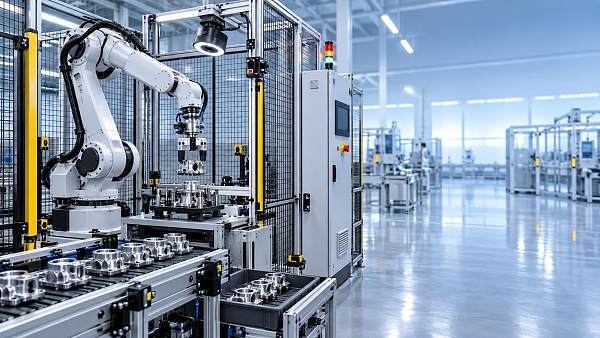
When procurement teams compare robotics automation price, the first mistake is treating the robot itself as the project cost. In practice, the arm, AMR, gantry, or handling unit is only one line item. The total spend is shaped by what the system must do, how tightly it must do it, what it must connect to, and how much plant-side work is needed before the first cycle ever runs.
A low headline quote can still turn into an expensive deployment if the integrator later adds tooling, safety fencing, vision, PLC work, recipe management, line modifications, and commissioning days. A higher initial quote can actually be the cheaper option if it already includes those items and reduces startup risk.
For purchasing, the useful question is not “What does the robot cost?” It is “What does one stable, accepted production cell cost from mechanical install through handover?” That framing usually changes the vendor ranking.
Which cost components should be included in a serious budget?
If you want a budget that survives internal review, include the full deployment stack. The obvious hardware is only part of it.
If a quote does not break these items out, you are not comparing offers yet. You are comparing packaging styles.
What technical factors push robotics automation price up fastest?
Three factors usually move cost faster than buyers expect: precision, variability, and integration depth.
Precision affects more than robot selection. If the process needs tight repeatability, force control, vision correction, calibrated fixtures, or in-process verification, the supporting engineering stack grows. The robot may be capable, but the application becomes harder to stabilize.
Part variability is another hidden multiplier. A system picking uniform cartons is a very different cost profile from one handling reflective metal parts, soft bags, mixed SKUs, or inconsistent incoming orientation. Every source of variability tends to add sensors, programming, error handling, and debug time.
Integration depth is where many budgets drift. A stand-alone cell is one thing. A cell that exchanges data with upstream conveyors, downstream inspection, plant PLCs, recipe databases, and traceability systems is a different procurement category. The more handshakes, the more engineering risk sits outside the robot hardware itself.
Is a collaborative robot always the lower-cost option?
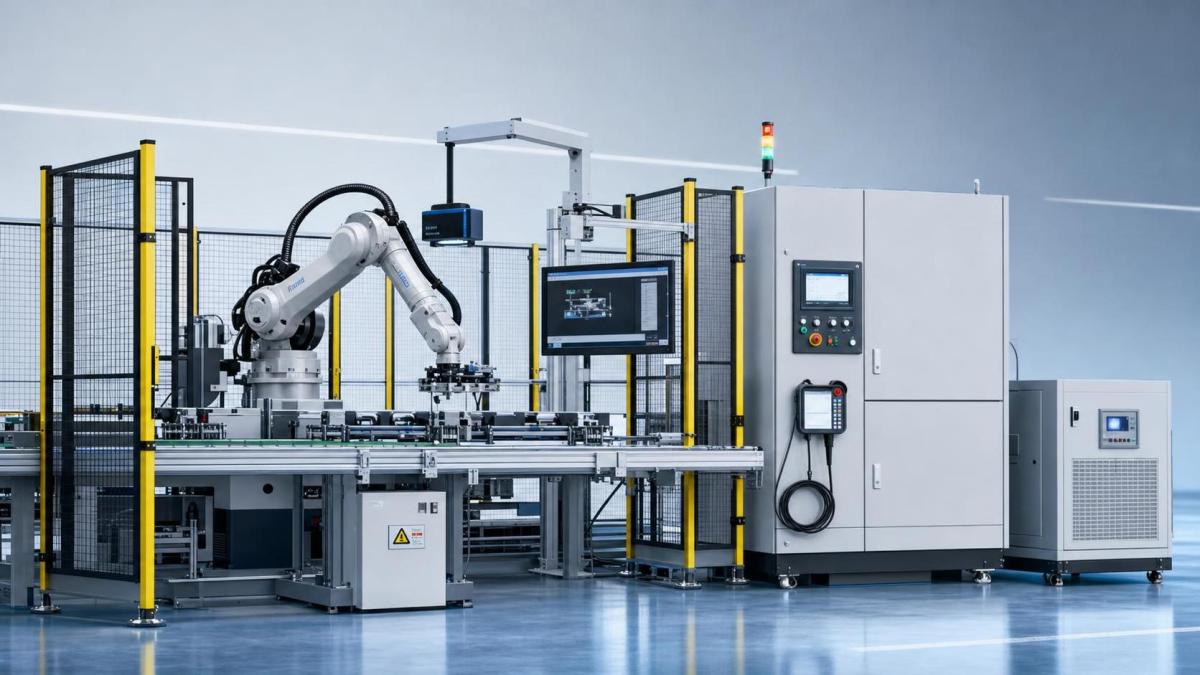
Not automatically. Cobots are often marketed as the simple answer because the unit price and setup story can look attractive. But the right comparison is not cobot versus industrial robot in isolation. It is total deployed cost for the required throughput, payload, reach, and safety concept.
A cobot can reduce guarding and floor-space burden in the right task, especially for lower-speed handling, machine tending, or mixed manual-automatic workflows. But if your cycle time target is aggressive, or the payload and reach requirement is near the upper end, the cell may need compromises that reduce output. In that case, a traditional industrial robot with proper safeguarding may deliver better economics per unit produced.
The practical check is straightforward: ask each supplier to quote the same accepted cycle time, same payload, same uptime assumption, and same safety boundary. That removes a lot of marketing noise.
Why do integration and commissioning often blow the budget?
Because many RFQs describe the desired outcome but not the real plant conditions. Integrators price what is defined. The gap between the document and the factory floor becomes change orders.
Typical sources of overrun include:
- Incomplete utility information such as air quality, voltage, network architecture, and available floor loading
- No confirmed definition of FAT and SAT pass criteria
- Late changes to part presentation, SKU count, or product dimensions
- Unclear ownership of third-party equipment interfaces
- Missing production samples representing worst-case conditions
Procurement can reduce this risk by forcing definition early. Request interface lists, I/O counts, utility specs, layout constraints, sample part conditions, and acceptance metrics before final commercial alignment. If those fields are still open, the quote is provisional even when it looks detailed.
What should be in the RFQ if you want comparable pricing?
A useful RFQ does not ask for “best price for an automation solution.” It defines the operating envelope. That is what lets suppliers price the same job instead of inventing different scopes.
- Process description: pick, place, weld, inspect, palletize, screwdriving, dispensing, or machine tending
- Part details: dimensions, weight, material, orientation variability, surface condition
- Performance targets: cycle time, takt time, throughput, uptime expectation, changeover time
- Accuracy needs: repeatability, tolerance window, inspection criteria, reject handling
- Plant interface requirements: PLC brand, fieldbus, MES/ERP connection, traceability fields
- Safety scope: guarding approach, access modes, reset logic, operator interaction zones
- Commercial boundaries: delivery terms, FAT/SAT, training, spare parts, warranty, response time
If one vendor includes all of this and another answers with a one-page budgetary quote, the cheaper number is not automatically useful. It may simply be less complete.
How do software and data requirements change total cost?
More than many buyers expect. Basic motion control is one level of cost. Production data capture, recipe management, alarm history, user permissions, remote diagnostics, and integration into plant reporting systems add another layer that can materially change engineering hours.
This is especially relevant when the automation cell is expected to support quality traceability or multi-SKU production. You are no longer buying movement alone. You are buying decision logic, operator interface design, data mapping, and exception handling. That work often sits in controls engineering and software validation, not in the robot hardware line.
For sourcing, ask vendors to separate license costs, custom software scope, and future modification rates. Otherwise, a low-capex quote can become expensive once recipe changes or reporting updates start.
Where do operating costs usually show up after installation?
The post-installation spend usually comes from maintenance labor, consumables, spare parts, unplanned downtime, and production losses during troubleshooting. In some applications, end-of-arm tooling wear becomes a bigger cost driver than the robot itself.
A few questions expose this quickly:
- Which components are expected wear items, and what is the replacement interval under your duty cycle?
- Which spares are critical for restart, and are they stocked locally?
- Can your maintenance team handle first-line recovery, or does every fault require integrator support?
- What production is lost if a vision camera, servo drive, or gripper module fails?
That is why robotics automation price should always be reviewed as both capex and expected support burden. A machine that is hard to recover on second shift may be cheap only on paper.
Should procurement compare projects by payback period alone?
Payback is useful, but it is not enough on its own. A short payback estimate can be built on fragile assumptions: perfect uptime, full labor removal on day one, no debug period, and no production variation. Those assumptions rarely survive contact with a real line.
A better comparison combines three views: initial deployed cost, ramp-up risk, and cost per stable unit produced. The last one matters because two systems with similar capex can perform very differently once you factor in downtime, staffing, scrap, and changeover losses.
If finance needs one number, give payback. If procurement needs a reliable decision, ask for the assumptions behind it and stress-test them against actual plant conditions.
What are the most common buying mistakes?
The most expensive mistake is buying against a demo instead of a defined production requirement. Demo cells are controlled environments. Production lines are not.
Other repeat offenders are familiar:
- Selecting by robot brand reputation without validating the integrator’s application depth
- Ignoring fixture design and part presentation, then blaming the robot for inconsistency
- Leaving safety scope vague until late project stages
- Treating software changes as minor when they affect recipes, permissions, or data flow
- Accepting quotes that do not define exclusion items
When you review proposals, the cleanest pricing is usually the one tied to the clearest assumptions. That is the quote least likely to move later.
What is the best final check before issuing a PO?
Run one disciplined gap review. Put the technical lead, operations owner, maintenance representative, EHS, and procurement in the same review and walk through scope line by line: process inputs, output targets, interfaces, safety concept, acceptance criteria, support model, and exclusions. If a supplier promise is important, it should exist in a document, not in a meeting memory.
That is usually the difference between a robotics automation price that stays under control and one that expands through revisions, delays, and avoidable site work. In factory deployment, the cheapest quote is often the least complete one. The better buy is the system whose technical boundary is explicit enough that cost, risk, and responsibility are visible before installation starts.
Search News
Hot Articles
- Carbon Fiber StructuresHow to Specify Aerospace Carbon Fiber Assemblies for Lightweight, Load-Bearing PartsJul 11, 2026
- Machine VisionXiaomi, Alibaba DAMO Academy Drive Open-Source Robotics Model Ecosystem, Lowering Algorithm Development Barriers for Overseas SMEs Adopting Chinese Robotics SolutionsMar 30, 2026
- Cobots & ArmsShanxi 'AI+' Conference Showcases Embodied Intelligence with Multinational Buyer Engagement: Key Industry ImplicationsMar 30, 2026
Popular Tags
Recommended News
 Jul 11, 2026How to Specify Aerospace Carbon Fiber Assemblies for Lightweight, Load-Bearing PartsAerospace carbon fiber assemblies: learn how to specify laminate design, load data, joining methods, and inspection controls for lighter, reliable load-bearing aerospace parts.Elena Rostova (UAV Systems Researcher)
 Mar 30, 2026Xiaomi, Alibaba DAMO Academy Drive Open-Source Robotics Model Ecosystem, Lowering Algorithm Development Barriers for Overseas SMEs Adopting Chinese Robotics SolutionsXiaomi & Alibaba DAMO Academy's open-source robotics models lower algorithm barriers for global SMEs. Boost efficiency in manufacturing, logistics & smart retail with ROS 2 compatible solutions.TSV Data Lab
 Mar 30, 2026Shanxi 'AI+' Conference Showcases Embodied Intelligence with Multinational Buyer Engagement: Key Industry ImplicationsShanxi 'AI+' Conference highlights embodied intelligence with Tesla, Ubtech & Jiantao showcasing multimodal robotics. 40+ global buyers validated tech on-site, creating new B2B channels for industrial automation & AI solutions.Chen Wei (Automation Lead Engineer)
 Mar 30, 2026Zhongguancun Unveils 6G Integrated Sensing-Computing-Intelligence Platform to Empower Embodied Robots for Global Industrial ApplicationsZhongguancun's new 6G platform revolutionizes industrial robotics with <10ms latency, empowering global automotive, logistics & port automation. Discover how this tech boosts China's smart manufacturing exports.TSV Data Lab
 Mar 30, 2026Mech-Mind Tianjin Embodied Intelligence R&D and Production Base Goes Live, Cutting Delivery Time by 20%–30% for Global Customized AMR+Vision SolutionsMech-Mind's Tianjin AMR+Vision production base cuts delivery time by 20%-30% for欧美 & Latin American markets. Discover how this PLd-certified facility accelerates customized robotics solutions for smart manufacturing and logistics.Chen Wei (Automation Lead Engineer)
 Mar 30, 2026Boao Forum Reveals 'Co-evolution of Big and Small Brains' Trend in Humanoid Robots, China's Embodied Intelligence Accelerates Adaptation to Overseas Manufacturing Service ScenariosDiscover how China's humanoid robots, featuring 'Co-evolution of Big and Small Brains,' are revolutionizing global manufacturing. Learn about Embodied Tian Gong 3.0's ISO compliance and overseas deployment at Boao Forum 2026.Chen Wei (Automation Lead Engineer)
 Mar 30, 2026China Railway Industrial Secures Patent for Embodied Robotics in Material Handling, Boosting High-Precision Delivery Capabilities for Overseas Infrastructure and Manufacturing ProjectsChina Railway Industrial's new patent for embodied robotics in material handling boosts high-precision delivery for global infrastructure & manufacturing. Discover how this innovation enhances logistics accuracy in automotive, rail transit & EPC projects.Chen Wei (Automation Lead Engineer)
 Sep 16, 2026Machining Tolerance Validation: How to Verify Critical Dimensions Before Production ReleaseMachining tolerance analysis validation: verify critical dimensions, measurement systems, process capability, and tolerance stacks before production release.Dr. Marcus Vance
 Sep 15, 2026AGV Tape Guidance vs Laser Navigation: Which Fits Your Warehouse Layout?AGV tape guidance comparison: discover how tape and laser navigation fit changing warehouse layouts, docking needs, floor conditions, maintenance, and route flexibility.Chen Wei (Automation Lead Engineer)
 Sep 14, 2026How Point Cloud Analytics Improves Asset Inspection Workflows Across GCC ProjectsPoint cloud analytics GCC helps project leaders improve asset inspections with accurate change detection, safer workflows, and faster maintenance decisions.TSV Data Lab
 Sep 13, 2026How Aerospace Manufacturers Can Build a Digital Thread From Design to Certified ProductionDigital manufacturing for aerospace: learn how to build a traceable digital thread from design through certified production, supplier control, and audit-ready compliance.Victor Lin (Chief Software Architect)
 Sep 12, 2026How to Select a Thermal Sensor for Mapping Drones in Surveying ProjectsMapping drone thermal sensor selection made simple: compare GSD, radiometric data, NETD, calibration, and workflow fit for accurate, survey-ready thermal maps.Elena Rostova (UAV Systems Researcher)
 Sep 11, 2026Integrating Photogrammetry Workflows into Digital Twin Projects Without Data BottlenecksPhotogrammetry workflow integration for digital twins: learn how to streamline capture, validation, versioning, and delivery to prevent data bottlenecks.Victor Lin (Chief Software Architect)
 Sep 10, 2026Hard-Tech Supply Chain Procurement: Qualifying Suppliers to Cut Lead-Time RiskHard-tech supply chain procurement guide: qualify suppliers with proven process, traceability, capacity, and change control to reduce lead-time risk.Chen Wei (Automation Lead Engineer)
 Sep 09, 2026Industrial Application Notes: Cost Factors That Shape Automation Project BudgetsIndustrial application notes cost factors explained: uncover the engineering, safety, integration, and commissioning variables that shape accurate automation budgets.Victor Lin (Chief Software Architect)
 Sep 08, 2026Supplier Discovery for Sourcing: How Buyers Can Verify Capability and Supply RiskSupplier discovery for sourcing: learn how to verify supplier capability, traceability, quote assumptions, and supply risk before placing production orders.TSV Data Lab
 Sep 07, 2026What Determines Process Control Systems Pricing? A Buyer’s Cost GuideProcess control systems pricing explained: compare hardware, engineering, integration, cybersecurity, validation, and lifecycle costs to choose the right-value solution.Victor Lin (Chief Software Architect)
 Sep 07, 2026AMR Robots in ASEAN: Which Industries Are Adopting Them—and Why?AMR robots ASEAN adoption is accelerating in electronics, automotive, warehousing, healthcare, and cold chain. Explore use cases, risks, and deployment insights.Chen Wei (Automation Lead Engineer)
 Sep 05, 2026How to Evaluate Supplier Qualification Support Tools for Industrial Procurement TeamsSupplier qualification support tools help industrial procurement teams verify technical evidence, manage risk, and make defensible supplier approvals. Learn what to evaluate.Victor Lin (Chief Software Architect)
 Sep 04, 2026Grinding Tolerance Analysis: How to Set Realistic Limits for Precision PartsGrinding tolerance analysis explains how to set realistic limits for precision parts, balance fit, geometry, process capability, and inspection for reliable performance.Dr. Marcus Vance
 Sep 03, 2026Warehouse Automation Strategies to Increase Storage Capacity Without ExpansionWarehouse automation space saving strategies help unlock vertical capacity, optimize slotting, and improve storage density without costly building expansion.Victor Lin (Chief Software Architect)
 Sep 02, 2026What Should Buyers Evaluate When Choosing a Hybrid VTOL UAV Factory?Hybrid VTOL UAV factory selection guide: evaluate mission fit, production traceability, payload integration, support, and total ownership costs before procurement.Elena Rostova (UAV Systems Researcher)
 Sep 01, 2026Cobot Collision Detection Settings: How to Tune Sensitivity, Force, and Stop LimitsCobot collision detection settings explained: tune sensitivity, force thresholds, payload data, and stop limits to reduce false trips and improve safer, reliable automation.Chen Wei (Automation Lead Engineer)
 Aug 31, 2026How Procurement Teams Can Measure and Reduce Supplier Discovery CostsSupplier discovery cost can drain time and budgets. Learn proven ways to measure hidden expenses, qualify suppliers faster, and reduce sourcing risk.Chen Wei (Automation Lead Engineer)