Servo Drive Response Time Explained: How It Affects Positioning Accuracy
Publication Date
author
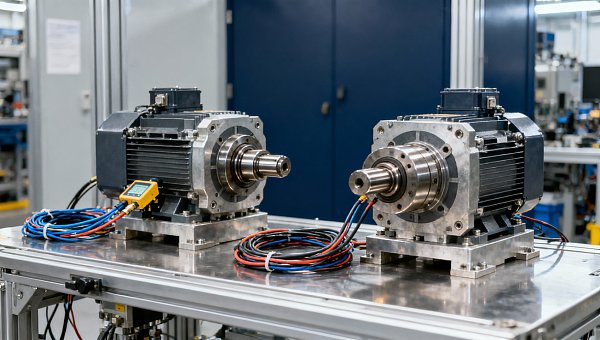
In motion-control systems, servo drive response time is more than a speed metric—it directly shapes positioning accuracy, stability, and repeatability under real operating loads. For technical evaluators comparing automation platforms, understanding how response behavior influences error correction, overshoot, and cycle consistency is essential to making data-backed decisions rather than relying on vague performance claims.
Why servo drive response time matters in real-world positioning performance
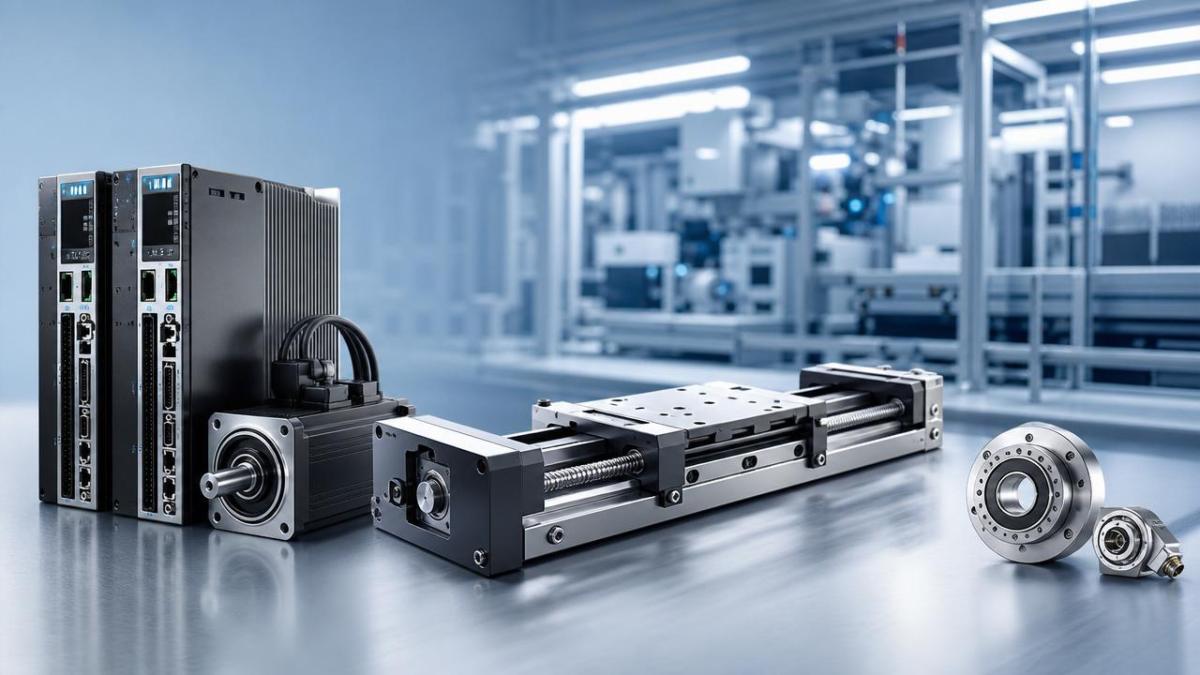
Servo drive response time describes how quickly the drive reacts to a command change, disturbance, or feedback deviation. In practical terms, it affects how fast the axis corrects position error, how smoothly it settles, and how reliably it repeats the same move under changing loads.
For technical evaluation teams, this parameter should never be reviewed in isolation. A fast response can improve throughput and tracking, but if the control loop is poorly tuned or the motor-mechanics pair is mismatched, the same fast response can increase overshoot, oscillation, or thermal stress.
This is where many sourcing decisions go wrong. Marketing material often highlights “high-speed response” without showing settling behavior, encoder resolution dependence, or repeatability under payload variation. TSV’s engineering-first approach is to examine the full control chain, not a single headline value.
- Faster correction usually reduces following error during rapid direction changes.
- Poorly managed fast response can create hunting, vibration, and unstable settling.
- The useful question is not “How fast is the drive?” but “How fast does the axis settle within required tolerance?”
What exactly does servo drive response time influence?
In production systems, servo drive response time affects more than cycle time. It influences positioning accuracy, contour accuracy, repeatability, machine wear, and fault margin. These effects become more visible in applications with high inertia changes, frequent start-stop motion, or narrow process tolerances.
Technical evaluators should map response performance to measurable outcomes. A millisecond-level improvement may have little value in a low-dynamic indexing table, but it may be decisive in electronics assembly, packaging, robotic pick-and-place, or multi-axis interpolation.
Core performance links
- Positioning accuracy: Faster, stable correction reduces residual position error after motion completion.
- Settling time: The axis can enter the acceptable tolerance band sooner after a move.
- Overshoot control: Response quality determines whether the axis exceeds target position before stabilizing.
- Repeatability under load variation: Better disturbance rejection keeps cycle-to-cycle motion more consistent.
- Surface quality or process quality: In machining, dispensing, and inspection systems, unstable response can degrade output quality.
The table below shows how servo drive response time typically connects to operational outcomes that matter during equipment qualification and supplier comparison.
The key takeaway is simple: servo drive response time only creates value when it translates into stable, measurable motion quality. For evaluation teams, final positioning behavior is more meaningful than a standalone response claim.
Which technical parameters should be reviewed together?
A common mistake in automation procurement is reviewing servo drive response time without checking adjacent control and mechanical parameters. A drive can respond quickly on paper while the full axis still performs poorly because of inertia mismatch, encoder limitations, backlash, or structural resonance.
Priority parameters for technical assessment
- Bandwidth and loop tuning range, because they define how aggressively the system can correct error.
- Encoder resolution and feedback quality, because the drive can only correct what it can accurately detect.
- Motor-load inertia ratio, because response claims collapse if the mechanical system is badly matched.
- Settling time within actual process tolerance, because that is what determines usable production speed.
- Peak torque and disturbance rejection, especially in intermittent, high-acceleration applications.
TSV recommends converting marketing descriptions into a parameter matrix. Instead of asking whether a drive is “ultra-responsive,” ask how quickly the axis settles to ±1 pulse, ±10 μm, or the actual tolerance required by your process.
The following comparison table helps technical evaluators review servo drive response time in a broader, more decision-useful context.
This multi-parameter view is especially valuable when comparing drives across robotics, CNC subsystems, AGV steering modules, packaging lines, and inspection platforms where mechanical dynamics differ substantially.
How application scenarios change the meaning of response time
Not every system benefits equally from faster servo drive response time. The right target depends on the process window, the product sensitivity, the axis structure, and the acceptable risk of overshoot. Evaluators should begin with the application, not with a catalog ranking.
Typical scenario differences
- Pick-and-place robotics often value rapid settling after short stroke motion, especially where throughput is tied to index timing.
- Precision dispensing and vision-guided inspection prioritize smoothness and low overshoot because target disturbance can affect quality.
- CNC feed axes require balanced dynamic tracking and contour stability, not just aggressive point-to-point response.
- Aerospace or UAV actuation subsystems may emphasize disturbance rejection and predictable transient behavior under changing loads.
For cross-industry technical reviews, this application-first logic prevents overbuying high-dynamic hardware where it adds cost without process gain, or underbuying a slow-response platform that later fails throughput or accuracy targets.
What procurement teams should ask before approving a servo platform
Technical evaluators are often pressured by delivery deadlines, budget limits, and incomplete supplier data. In that environment, servo drive response time should become part of a structured qualification checklist rather than an isolated specification line.
A practical review checklist
- Define the required tolerance band first, such as angular error, linear deviation, or encoder counts at settle.
- Request measured settling time under the expected payload, travel distance, and acceleration profile.
- Ask whether the servo drive response time value was obtained with auto-tuning, manual tuning, or a laboratory benchmark setup.
- Verify whether resonance suppression, feedforward, or notch filtering was required to reach the published performance.
- Check thermal behavior and continuous duty limits, because strong transient response may hide sustained operation constraints.
This is where TSV’s methodology is useful. By focusing on benchmarkable engineering evidence instead of broad vendor adjectives, teams can shorten qualification cycles and reduce redesign risk after installation.
Common misconceptions about servo drive response time
Several persistent misconceptions distort buying decisions. The first is that faster response automatically means better positioning accuracy. In reality, final accuracy depends on mechanics, feedback quality, control tuning, environmental stability, and the process tolerance itself.
The second misconception is that published response values are directly comparable across suppliers. Test methods differ. One supplier may present loop response in ideal conditions, while another may report axis-level behavior with an actual load. Without test context, procurement comparisons can become misleading.
The third misconception is that instability is mainly a software issue. In many cases, structural flexibility, coupling compliance, backlash, cable effects, or load asymmetry are the real reasons a nominally fast servo cannot hold precise, repeatable motion.
- Fast response is useful only when it remains controllable under the machine’s real inertia and disturbance profile.
- Positioning accuracy should be evaluated at the axis or machine level, not only at the drive specification level.
- Supplier data becomes far more valuable when it includes test method, load condition, and acceptance threshold.
FAQ: how technical evaluators usually compare response performance
How should I compare servo drive response time across different vendors?
Compare only after normalizing the context: load inertia, tuning method, encoder type, move profile, and tolerance band for settling. If vendors cannot provide this detail, treat the response claim as directional rather than decision-grade.
Is lower settling time always more important than lower overshoot?
Not always. In high-speed transfer systems, settling time may dominate throughput. In bonding, dispensing, or optical alignment, overshoot may be more critical because even brief target crossing can affect quality, calibration, or product safety.
Can a system with moderate servo drive response time still achieve high positioning accuracy?
Yes, especially in applications with lower dynamic demand. A well-matched mechanical design, high-resolution feedback, rigid structure, and controlled disturbance environment can deliver excellent accuracy without the most aggressive response setting.
What is the biggest sourcing risk related to servo response claims?
The biggest risk is buying based on catalog speed claims that are not tied to your actual payload, tolerance, and duty cycle. This often leads to post-installation tuning delays, repeatability issues, or expensive axis redesign.
Why data-driven evaluation matters before you commit
In today’s hard-tech supply chain, technical teams face too much noise and too little comparable evidence. Servo drive response time is a perfect example of a parameter that sounds simple but becomes decision-critical only when linked to tolerance, load, and dynamic behavior.
TechStat Vanguard approaches this challenge from an engineering benchmark perspective. We focus on measurable motion behavior, realistic qualification logic, and specification clarity that helps R&D, procurement, and system integration teams reduce trial-and-error costs.
Why choose us
If you are validating a servo platform, comparing motion-control suppliers, or refining a spec sheet, TSV can support parameter confirmation, response-time interpretation, settling and overshoot review, application-based selection logic, certification-oriented documentation checks, delivery-cycle discussion, and benchmark-driven quotation comparison.
Contact us when you need a clearer basis for product selection, custom motion requirements, sample evaluation criteria, supplier technical screening, or cross-platform performance review. In precision automation, reliable decisions begin with verified parameters—not marketing language.
Search News
Hot Articles
- Carbon Fiber StructuresHow to Specify Aerospace Carbon Fiber Assemblies for Lightweight, Load-Bearing PartsJul 11, 2026
- Machine VisionXiaomi, Alibaba DAMO Academy Drive Open-Source Robotics Model Ecosystem, Lowering Algorithm Development Barriers for Overseas SMEs Adopting Chinese Robotics SolutionsMar 30, 2026
- Cobots & ArmsShanxi 'AI+' Conference Showcases Embodied Intelligence with Multinational Buyer Engagement: Key Industry ImplicationsMar 30, 2026
Popular Tags
Recommended News
 Jul 11, 2026How to Specify Aerospace Carbon Fiber Assemblies for Lightweight, Load-Bearing PartsAerospace carbon fiber assemblies: learn how to specify laminate design, load data, joining methods, and inspection controls for lighter, reliable load-bearing aerospace parts.Elena Rostova (UAV Systems Researcher)
 Mar 30, 2026Xiaomi, Alibaba DAMO Academy Drive Open-Source Robotics Model Ecosystem, Lowering Algorithm Development Barriers for Overseas SMEs Adopting Chinese Robotics SolutionsXiaomi & Alibaba DAMO Academy's open-source robotics models lower algorithm barriers for global SMEs. Boost efficiency in manufacturing, logistics & smart retail with ROS 2 compatible solutions.TSV Data Lab
 Mar 30, 2026Shanxi 'AI+' Conference Showcases Embodied Intelligence with Multinational Buyer Engagement: Key Industry ImplicationsShanxi 'AI+' Conference highlights embodied intelligence with Tesla, Ubtech & Jiantao showcasing multimodal robotics. 40+ global buyers validated tech on-site, creating new B2B channels for industrial automation & AI solutions.Chen Wei (Automation Lead Engineer)
 Mar 30, 2026Zhongguancun Unveils 6G Integrated Sensing-Computing-Intelligence Platform to Empower Embodied Robots for Global Industrial ApplicationsZhongguancun's new 6G platform revolutionizes industrial robotics with <10ms latency, empowering global automotive, logistics & port automation. Discover how this tech boosts China's smart manufacturing exports.TSV Data Lab
 Mar 30, 2026Mech-Mind Tianjin Embodied Intelligence R&D and Production Base Goes Live, Cutting Delivery Time by 20%–30% for Global Customized AMR+Vision SolutionsMech-Mind's Tianjin AMR+Vision production base cuts delivery time by 20%-30% for欧美 & Latin American markets. Discover how this PLd-certified facility accelerates customized robotics solutions for smart manufacturing and logistics.Chen Wei (Automation Lead Engineer)
 Mar 30, 2026Boao Forum Reveals 'Co-evolution of Big and Small Brains' Trend in Humanoid Robots, China's Embodied Intelligence Accelerates Adaptation to Overseas Manufacturing Service ScenariosDiscover how China's humanoid robots, featuring 'Co-evolution of Big and Small Brains,' are revolutionizing global manufacturing. Learn about Embodied Tian Gong 3.0's ISO compliance and overseas deployment at Boao Forum 2026.Chen Wei (Automation Lead Engineer)
 Mar 30, 2026China Railway Industrial Secures Patent for Embodied Robotics in Material Handling, Boosting High-Precision Delivery Capabilities for Overseas Infrastructure and Manufacturing ProjectsChina Railway Industrial's new patent for embodied robotics in material handling boosts high-precision delivery for global infrastructure & manufacturing. Discover how this innovation enhances logistics accuracy in automotive, rail transit & EPC projects.Chen Wei (Automation Lead Engineer)
 Oct 19, 2026Choosing a Radar Sensor by Application: Range, Resolution, and Field of ViewSimplify radar sensor application based product selection. Compare range, resolution, and field of view to avoid blind spots and choose with confidence. Explore the guide.TSV Data Lab
 Oct 18, 2026Comparing Material Options for Procurement: Specs, Costs, and Supply RisksExplore procurement oriented technical content on material options, specs, costs, and supply risks. Compare alternatives to cut hidden expenses and make confident sourcing decisions.Dr. Marcus Vance
 Oct 17, 20265-Axis CNC Positioning Accuracy: How to Interpret ISO 230-2 Test ResultsAssess 5 axis CNC machining positioning accuracy with ISO 230-2. Learn to interpret repeatability, reversal error, and test conditions to compare suppliers and make confident acceptance decisions.Dr. Marcus Vance
 Oct 16, 2026Choosing a Rugged Edge AI Box Supplier: Thermal Tests and Lifecycle SupportChoose a rugged edge AI box supplier with proven thermal performance and reliable lifecycle support. Discover the tests and commitments to verify before you buy.TSV Data Lab
 Oct 15, 2026R&D Cost Reduction Services: How to Evaluate Fees, Savings, and ROIEvaluate R&D cost reduction services with confidence. Compare fees, verify savings, and calculate ROI without compromising performance. Discover how to choose a provider that delivers real value.Chen Wei (Automation Lead Engineer)
 Oct 18, 2026What Should an AS9100 Machining Supplier Checklist Include?Build an AS9100 machining supplier checklist that verifies capability, traceability, inspection, and outsourced processes. Discover what to check before approving your next aerospace supplier.Dr. Marcus Vance
 Oct 17, 2026How Should You Interpret Industrial Robot Repeatability Specs?Decode industrial robot repeatability specifications, understand ISO 9283 test conditions, and avoid costly selection mistakes. Learn how to verify performance for your process.Chen Wei (Automation Lead Engineer)
 Oct 16, 2026How Can You Fairly Compare MTBF Across Industrial Servo Motors?Make a fair industrial servo motor MTBF comparison with matched operating profiles, failure criteria, and confidence bounds. Discover how to assess reliability beyond advertised numbers.Chen Wei (Automation Lead Engineer)
 Oct 15, 2026How Should You Compare TechStat Vanguard 5-Axis CNC Tolerances?TechStat Vanguard 5-axis CNC tolerance comparison: learn how to verify part accuracy, assess inspection evidence, and choose suppliers that reliably meet your drawing requirements.Dr. Marcus Vance
 Oct 14, 2026Drone Frame Composites: Carbon Fiber vs. Fiberglass for Weight and StiffnessExplore drone structural materials composites: compare carbon fiber and fiberglass for weight, stiffness, cost, and antenna compatibility. Find the right material for your drone frame.Elena Rostova (UAV Systems Researcher)
 Oct 13, 2026Smart Cameras vs. PC-Based Machine Vision: Which Fits High-Speed Inspection?This industrial product comparison for machine vision weighs smart cameras vs. PC-based systems on latency, throughput, and cost. Discover your best fit for high-speed inspection.TSV Data Lab
 Oct 12, 2026How to Verify RoHS Compliance in Industrial Sensing Systems Before DeploymentRoHS compliant sensing systems: learn how to verify materials, supplier declarations, testing, and configuration controls before industrial deployment.TSV Data Lab
 Oct 11, 2026How Procurement-Oriented Content Taxonomy Improves B2B Buying JourneysProcurement-oriented content taxonomy streamlines B2B buying journeys with clearer evidence, supplier comparisons, risk visibility, and faster approvals.TSV Data Lab
 Oct 10, 2026How to Select a Machine Performance Monitoring Platform for OEE and Downtime ReductionMachine performance monitoring platform selection guide: validate machine states, OEE data, downtime reasons, integrations, and scalability to reduce losses with confidence.TSV Data Lab
 Oct 08, 2026How to Machine Inconel 625 Blades Without Heat Cracks or Edge ChippingInconel 625 blade machining guide: prevent heat cracks, edge chipping, chatter, and work hardening with proven tooling, cooling, fixturing, and inspection strategies.Dr. Marcus Vance
 Oct 07, 2026How to Evaluate an HMI Panel Distributor for Industrial Automation ProjectsHMI panel distributor evaluation guide: verify technical compatibility, traceability, supply reliability, lifecycle support, and total cost for automation projects.Victor Lin (Chief Software Architect)
 Oct 06, 2026Navigation Fault Tolerance Standards for AMRs: What Safety Teams Must VerifyNavigation fault tolerance standards: learn what AMR safety teams must verify, from localization loss and sensor faults to stopping distance, safe restart, and site-specific validation.Chen Wei (Automation Lead Engineer)