Edge AI for Smart Manufacturing: Best Use Cases for Real-Time Quality Inspection
Publication Date
author
Edge AI for smart manufacturing is reshaping how factories detect defects, reduce downtime, and protect margins in real time. For enterprise decision-makers, the real opportunity lies not in hype, but in measurable gains across quality inspection, throughput, and traceable production data. This article examines the most practical use cases where edge intelligence delivers faster decisions, higher accuracy, and stronger operational resilience on the factory floor.
For CTOs, plant directors, and procurement leaders, the question is no longer whether machine vision and AI belong on the shop floor. The real question is where edge deployment creates the fastest operational return, the lowest data latency, and the strongest engineering control.
That distinction matters. In hard-tech manufacturing, milliseconds can determine whether a defective part is rejected at station one or discovered after five downstream steps. A 0.2 mm dimensional drift, a missed surface crack, or an unstable seal inspection can quickly become scrap, rework, delayed delivery, and supplier qualification risk.
From the perspective of TechStat Vanguard, the value of edge intelligence is not marketing language. It is parameter-level performance: inference time in 10–50 ms ranges, image processing at line speed, lower backhaul dependence, and audit-ready inspection data tied to specific lots, machines, and operators.
Why Edge AI Matters More Than Cloud-Only Inspection in Manufacturing

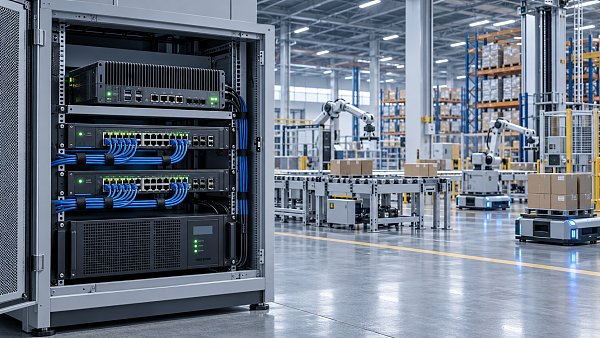
Edge AI for smart manufacturing refers to running AI inference close to the production asset rather than sending every image or sensor stream to a remote cloud environment. In practice, this often means industrial PCs, embedded vision controllers, smart cameras, or edge gateways installed at the machine, line, or cell level.
For real-time quality inspection, this architecture solves three persistent factory constraints. First, latency drops sharply because the model executes locally. Second, bandwidth pressure decreases because only events, metadata, or selected images need to be transmitted. Third, operational continuity improves when connectivity is unstable or segmented by plant security policies.
The operational case for local inference
In many production environments, an acceptable response window is under 100 ms, and in faster lines it may need to stay below 30 ms. A cloud-only path can struggle when image files are large, network traffic spikes, or plants operate across multiple facilities with uneven infrastructure.
Local inference also supports tighter integration with programmable logic controllers, reject actuators, robotic pickers, and line alarms. If a defect is detected, the decision can trigger in one cycle rather than waiting for a round trip across external infrastructure.
What enterprise buyers should evaluate first
Decision-makers should compare edge deployments across five factors before approving budget:
- Inference latency target, often 10–100 ms depending on line speed
- Inspection accuracy by defect class, not only aggregate model accuracy
- Image retention and traceability policy by lot, shift, or SKU
- Integration depth with PLC, MES, SCADA, and quality systems
- Environmental resilience under vibration, dust, oil mist, and 0–45°C operating ranges
The following table highlights the practical differences between edge-first and cloud-heavy inspection strategies in manufacturing settings.
The takeaway is not that cloud has no role. Cloud remains valuable for model retraining, cross-site analytics, and long-term optimization. But for immediate pass-fail decisions, edge AI for smart manufacturing usually delivers the stronger operational fit.
Best Use Cases for Real-Time Quality Inspection
The strongest use cases share four traits: defect cost is meaningful, line speed is high, human inspection is inconsistent, and upstream variation needs fast containment. These conditions appear across electronics, metalworking, automotive components, medical consumables, packaging, and aerospace subassembly.
1. Surface defect detection on fast-moving parts
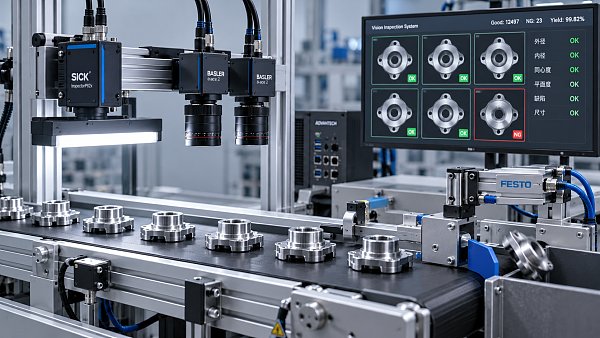
Surface inspection is one of the most mature applications for edge AI. Common targets include scratches, dents, pits, coating voids, weld discoloration, and contamination. On lines running 30–120 parts per minute, manual inspection can miss subtle anomalies, especially in reflective or low-contrast materials.
An edge vision system can process images from 2–8 cameras in parallel, classify multiple defect types, and immediately reject nonconforming parts. This is particularly useful when defect signatures vary by finish, illumination angle, or supplier lot.
Where buyers should be careful
Do not approve a surface inspection system based only on demo images. Ask for performance under production lighting drift, oily surfaces, and shift-to-shift variability. A model that performs well in a lab may degrade quickly if camera cleaning intervals, lens vibration, or part presentation are not controlled.
2. Dimensional and assembly verification at the edge
Edge AI also supports dimensional checks and assembly confirmation, especially when traditional rule-based vision struggles with variation. Typical tasks include presence or absence verification, connector orientation, clip seating, label placement, screw count, bead path continuity, and fill-level confirmation.
In mixed-model production, the edge layer can switch recipes within seconds based on barcode, RFID, or MES signals. That reduces false rejects and avoids the downtime associated with manual recipe changes.
3. Inline weld, seal, and adhesive inspection
Welds, seals, and adhesive paths are often expensive failure points because defects may not become visible until leak testing, field use, or final audit. Edge models can inspect bead width, continuity, overflow, underfill, and edge deviation in real time, allowing immediate correction before material and labor are added downstream.
For many plants, even a 1–3% reduction in rework at this stage can materially improve margin because the cost of late-stage correction is far higher than the cost of early detection.
4. Final packaging and serialization validation
Another high-value use case is end-of-line packaging inspection. Edge systems can verify labels, date codes, lot markings, carton integrity, insert presence, and tamper features. In regulated or traceability-sensitive sectors, this step protects shipment accuracy and recall readiness.
The table below maps common inspection scenarios to technical priorities and operational impact.
For most enterprise teams, the best first deployment is not the most complex use case. It is the station where defect cost, line speed, and process repetition create a measurable 90-day business case.
How to Select the Right Edge AI Inspection Architecture
Selecting edge AI for smart manufacturing is as much an engineering decision as a software purchase. Many projects underperform because teams buy around feature lists instead of process constraints. The right architecture should be defined by defect physics, line timing, and integration requirements.
Core hardware and system factors
- Camera resolution matched to defect size, such as sub-millimeter crack visibility
- Compute headroom for peak loads, not only average cycle time
- Triggering method synchronized with conveyor, robot, or fixture position
- Storage strategy for 7, 30, or 90 days of retained evidence images
- Industrial enclosure rating suitable for dust, washdown, or vibration zones
If the production environment includes reflective metals, transparent films, or textured composites, optical design is often more important than the AI model itself. Lighting geometry, lens selection, and part fixturing should be resolved before model performance is judged.
Software, governance, and integration requirements
Enterprise buyers should verify whether the system supports model version control, audit logs, role-based access, and structured export to MES or QMS platforms. A quality station that cannot prove which model made a decision on a given date creates compliance and root-cause challenges.
A practical implementation usually needs 4 layers working together: image acquisition, local inference, machine control response, and plant-level data reporting. Missing any one of these layers often turns a promising pilot into a disconnected island solution.
A useful buyer checklist
Before signing, ask suppliers to define six items in writing: defect taxonomy, pass-fail thresholds, false reject handling, retraining workflow, uptime support window, and acceptance test criteria at production speed.
Implementation Risks, Rollout Strategy, and ROI Discipline
The fastest way to lose confidence in edge AI is to launch too broadly. A disciplined rollout usually follows 3 phases: feasibility validation, pilot at one station, and controlled scale-out across similar lines. Each phase should have measurable targets for defect capture, cycle time impact, and false reject rates.
Common failure modes in real deployments
- Insufficient defect image diversity during training
- Ignoring part presentation and fixturing repeatability
- Overlooking cleaning and maintenance intervals for optics
- Using accuracy metrics without separating critical vs minor defects
- Deploying without operator escalation logic for ambiguous cases
A plant may report 95% model accuracy and still suffer business pain if the missed 5% includes safety-critical or high-cost defects. That is why acceptance criteria should be defect-weighted, not purely averaged.
A realistic rollout framework for decision-makers
A practical enterprise roadmap often spans 8–16 weeks for the first production-grade station. Weeks 1–3 focus on imaging feasibility and defect labeling. Weeks 4–8 cover model tuning, controls integration, and operator workflows. Weeks 9–16 validate production stability across shifts, SKUs, and maintenance conditions.
ROI should be measured through at least four indicators: scrap reduction, rework hours avoided, customer escapes reduced, and inspection labor redeployed. In many cases, the strongest financial case comes from avoiding one recurring defect family rather than automating every inspection point at once.
Where TSV’s data-first view adds value
For organizations evaluating multiple suppliers, the most useful comparison is not sales messaging but benchmark discipline. Decision-makers should ask for tolerance handling, image throughput, failure recovery behavior, and traceability output under production-like conditions. Parameters do not lie, and edge AI performance should be judged the same way as any critical manufacturing asset.
Final Considerations for Enterprise Buyers
Edge AI for smart manufacturing creates the most value when it is deployed where time, variation, and defect cost intersect. Real-time quality inspection is not simply an automation upgrade. It is a control strategy that can reduce trial-and-error costs, shorten containment cycles, and improve confidence in every shipped unit.
For enterprise decision-makers, the winning approach is clear: start with one high-impact station, define measurable thresholds, demand production-grade traceability, and scale only after the data proves repeatability. That is how edge intelligence moves from pilot enthusiasm to durable operational advantage.
If your team is evaluating inspection architecture, supplier capability, or deployment priorities, now is the right time to review the engineering details behind the claims. Contact TechStat Vanguard to discuss benchmarking criteria, compare implementation paths, and get a more rigorous view of edge AI solutions built for real manufacturing conditions.
Search News
Hot Articles
- Carbon Fiber StructuresHow to Specify Aerospace Carbon Fiber Assemblies for Lightweight, Load-Bearing PartsJul 11, 2026
- Machine VisionXiaomi, Alibaba DAMO Academy Drive Open-Source Robotics Model Ecosystem, Lowering Algorithm Development Barriers for Overseas SMEs Adopting Chinese Robotics SolutionsMar 30, 2026
- Cobots & ArmsShanxi 'AI+' Conference Showcases Embodied Intelligence with Multinational Buyer Engagement: Key Industry ImplicationsMar 30, 2026
Popular Tags
Recommended News
 Jul 11, 2026How to Specify Aerospace Carbon Fiber Assemblies for Lightweight, Load-Bearing PartsAerospace carbon fiber assemblies: learn how to specify laminate design, load data, joining methods, and inspection controls for lighter, reliable load-bearing aerospace parts.Elena Rostova (UAV Systems Researcher)
 Mar 30, 2026Xiaomi, Alibaba DAMO Academy Drive Open-Source Robotics Model Ecosystem, Lowering Algorithm Development Barriers for Overseas SMEs Adopting Chinese Robotics SolutionsXiaomi & Alibaba DAMO Academy's open-source robotics models lower algorithm barriers for global SMEs. Boost efficiency in manufacturing, logistics & smart retail with ROS 2 compatible solutions.TSV Data Lab
 Mar 30, 2026Shanxi 'AI+' Conference Showcases Embodied Intelligence with Multinational Buyer Engagement: Key Industry ImplicationsShanxi 'AI+' Conference highlights embodied intelligence with Tesla, Ubtech & Jiantao showcasing multimodal robotics. 40+ global buyers validated tech on-site, creating new B2B channels for industrial automation & AI solutions.Chen Wei (Automation Lead Engineer)
 Mar 30, 2026Zhongguancun Unveils 6G Integrated Sensing-Computing-Intelligence Platform to Empower Embodied Robots for Global Industrial ApplicationsZhongguancun's new 6G platform revolutionizes industrial robotics with <10ms latency, empowering global automotive, logistics & port automation. Discover how this tech boosts China's smart manufacturing exports.TSV Data Lab
 Mar 30, 2026Mech-Mind Tianjin Embodied Intelligence R&D and Production Base Goes Live, Cutting Delivery Time by 20%–30% for Global Customized AMR+Vision SolutionsMech-Mind's Tianjin AMR+Vision production base cuts delivery time by 20%-30% for欧美 & Latin American markets. Discover how this PLd-certified facility accelerates customized robotics solutions for smart manufacturing and logistics.Chen Wei (Automation Lead Engineer)
 Mar 30, 2026Boao Forum Reveals 'Co-evolution of Big and Small Brains' Trend in Humanoid Robots, China's Embodied Intelligence Accelerates Adaptation to Overseas Manufacturing Service ScenariosDiscover how China's humanoid robots, featuring 'Co-evolution of Big and Small Brains,' are revolutionizing global manufacturing. Learn about Embodied Tian Gong 3.0's ISO compliance and overseas deployment at Boao Forum 2026.Chen Wei (Automation Lead Engineer)
 Mar 30, 2026China Railway Industrial Secures Patent for Embodied Robotics in Material Handling, Boosting High-Precision Delivery Capabilities for Overseas Infrastructure and Manufacturing ProjectsChina Railway Industrial's new patent for embodied robotics in material handling boosts high-precision delivery for global infrastructure & manufacturing. Discover how this innovation enhances logistics accuracy in automotive, rail transit & EPC projects.Chen Wei (Automation Lead Engineer)
 Oct 18, 2026Comparing Material Options for Procurement: Specs, Costs, and Supply RisksExplore procurement oriented technical content on material options, specs, costs, and supply risks. Compare alternatives to cut hidden expenses and make confident sourcing decisions.Dr. Marcus Vance
 Oct 17, 20265-Axis CNC Positioning Accuracy: How to Interpret ISO 230-2 Test ResultsAssess 5 axis CNC machining positioning accuracy with ISO 230-2. Learn to interpret repeatability, reversal error, and test conditions to compare suppliers and make confident acceptance decisions.Dr. Marcus Vance
 Oct 16, 2026Choosing a Rugged Edge AI Box Supplier: Thermal Tests and Lifecycle SupportChoose a rugged edge AI box supplier with proven thermal performance and reliable lifecycle support. Discover the tests and commitments to verify before you buy.TSV Data Lab
 Oct 15, 2026R&D Cost Reduction Services: How to Evaluate Fees, Savings, and ROIEvaluate R&D cost reduction services with confidence. Compare fees, verify savings, and calculate ROI without compromising performance. Discover how to choose a provider that delivers real value.Chen Wei (Automation Lead Engineer)
 Oct 17, 2026How Should You Interpret Industrial Robot Repeatability Specs?Decode industrial robot repeatability specifications, understand ISO 9283 test conditions, and avoid costly selection mistakes. Learn how to verify performance for your process.Chen Wei (Automation Lead Engineer)
 Oct 16, 2026How Can You Fairly Compare MTBF Across Industrial Servo Motors?Make a fair industrial servo motor MTBF comparison with matched operating profiles, failure criteria, and confidence bounds. Discover how to assess reliability beyond advertised numbers.Chen Wei (Automation Lead Engineer)
 Oct 15, 2026How Should You Compare TechStat Vanguard 5-Axis CNC Tolerances?TechStat Vanguard 5-axis CNC tolerance comparison: learn how to verify part accuracy, assess inspection evidence, and choose suppliers that reliably meet your drawing requirements.Dr. Marcus Vance
 Oct 14, 2026Drone Frame Composites: Carbon Fiber vs. Fiberglass for Weight and StiffnessExplore drone structural materials composites: compare carbon fiber and fiberglass for weight, stiffness, cost, and antenna compatibility. Find the right material for your drone frame.Elena Rostova (UAV Systems Researcher)
 Oct 13, 2026Smart Cameras vs. PC-Based Machine Vision: Which Fits High-Speed Inspection?This industrial product comparison for machine vision weighs smart cameras vs. PC-based systems on latency, throughput, and cost. Discover your best fit for high-speed inspection.TSV Data Lab
 Oct 12, 2026How to Verify RoHS Compliance in Industrial Sensing Systems Before DeploymentRoHS compliant sensing systems: learn how to verify materials, supplier declarations, testing, and configuration controls before industrial deployment.TSV Data Lab
 Oct 11, 2026How Procurement-Oriented Content Taxonomy Improves B2B Buying JourneysProcurement-oriented content taxonomy streamlines B2B buying journeys with clearer evidence, supplier comparisons, risk visibility, and faster approvals.TSV Data Lab
 Oct 10, 2026How to Select a Machine Performance Monitoring Platform for OEE and Downtime ReductionMachine performance monitoring platform selection guide: validate machine states, OEE data, downtime reasons, integrations, and scalability to reduce losses with confidence.TSV Data Lab
 Oct 08, 2026How to Machine Inconel 625 Blades Without Heat Cracks or Edge ChippingInconel 625 blade machining guide: prevent heat cracks, edge chipping, chatter, and work hardening with proven tooling, cooling, fixturing, and inspection strategies.Dr. Marcus Vance
 Oct 07, 2026How to Evaluate an HMI Panel Distributor for Industrial Automation ProjectsHMI panel distributor evaluation guide: verify technical compatibility, traceability, supply reliability, lifecycle support, and total cost for automation projects.Victor Lin (Chief Software Architect)
 Oct 06, 2026Navigation Fault Tolerance Standards for AMRs: What Safety Teams Must VerifyNavigation fault tolerance standards: learn what AMR safety teams must verify, from localization loss and sensor faults to stopping distance, safe restart, and site-specific validation.Chen Wei (Automation Lead Engineer)
 Oct 05, 2026Calculating Edge Computing Total Cost of Ownership Across Distributed SitesEdge computing ownership cost explained: calculate deployment, energy, connectivity, security, remote support, and refresh costs across distributed sites.TSV Data Lab
 Oct 04, 2026CAD/CAM Benchmarking in the GCC: What Manufacturers Should Ask a ConsultantCAD CAM benchmark consultant GCC guide: learn the key questions manufacturers should ask to validate post-processors, workflows, machine performance, and production risk.Victor Lin (Chief Software Architect)