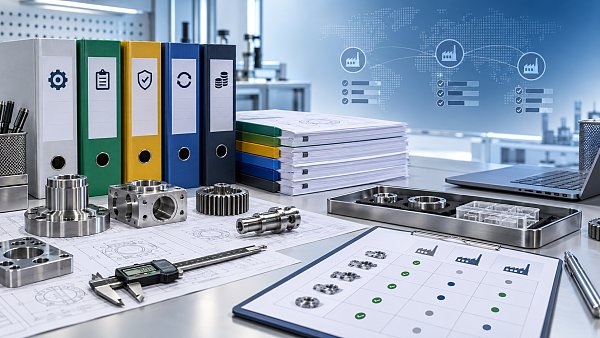
Aluminum 7075 vs 6061 strength under repeated load
Publication Date
author
When comparing aluminum 7075 vs 6061 strength under repeated load, engineers and buyers need more than headline tensile values. Fatigue life, micro machining tolerance limits, and 5 axis CNC surface finish Ra can all shift real-world performance in aerospace, medical, and precision manufacturing applications. This guide cuts through marketing claims to show how material data supports better design, machining, and sourcing decisions.
Why repeated load changes the 7075 vs 6061 decision
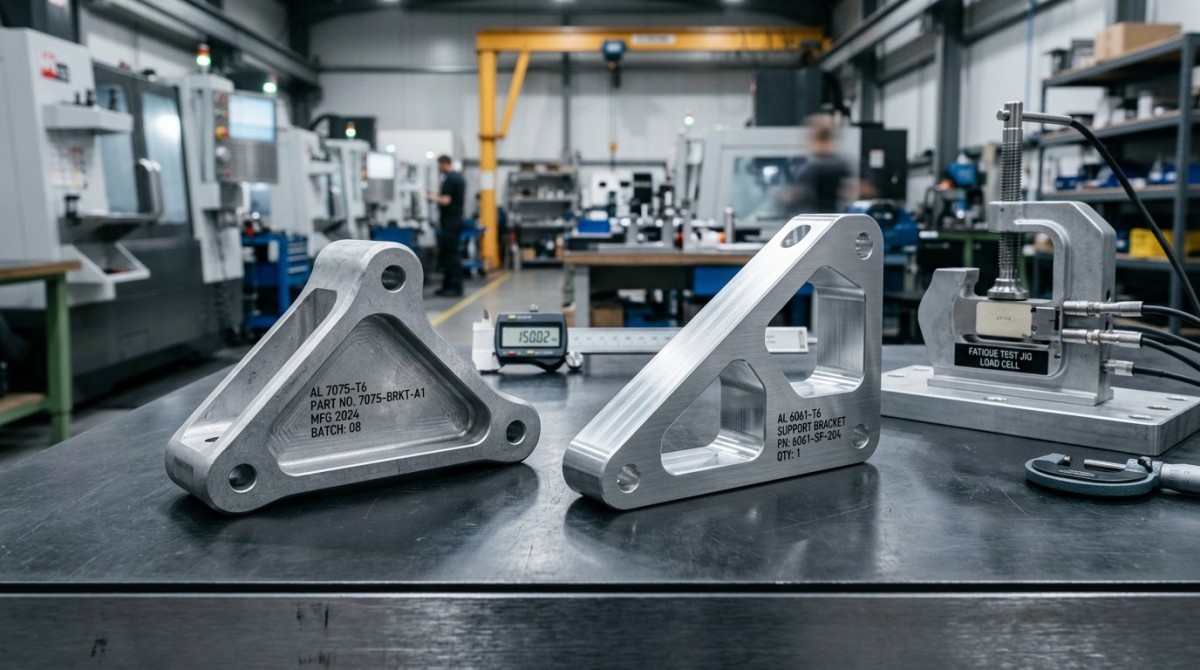
For static parts, many teams start with yield strength and ultimate tensile strength. Under repeated load, that shortcut often fails. Cyclic stress, vibration, thermal variation, and surface discontinuities can reduce service life long before a part reaches a single overload event. That is why aluminum 7075 vs 6061 strength under repeated load must be discussed in terms of fatigue behavior, notch sensitivity, machining condition, and assembly environment rather than one catalog number.
In broad industry practice, 7075-T6 is selected when high strength-to-weight ratio is the first priority, while 6061-T6 is chosen when designers need a balance of strength, corrosion resistance, weldability, and machining stability. For many procurement teams, the confusion begins when suppliers advertise only tensile values. A stronger alloy in a static test does not automatically become the better alloy for 10,000, 100,000, or 10 million stress cycles.
TechStat Vanguard approaches this question the way engineering teams actually buy and validate components: by filtering claims through process data. That means asking whether the part is milled from plate, forged, or extruded; whether the load is fully reversed or pulsating; whether the surface finish is Ra 0.8, Ra 1.6, or rougher; and whether the geometry contains thin walls, sharp fillets, or threaded transitions. These details commonly decide field life more than brochure language.
For information researchers, operators, buyers, and executives, the practical question is simple: which alloy lowers performance risk in your exact duty cycle? The answer depends on 3 core layers: mechanical stress range, manufacturing route, and qualification evidence. If one of those layers is missing, material selection becomes guesswork and supplier comparison becomes unreliable.
What “strength under repeated load” really means in procurement terms
Repeated load usually refers to fatigue loading, where a component experiences cyclic stress over time. In real procurement language, that can include UAV bracket vibration during every flight hour, robot arm fixtures cycling every 3 to 5 seconds, medical device frames exposed to sterilization and repeated motion, or aerospace interior and structural hardware seeing long service intervals with variable amplitude loads.
A buying decision should therefore review at least 5 checks: alloy temper, grain orientation, section thickness, stress concentration features, and post-machining treatment. Teams that skip even 1 of these checks often overestimate fatigue life. This is especially true when comparing 7075 and 6061 parts produced by different shops using different cutter paths, coolant control, or deburring quality.
- Static strength tells you how the alloy behaves in a one-time load event.
- Fatigue performance tells you how long the part may survive under repeated stress cycles.
- Surface finish, edge condition, and residual stress can shift fatigue behavior significantly.
- Supplier process consistency matters as much as the alloy name on the quote.
7075-T6 vs 6061-T6: which material carries more cyclic risk?
The best-known difference is strength. 7075-T6 commonly shows much higher yield and tensile values than 6061-T6, which is why it appears often in aerospace, defense, performance sporting equipment, and weight-critical fixtures. However, cyclic reliability is not decided by peak strength alone. 7075 can offer strong fatigue capability, but it is also generally less forgiving in corrosion-prone environments and less suitable where welding or field repair is required.
6061-T6, by contrast, usually provides lower absolute strength but broader manufacturing flexibility. It is easier to weld, widely available, and commonly preferred for general industrial structures, housings, machine frames, and custom CNC components where moderate repeated loading is paired with easier fabrication and lower sourcing friction. In many programs, 6061 wins not because it is stronger, but because it reduces total project risk across machining, finishing, lead time, and replacement cycles.
The table below helps separate alloy marketing from engineering relevance. Values are typical industry ranges or qualitative procurement considerations rather than a substitute for mill certificates, design allowables, or application-specific fatigue testing.
This comparison shows why aluminum 7075 vs 6061 strength under repeated load cannot be reduced to one row on a datasheet. If the part is heavily stressed, thin, and weight critical, 7075 often deserves consideration. If the part needs machining, welding, anodizing, frequent replacement, or broad supplier availability, 6061 may create a better total outcome over a 12 to 36 month product cycle.
Where fatigue performance usually shifts in real parts
Even a strong alloy can fail early when local stress concentration is ignored. Common fatigue initiators include sharp inside corners under 1.0 mm radius, aggressive thread roots, abrupt section changes, and machining marks aligned with the principal stress path. For precision buyers, this means the drawing and process specification deserve as much scrutiny as the alloy line item.
At TSV, the working principle is simple: parameters do not lie. A supplier that can define cutter strategy, edge break requirement, inspection interval, and surface finish window gives stronger evidence than one that only says “high-strength aerospace grade.” For repeated-load parts, process clarity is a quality signal.
How machining, tolerance, and surface finish influence fatigue life
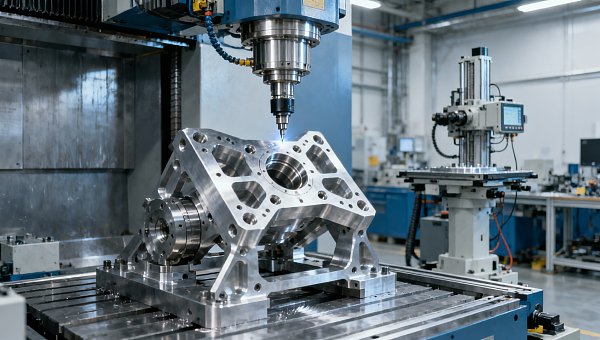
Many users ask whether 7075 or 6061 is better for 5 axis CNC parts. The honest answer is that both can machine well, but they behave differently in production control. 7075 is often favored for precision milled high-strength components because it can support tighter structural targets with less bulk. 6061 is widely preferred when shops need stable machining, broad stock access, and lower rework cost across prototypes, pilot lots, and medium-volume batches.
Under repeated load, the machining route matters because fatigue cracks usually start at the surface. A surface finish difference from Ra 0.8 to Ra 3.2 can materially change crack initiation risk, especially around pockets, blended corners, and clamped contact faces. Likewise, tolerance stack-up can create unintended preload or misalignment, raising cyclic stress in service even when the base alloy is correctly selected.
For micro machining tolerance limits or thin-wall 5 axis components, buyers should ask whether the supplier controls burr formation, residual stress, and post-machining inspection. In small aerospace brackets, optical housings, and UAV structural nodes, a tolerance band such as ±0.02 mm or ±0.05 mm may be more meaningful to durability than a generic strength claim. That is especially true where assembly fit directly changes vibration response.
The table below turns these shop-floor variables into a practical sourcing checklist. It is useful for prototype RFQs, supplier audits, and engineering validation plans.
For operators and manufacturing engineers, the message is practical. If your repeated-load part is failing early, do not stop at alloy comparison. Review 4 process layers: tool path marks, surface roughness, local geometry, and finishing sequence. Those layers often explain why one supplier’s 6061 part outlasts another supplier’s 7075 part in actual service.
A data-first checklist before approving production
Minimum engineering package
- Define load type: constant amplitude, variable amplitude, vibration, or impact-assisted cyclic loading.
- Specify fatigue-critical surfaces and acceptable finish range, not only general cosmetic finish.
- Mark tolerance zones that influence assembly stress, especially bores, slots, and clamping faces.
- Request material certificates and temper verification for every production lot or agreed batch interval.
This kind of package shortens decision cycles for procurement teams because quotes become technically comparable. It also reduces the common problem of selecting by alloy alone while hidden process variation drives warranty cost later.
Which alloy fits aerospace, medical, robotics, and precision machining scenarios?
Application context is where the aluminum 7075 vs 6061 strength under repeated load debate becomes useful rather than abstract. In aerospace and UAV structures, designers often accept higher material cost and stricter process control to gain better strength-to-weight performance. In robotics fixtures, automation frames, and general machine assemblies, teams may prefer 6061 because replacement speed, weldability, and corrosion behavior affect lifecycle cost as much as pure structural capacity.
Medical and laboratory hardware create another pattern. Many components are not maximized for ultimate strength; they are optimized for dimensional consistency, clean finishing, moderate cyclic duty, and documented process repeatability. In that environment, 6061 frequently remains attractive. However, small high-load motion parts, instrument carriers, or lightweight support arms can still justify 7075 if the geometry and finishing plan are tightly controlled.
TSV’s industry lens is useful here because modern hard-tech sourcing crosses multiple sectors. A UAV arm mount, a cobot end-effector plate, and a precision sensor bracket may all look similar on a CAD screen, but their duty cycles, environmental risks, and qualification requirements differ over 6 months, 12 months, or multi-year service windows. Material selection should follow the duty profile, not fashion.
The scenario table below helps technical buyers quickly narrow the field before final validation testing.
Aerospace-oriented programs often lean toward 7075, but only with controlled finishing, corrosion review, and traceable process documentation. General industrial and cross-sector equipment often lean toward 6061 because it simplifies procurement across more suppliers and supports easier changes during prototype-to-production transfer.
When buyers should pause before locking the alloy
Pause the decision if any of these conditions apply: the part will be welded after machining, the operating environment includes humidity or salt exposure, the geometry uses many sharp transitions, or no fatigue qualification plan exists. In those cases, the correct answer may involve coating strategy, geometry revision, or different temper review instead of a simple 7075 versus 6061 choice.
Procurement guide: what to ask suppliers before ordering fatigue-critical aluminum parts
Procurement failures usually happen before production starts. Quotes look comparable, but one supplier prices certified stock and controlled finishing, while another prices generic stock and minimal inspection. For repeated-load parts, buyers should convert the alloy discussion into a supplier qualification framework. That framework should cover material traceability, machining controls, inspection plan, finishing compatibility, and realistic lead time such as 7–15 days for simple prototypes or 2–4 weeks for documented production lots, depending on complexity.
A practical RFQ should define at least 6 items: alloy and temper, key dimensions and tolerance bands, required Ra on critical faces, intended duty cycle, finishing method, and documentation level. If any of these are missing, suppliers will make assumptions. Assumptions are one of the biggest hidden causes of inconsistent fatigue life in CNC aluminum components.
For decision-makers balancing cost and risk, it helps to think in 3 layers. First, design suitability: can the alloy support the load path? Second, manufacturing suitability: can the supplier repeatedly machine and finish the part without introducing fatigue initiators? Third, commercial suitability: can that supplier maintain stock, traceability, and lead time over repeat orders? A strong answer in only 1 layer is not enough for long-term sourcing.
TSV’s data-driven approach is built for this exact procurement problem. We help teams cut through vague claims by translating “high-performance aluminum” into measurable checkpoints that engineers, sourcing teams, and management can all review in the same decision meeting.
A 4-step sourcing workflow for repeated-load parts
- Define the load case clearly, including stress direction, frequency, expected life target, and operating environment.
- Translate the design into manufacturing controls such as critical radii, Ra limits, and tolerance zones.
- Request comparable quotes with the same alloy, temper, certification need, and inspection package.
- Validate with prototype or pilot parts before releasing medium or large production batches.
This workflow is especially valuable when multiple global suppliers are involved. It reduces quote ambiguity, shortens technical clarification cycles, and improves the odds that the first production run will match the intended durability target.
FAQ and common misconceptions about 7075 vs 6061 under cyclic loading
Is 7075 always better than 6061 for repeated load?
No. 7075 usually offers higher strength, but “better” depends on design, environment, finishing, and fabrication method. If a part needs welding, broad corrosion tolerance, or fast low-risk sourcing across many vendors, 6061 may be the better engineering and commercial choice. If the part is weight critical and highly stressed, 7075 may justify the tighter process discipline.
Should buyers ask for fatigue data on every order?
Not every order needs a full fatigue test program, but every fatigue-critical order should include a clear duty description and process specification. For prototype stages, teams often review material certs, machining route, finish level, and dimensional inspection first. For critical production programs, additional coupon tests, pilot validation, or part-level verification may be justified.
Does anodizing solve the 7075 corrosion concern automatically?
Not automatically. Surface treatment can help, but coating choice, thickness control, edge coverage, and service environment all matter. Buyers should confirm that finishing does not conflict with fatigue-critical dimensions or create unwanted brittleness or surface defects in sensitive areas.
What is the most common sourcing mistake?
The most common mistake is comparing alloy names without comparing process evidence. Two quotes for “7075 CNC part” can differ significantly in stock origin, inspection depth, edge treatment, and surface finish. Under repeated load, those differences can matter more than a small price gap on the purchase order.
Why work with a data-driven technical partner
For teams evaluating aluminum 7075 vs 6061 strength under repeated load, the hardest part is rarely finding claims. The hard part is filtering them. TechStat Vanguard focuses on engineering truth through data, which means translating supplier language into measurable decision points: tolerance windows, fatigue-related design risks, surface finish impact, qualification depth, and realistic sourcing tradeoffs across robotics, aerospace, sensors, and precision machining ecosystems.
If your team is selecting material for a fatigue-sensitive bracket, fixture, enclosure, or structural CNC part, we can help review parameter fit before you commit budget. Typical discussion points include alloy and temper confirmation, machining tolerance strategy, expected lead time, surface finish requirements, environmental risks, documentation needs, and sample or pilot-lot evaluation criteria.
This is particularly useful for overseas engineering teams and senior buyers who need a neutral technical filter before supplier approval. Instead of relying on adjectives, you can compare 3 to 5 actionable checkpoints and build a sourcing decision that is easier to defend internally.
Contact TSV if you need support with parameter confirmation, material selection, fatigue-oriented machining review, delivery cycle planning, certification-related questions, sample support, or quotation comparison for custom aluminum parts. Clear data early in the process can reduce trial-and-error cost later.
Search News
Hot Articles
- Carbon Fiber StructuresHow to Specify Aerospace Carbon Fiber Assemblies for Lightweight, Load-Bearing PartsJul 11, 2026
- Machine VisionXiaomi, Alibaba DAMO Academy Drive Open-Source Robotics Model Ecosystem, Lowering Algorithm Development Barriers for Overseas SMEs Adopting Chinese Robotics SolutionsMar 30, 2026
- Cobots & ArmsShanxi 'AI+' Conference Showcases Embodied Intelligence with Multinational Buyer Engagement: Key Industry ImplicationsMar 30, 2026
Popular Tags
Recommended News
 Jul 11, 2026How to Specify Aerospace Carbon Fiber Assemblies for Lightweight, Load-Bearing PartsAerospace carbon fiber assemblies: learn how to specify laminate design, load data, joining methods, and inspection controls for lighter, reliable load-bearing aerospace parts.Elena Rostova (UAV Systems Researcher)
 Mar 30, 2026Xiaomi, Alibaba DAMO Academy Drive Open-Source Robotics Model Ecosystem, Lowering Algorithm Development Barriers for Overseas SMEs Adopting Chinese Robotics SolutionsXiaomi & Alibaba DAMO Academy's open-source robotics models lower algorithm barriers for global SMEs. Boost efficiency in manufacturing, logistics & smart retail with ROS 2 compatible solutions.TSV Data Lab
 Mar 30, 2026Shanxi 'AI+' Conference Showcases Embodied Intelligence with Multinational Buyer Engagement: Key Industry ImplicationsShanxi 'AI+' Conference highlights embodied intelligence with Tesla, Ubtech & Jiantao showcasing multimodal robotics. 40+ global buyers validated tech on-site, creating new B2B channels for industrial automation & AI solutions.Chen Wei (Automation Lead Engineer)
 Mar 30, 2026Zhongguancun Unveils 6G Integrated Sensing-Computing-Intelligence Platform to Empower Embodied Robots for Global Industrial ApplicationsZhongguancun's new 6G platform revolutionizes industrial robotics with <10ms latency, empowering global automotive, logistics & port automation. Discover how this tech boosts China's smart manufacturing exports.TSV Data Lab
 Mar 30, 2026Mech-Mind Tianjin Embodied Intelligence R&D and Production Base Goes Live, Cutting Delivery Time by 20%–30% for Global Customized AMR+Vision SolutionsMech-Mind's Tianjin AMR+Vision production base cuts delivery time by 20%-30% for欧美 & Latin American markets. Discover how this PLd-certified facility accelerates customized robotics solutions for smart manufacturing and logistics.Chen Wei (Automation Lead Engineer)
 Mar 30, 2026Boao Forum Reveals 'Co-evolution of Big and Small Brains' Trend in Humanoid Robots, China's Embodied Intelligence Accelerates Adaptation to Overseas Manufacturing Service ScenariosDiscover how China's humanoid robots, featuring 'Co-evolution of Big and Small Brains,' are revolutionizing global manufacturing. Learn about Embodied Tian Gong 3.0's ISO compliance and overseas deployment at Boao Forum 2026.Chen Wei (Automation Lead Engineer)
 Mar 30, 2026China Railway Industrial Secures Patent for Embodied Robotics in Material Handling, Boosting High-Precision Delivery Capabilities for Overseas Infrastructure and Manufacturing ProjectsChina Railway Industrial's new patent for embodied robotics in material handling boosts high-precision delivery for global infrastructure & manufacturing. Discover how this innovation enhances logistics accuracy in automotive, rail transit & EPC projects.Chen Wei (Automation Lead Engineer)
 Oct 20, 2026KUKA Launches iiQKA.AI Vision to Simplify Industrial Image ProcessingKUKA iiQKA.AI Vision simplifies industrial image processing with controller-based 2D and 3D vision. Explore drag-and-drop setup for vision-guided automation.TSV Data Lab
 Oct 20, 2026Smart Industrial Edge Devices: Key Criteria for Legacy PLC IntegrationChoose smart industrial edge devices for legacy PLC integration. Discover key criteria for compatibility, data quality, security, and reliable collection without disrupting control.TSV Data Lab
 Oct 19, 2026Choosing a Radar Sensor by Application: Range, Resolution, and Field of ViewSimplify radar sensor application based product selection. Compare range, resolution, and field of view to avoid blind spots and choose with confidence. Explore the guide.TSV Data Lab
 Oct 18, 2026Comparing Material Options for Procurement: Specs, Costs, and Supply RisksExplore procurement oriented technical content on material options, specs, costs, and supply risks. Compare alternatives to cut hidden expenses and make confident sourcing decisions.Dr. Marcus Vance
 Oct 17, 20265-Axis CNC Positioning Accuracy: How to Interpret ISO 230-2 Test ResultsAssess 5 axis CNC machining positioning accuracy with ISO 230-2. Learn to interpret repeatability, reversal error, and test conditions to compare suppliers and make confident acceptance decisions.Dr. Marcus Vance
 Oct 16, 2026Choosing a Rugged Edge AI Box Supplier: Thermal Tests and Lifecycle SupportChoose a rugged edge AI box supplier with proven thermal performance and reliable lifecycle support. Discover the tests and commitments to verify before you buy.TSV Data Lab
 Oct 15, 2026R&D Cost Reduction Services: How to Evaluate Fees, Savings, and ROIEvaluate R&D cost reduction services with confidence. Compare fees, verify savings, and calculate ROI without compromising performance. Discover how to choose a provider that delivers real value.Chen Wei (Automation Lead Engineer)
 Oct 19, 2026How Do You Verify That Precision Machined Parts Meet Tolerances?Master precision machining tolerance verification with the right tools, datum setups, and acceptance rules. Learn how to validate parts confidently and reduce costly inspection errors.Dr. Marcus Vance
 Oct 18, 2026What Should an AS9100 Machining Supplier Checklist Include?Build an AS9100 machining supplier checklist that verifies capability, traceability, inspection, and outsourced processes. Discover what to check before approving your next aerospace supplier.Dr. Marcus Vance
 Oct 17, 2026How Should You Interpret Industrial Robot Repeatability Specs?Decode industrial robot repeatability specifications, understand ISO 9283 test conditions, and avoid costly selection mistakes. Learn how to verify performance for your process.Chen Wei (Automation Lead Engineer)
 Oct 16, 2026How Can You Fairly Compare MTBF Across Industrial Servo Motors?Make a fair industrial servo motor MTBF comparison with matched operating profiles, failure criteria, and confidence bounds. Discover how to assess reliability beyond advertised numbers.Chen Wei (Automation Lead Engineer)
 Oct 15, 2026How Should You Compare TechStat Vanguard 5-Axis CNC Tolerances?TechStat Vanguard 5-axis CNC tolerance comparison: learn how to verify part accuracy, assess inspection evidence, and choose suppliers that reliably meet your drawing requirements.Dr. Marcus Vance
 Oct 14, 2026Drone Frame Composites: Carbon Fiber vs. Fiberglass for Weight and StiffnessExplore drone structural materials composites: compare carbon fiber and fiberglass for weight, stiffness, cost, and antenna compatibility. Find the right material for your drone frame.Elena Rostova (UAV Systems Researcher)
 Oct 13, 2026Smart Cameras vs. PC-Based Machine Vision: Which Fits High-Speed Inspection?This industrial product comparison for machine vision weighs smart cameras vs. PC-based systems on latency, throughput, and cost. Discover your best fit for high-speed inspection.TSV Data Lab
 Oct 12, 2026How to Verify RoHS Compliance in Industrial Sensing Systems Before DeploymentRoHS compliant sensing systems: learn how to verify materials, supplier declarations, testing, and configuration controls before industrial deployment.TSV Data Lab
 Oct 11, 2026How Procurement-Oriented Content Taxonomy Improves B2B Buying JourneysProcurement-oriented content taxonomy streamlines B2B buying journeys with clearer evidence, supplier comparisons, risk visibility, and faster approvals.TSV Data Lab
 Oct 10, 2026How to Select a Machine Performance Monitoring Platform for OEE and Downtime ReductionMachine performance monitoring platform selection guide: validate machine states, OEE data, downtime reasons, integrations, and scalability to reduce losses with confidence.TSV Data Lab