Industrial Raspberry Pi Compute Module: When to Use It and What to Check Before Deployment
Publication Date
author
Choosing an industrial raspberry pi compute module can speed up edge deployment, but only if the platform truly fits the job. In many projects, the better question is not whether it works in theory, but whether it survives real operating conditions, maintenance cycles, and long procurement timelines.
That is where engineering discipline matters. At TechStat Vanguard, the focus is simple: strip away marketing language and check the numbers that decide uptime, serviceability, and field risk.
An industrial raspberry pi compute module makes sense when compact computing, flexible I/O, and software familiarity create clear value. It becomes a bad fit when environmental exposure, certification pressure, or lifecycle uncertainty are treated as afterthoughts.
When an Industrial Raspberry Pi Compute Module Is the Right Choice
Before selecting hardware, it helps to define what success looks like in the field. For edge control, sensor aggregation, machine vision preprocessing, and low-power gateways, this platform can be very practical.
It is especially useful when the deployment needs a balance of cost, Linux-based development, and faster prototyping without jumping directly to a fully custom embedded board.
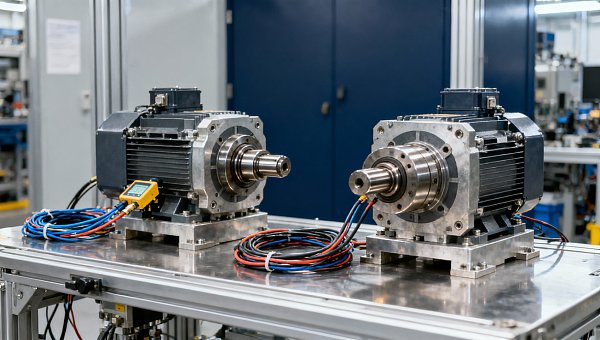
[Image 01: Industrial Raspberry Pi Compute Module deployment architecture in an edge manufacturing environment]
Still, “industrial” should never be assumed from the processor alone. The full system matters: carrier board design, thermal path, enclosure sealing, power conditioning, storage endurance, and connector retention all decide whether the deployment is robust.
- Use an industrial raspberry pi compute module when the project needs edge analytics, protocol conversion, or local control, but does not require extreme deterministic performance or unusually high certification complexity.
- Choose it when software reuse matters. If existing Linux tools, container workflows, or remote update methods shorten validation time, the platform can reduce engineering friction significantly.
- It works well in pilot lines and scaled rollouts when mechanical integration, power design, and thermal verification are handled early, not postponed until pre-production.
- Avoid default selection if the site faces severe vibration, wide voltage instability, or strict fail-safe demands. In those cases, board-level convenience can hide system-level risk.
What to Verify Before Field Deployment
This is where many deployments succeed or fail. A promising bench prototype often breaks down because teams validate application logic, but skip the operating envelope.
For an industrial raspberry pi compute module, the checklist should cover environment, electrical behavior, storage life, networking, serviceability, and supply continuity.
Core checks that should happen early
- Confirm temperature margins under real enclosure conditions. A stable lab setup means little if the module throttles inside a sealed cabinet beside drives, power supplies, or heat-generating sensors.
- Review power quality in detail. Brownouts, surge events, startup inrush, and noisy DC rails are common reasons an industrial raspberry pi compute module behaves unreliably after installation.
- Check storage endurance carefully. If logs, images, or databases write continuously, eMMC strategy, wear behavior, and failure recovery procedures need documented verification before rollout.
- Validate connector security and cable retention. In moving equipment or vibration-prone cabinets, loose interfaces can create intermittent faults that are difficult to reproduce during acceptance testing.
- Measure network recovery time after link loss or power cycling. Fast reboot and predictable reconnection matter more in production than impressive processor specifications on paper.
- Map the software maintenance path. Secure boot policy, remote patching, image rollback, and long-term OS support should be defined before the first unit leaves engineering.
A practical decision table
Where It Commonly Delivers Value
In smart manufacturing, an industrial raspberry pi compute module is often used as an edge bridge between legacy machines and modern dashboards. It can collect PLC data, preprocess events locally, and forward clean data to MES or cloud layers.
That works well when latency requirements are moderate and the electrical environment is controlled. The key check is isolation, especially around serial, CAN, and digital I/O interfaces.
In UAV ground systems or mobile inspection kits, the same platform can support telemetry handling, portable HMI functions, or sensor fusion at the edge. Here, the main concern shifts to shock, power instability, and thermal rise in compact housings.
For machine vision assist tasks, it can filter images, trigger decisions, or coordinate peripheral devices before upstream processing. But once workloads demand hard real-time behavior or sustained high inference loads, performance margins need honest benchmarking.
Common Mistakes That Create Field Risk
One frequent mistake is buying an industrial raspberry pi compute module and assuming the whole assembly is industrial-grade. In reality, the carrier board and enclosure often define the weakest point.
Another common issue is underestimating lifecycle management. The hardware may be available, but accessory components, firmware branches, and kernel dependencies can still create long-term maintenance trouble.
- Do not validate only at room temperature. Run heat-soak, cold-start, and power interruption tests with the final enclosure, final cables, and actual software image.
- Do not rely on nominal current ratings alone. Peak load behavior during boot, camera startup, radio transmission, or USB attachment can expose weak power designs quickly.
- Do not ignore EMC exposure. Nearby motors, inverters, and RF devices may not damage the module, but they can trigger unstable communication and silent data errors.
- Do not separate sourcing from engineering evidence. A lower unit price means little if supplier revisions, lead times, or documentation gaps increase validation and requalification cost.
How to Make the Selection More Defensible
A strong decision is built on measurable thresholds, not optimism. That principle aligns closely with the TechStat Vanguard view that parameters, tolerances, and traceable benchmarks matter more than sales language.
For an industrial raspberry pi compute module, that means defining acceptance criteria before procurement expands. Once the first prototype is approved without hard limits, uncontrolled variation tends to follow.
Useful acceptance points to document
- Set explicit boot-time, recovery-time, and thermal-throttling limits. If the module fails these numbers, the issue should block deployment rather than become a future service problem.
- Define storage retention and write-profile assumptions early. Logging policies, update frequency, and local database behavior should match expected field life, not lab convenience.
- Document approved component revisions and alternates. This helps preserve traceability when suppliers change board versions, connectors, or embedded software dependencies mid-project.
- Require evidence from representative tests, not generic brochures. Environmental stress, interface stability, and long-duration uptime results carry more value than broad product claims.
A Simple Next-Step Filter
If the application needs affordable edge computing, flexible integration, and manageable software deployment, an industrial raspberry pi compute module can be a very sensible option.
If the application faces harsh thermal cycles, unstable power, strict certification, or safety-critical timing, the right answer may still be a different embedded architecture.
The most practical next step is to build a short verification matrix: environment, power, storage, communications, serviceability, and supply continuity. If the platform passes those checks with evidence, deployment becomes a technical decision, not a hopeful one.
That is also the broader TSV principle. In advanced industry, trustworthy selection does not come from louder claims. It comes from clearer data, tighter tolerances, and disciplined validation before scale.
Search News
Hot Articles
- Carbon Fiber StructuresHow to Specify Aerospace Carbon Fiber Assemblies for Lightweight, Load-Bearing PartsJul 11, 2026
- Machine VisionXiaomi, Alibaba DAMO Academy Drive Open-Source Robotics Model Ecosystem, Lowering Algorithm Development Barriers for Overseas SMEs Adopting Chinese Robotics SolutionsMar 30, 2026
- Cobots & ArmsShanxi 'AI+' Conference Showcases Embodied Intelligence with Multinational Buyer Engagement: Key Industry ImplicationsMar 30, 2026
Popular Tags
Recommended News
 Jul 11, 2026How to Specify Aerospace Carbon Fiber Assemblies for Lightweight, Load-Bearing PartsAerospace carbon fiber assemblies: learn how to specify laminate design, load data, joining methods, and inspection controls for lighter, reliable load-bearing aerospace parts.Elena Rostova (UAV Systems Researcher)
 Mar 30, 2026Xiaomi, Alibaba DAMO Academy Drive Open-Source Robotics Model Ecosystem, Lowering Algorithm Development Barriers for Overseas SMEs Adopting Chinese Robotics SolutionsXiaomi & Alibaba DAMO Academy's open-source robotics models lower algorithm barriers for global SMEs. Boost efficiency in manufacturing, logistics & smart retail with ROS 2 compatible solutions.TSV Data Lab
 Mar 30, 2026Shanxi 'AI+' Conference Showcases Embodied Intelligence with Multinational Buyer Engagement: Key Industry ImplicationsShanxi 'AI+' Conference highlights embodied intelligence with Tesla, Ubtech & Jiantao showcasing multimodal robotics. 40+ global buyers validated tech on-site, creating new B2B channels for industrial automation & AI solutions.Chen Wei (Automation Lead Engineer)
 Mar 30, 2026Zhongguancun Unveils 6G Integrated Sensing-Computing-Intelligence Platform to Empower Embodied Robots for Global Industrial ApplicationsZhongguancun's new 6G platform revolutionizes industrial robotics with <10ms latency, empowering global automotive, logistics & port automation. Discover how this tech boosts China's smart manufacturing exports.TSV Data Lab
 Mar 30, 2026Mech-Mind Tianjin Embodied Intelligence R&D and Production Base Goes Live, Cutting Delivery Time by 20%–30% for Global Customized AMR+Vision SolutionsMech-Mind's Tianjin AMR+Vision production base cuts delivery time by 20%-30% for欧美 & Latin American markets. Discover how this PLd-certified facility accelerates customized robotics solutions for smart manufacturing and logistics.Chen Wei (Automation Lead Engineer)
 Mar 30, 2026Boao Forum Reveals 'Co-evolution of Big and Small Brains' Trend in Humanoid Robots, China's Embodied Intelligence Accelerates Adaptation to Overseas Manufacturing Service ScenariosDiscover how China's humanoid robots, featuring 'Co-evolution of Big and Small Brains,' are revolutionizing global manufacturing. Learn about Embodied Tian Gong 3.0's ISO compliance and overseas deployment at Boao Forum 2026.Chen Wei (Automation Lead Engineer)
 Mar 30, 2026China Railway Industrial Secures Patent for Embodied Robotics in Material Handling, Boosting High-Precision Delivery Capabilities for Overseas Infrastructure and Manufacturing ProjectsChina Railway Industrial's new patent for embodied robotics in material handling boosts high-precision delivery for global infrastructure & manufacturing. Discover how this innovation enhances logistics accuracy in automotive, rail transit & EPC projects.Chen Wei (Automation Lead Engineer)
 Oct 20, 2026KUKA Launches iiQKA.AI Vision to Simplify Industrial Image ProcessingKUKA iiQKA.AI Vision simplifies industrial image processing with controller-based 2D and 3D vision. Explore drag-and-drop setup for vision-guided automation.TSV Data Lab
 Oct 20, 2026Smart Industrial Edge Devices: Key Criteria for Legacy PLC IntegrationChoose smart industrial edge devices for legacy PLC integration. Discover key criteria for compatibility, data quality, security, and reliable collection without disrupting control.TSV Data Lab
 Oct 19, 2026Choosing a Radar Sensor by Application: Range, Resolution, and Field of ViewSimplify radar sensor application based product selection. Compare range, resolution, and field of view to avoid blind spots and choose with confidence. Explore the guide.TSV Data Lab
 Oct 18, 2026Comparing Material Options for Procurement: Specs, Costs, and Supply RisksExplore procurement oriented technical content on material options, specs, costs, and supply risks. Compare alternatives to cut hidden expenses and make confident sourcing decisions.Dr. Marcus Vance
 Oct 17, 20265-Axis CNC Positioning Accuracy: How to Interpret ISO 230-2 Test ResultsAssess 5 axis CNC machining positioning accuracy with ISO 230-2. Learn to interpret repeatability, reversal error, and test conditions to compare suppliers and make confident acceptance decisions.Dr. Marcus Vance
 Oct 16, 2026Choosing a Rugged Edge AI Box Supplier: Thermal Tests and Lifecycle SupportChoose a rugged edge AI box supplier with proven thermal performance and reliable lifecycle support. Discover the tests and commitments to verify before you buy.TSV Data Lab
 Oct 15, 2026R&D Cost Reduction Services: How to Evaluate Fees, Savings, and ROIEvaluate R&D cost reduction services with confidence. Compare fees, verify savings, and calculate ROI without compromising performance. Discover how to choose a provider that delivers real value.Chen Wei (Automation Lead Engineer)
 Oct 19, 2026How Do You Verify That Precision Machined Parts Meet Tolerances?Master precision machining tolerance verification with the right tools, datum setups, and acceptance rules. Learn how to validate parts confidently and reduce costly inspection errors.Dr. Marcus Vance
 Oct 18, 2026What Should an AS9100 Machining Supplier Checklist Include?Build an AS9100 machining supplier checklist that verifies capability, traceability, inspection, and outsourced processes. Discover what to check before approving your next aerospace supplier.Dr. Marcus Vance
 Oct 17, 2026How Should You Interpret Industrial Robot Repeatability Specs?Decode industrial robot repeatability specifications, understand ISO 9283 test conditions, and avoid costly selection mistakes. Learn how to verify performance for your process.Chen Wei (Automation Lead Engineer)
 Oct 16, 2026How Can You Fairly Compare MTBF Across Industrial Servo Motors?Make a fair industrial servo motor MTBF comparison with matched operating profiles, failure criteria, and confidence bounds. Discover how to assess reliability beyond advertised numbers.Chen Wei (Automation Lead Engineer)
 Oct 15, 2026How Should You Compare TechStat Vanguard 5-Axis CNC Tolerances?TechStat Vanguard 5-axis CNC tolerance comparison: learn how to verify part accuracy, assess inspection evidence, and choose suppliers that reliably meet your drawing requirements.Dr. Marcus Vance
 Oct 14, 2026Drone Frame Composites: Carbon Fiber vs. Fiberglass for Weight and StiffnessExplore drone structural materials composites: compare carbon fiber and fiberglass for weight, stiffness, cost, and antenna compatibility. Find the right material for your drone frame.Elena Rostova (UAV Systems Researcher)
 Oct 13, 2026Smart Cameras vs. PC-Based Machine Vision: Which Fits High-Speed Inspection?This industrial product comparison for machine vision weighs smart cameras vs. PC-based systems on latency, throughput, and cost. Discover your best fit for high-speed inspection.TSV Data Lab
 Oct 12, 2026How to Verify RoHS Compliance in Industrial Sensing Systems Before DeploymentRoHS compliant sensing systems: learn how to verify materials, supplier declarations, testing, and configuration controls before industrial deployment.TSV Data Lab
 Oct 11, 2026How Procurement-Oriented Content Taxonomy Improves B2B Buying JourneysProcurement-oriented content taxonomy streamlines B2B buying journeys with clearer evidence, supplier comparisons, risk visibility, and faster approvals.TSV Data Lab
 Oct 10, 2026How to Select a Machine Performance Monitoring Platform for OEE and Downtime ReductionMachine performance monitoring platform selection guide: validate machine states, OEE data, downtime reasons, integrations, and scalability to reduce losses with confidence.TSV Data Lab